

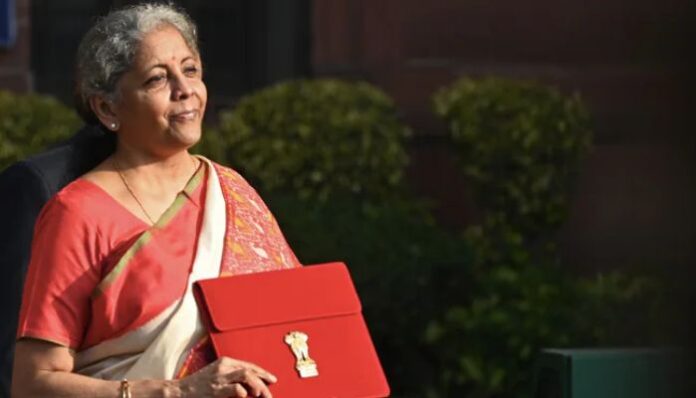
On Sunday (1st February), Finance Minister Nirmala Sitharaman will present the Union Budget for 2026-27 in Parliament. Budget day in India is always a day of excitement and loud demands, particularly on income tax support for the middle class. But this time, the atmosphere is quite different.
There is less fanfare about tax support, the wish lists are shorter, and the demands are more realistic. However, this calmness does not mean that Budget 2026 will be a non-event. According to reports, the upcoming budget is likely to be one of the most reform-friendly budgets in a long time, even if it does not make any noise about taxes.
Reforms take centre stage
One of the clearest signs of change is in the structure of the budget speech itself. Government insiders say Part B, the section usually just for tax announcements, will be the star this time. It’ll lay out India’s main economic goals, like boosting manufacturing, growing exports, and making the country stronger in global supply chains. Normally, this kind of big-picture talk goes in Part A. Flipping it like this shows the government wants to spotlight a clear plan for reforms right up front.
Officials are calling the budget’s main theme ‘Reform Express’ inside the finance ministry. The idea is to focus on long-term structural changes rather than short-term populist measures. This includes simplifying regulations, improving ease of doing business and strengthening domestic manufacturing capacity.
This push feels urgent because global trade is getting tougher. Indian exporters are still dealing with high US tariffs that hit key industries hard, even with new trade deals in the works. So, making exports tougher and manufacturing better is a top priority.
Strong economy, cautious markets
On the macroeconomic front, India heads into budget day on a relatively strong footing. The Economic Survey for 2025–26 estimates real GDP growth for FY27 at 6.8 to 7.2%, following an estimated 7.4% growth this year. Inflation has eased and remains within the RBI’s comfort range. Domestic demand is steady, and early signs of recovery in manufacturing are beginning to show.
Still, stock markets have been jittery. Vinod Nair from Geojit Financial Services says the past week mixed good news from the survey with worries over tariffs, tight global money, and a weaker rupee. Investors want a budget that keeps growth going without breaking spending rules.
According to him, investors are looking for a budget that supports growth momentum while sticking to fiscal discipline.
Why big tax changes are unlikely
The main reason there’s less talk about taxes is obvious. Last year’s Budget 2025 already made a huge change, no tax on income up to roughly Rs 12.75 lakh in the new regime. Governments don’t usually do back-to-back overhauls like that. Such large tax overhauls are rarely repeated in consecutive years.
As a result, analysts believe personal income tax changes will largely remain off the table this time. However, small tweaks are still possible. The standard deduction could see a modest increase, and there may be some easing of compliance norms for small businesses and professionals. Industry is also hoping for clarity on long-term capital gains taxation.
Customs, trade and manufacturing reforms
Customs reform is expected to be one of the most closely watched aspects of the budget. Senior officials suggest the government is preparing a major overhaul of the customs duty structure. The goal is to simplify procedures, reduce disputes over classification and make the system more predictable for companies involved in global trade.
India’s complex customs framework has often been flagged as a challenge in trade negotiations. A simpler system would benefit both Indian exporters and foreign investors.
Another key proposal likely to be announced is the creation of Unified Export and Manufacturing Zones. This new framework aims to merge Special Economic Zones, Export Oriented Units and the MOOWR scheme into a single structure. Officials believe this will create a more efficient ecosystem and encourage greater domestic value addition.
On the social sector front, the budget is expected to deepen welfare schemes for informal and urban workers. Extending health insurance under Ayushman Bharat to gig workers, expanding subsidised loans for first-time entrepreneurs, especially women and marginalised groups, and rolling out low-limit credit cards for micro and small firms could reinforce the social net the state wants to roll out.
Fiscal discipline remains a priority
On spending, Budget 2026 is expected to remain cautious. Analysts expect the government to remain focused on defence, renewable energy, semiconductors, and urban infrastructure, although the overall growth in expenditure is expected to remain moderate.
The market also expects the government to remain on track with its fiscal deficit target of around 4.2% of GDP. With inflation cooling down sharply and CPI touching 1.3% in December, the government has some leeway to promote growth without sacrificing fiscal discipline.
