

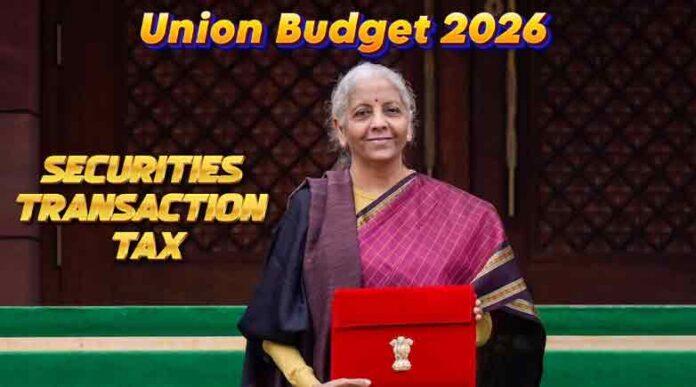
The government has raised the Securities Transaction Tax (STT) levied on futures and options trading with the objective of discouraging excessive speculation and minimising risks in the derivatives market. Revenue Secretary Arvind Shrivastava said on Sunday, 1st February, 2026, that the government has decided to safeguard the financial system and avoid massive losses incurred by small and retail investors.
According to the proposals in the Union Budget, the STT on futures contracts has been hiked to 0.05% from the previous rate of 0.025%. In the options business, the tax on options premium has been increased to 0.15% from the previous rate of 0.1%, and the STT on exercising options has been hiked to 0.15% from the previous rate of 0.125%.
KIND ATTENTION PLEASE:
— Income Tax India (@IncomeTaxIndia) February 1, 2026
➡️STT has been raised only on options and futures.
➡️The rate for futures now is 0.05 and for options is 0.15
➡️Total volume of transaction in options and futures is more than 500 times of Indian GDP
➡️In Rupee terms, our GDP is 300 lakh crore rupees.…
Retail investors facing heavy losses
Speaking at the post-Budget press conference, Mr Shrivastava explained that excessive speculation in the futures and options (F&O) segment has been resulting in massive losses, particularly to retail investors. He said that the government is trying to minimise such risky activities, and the increase in STT is a measure in this direction.
“The intention is clearly to discourage speculative tendencies. This move is essentially aimed at managing systemic risks in the derivatives market,” he said.
Data from the Securities and Exchange Board of India (SEBI) backs this concern. According to the regulator’s studies, more than 90% of retail investors trading in F&O end up losing money. Sebi has already taken several measures in the past to reduce excessive trading volumes in the derivatives segment.
Impact on High-Volume trading
The Revenue Secretary also stressed that even after the hike, STT rates remain relatively low when compared to the massive volumes traded in the derivatives market. The increased tax is mainly targeted at high-frequency and short-term derivative trades, not the regular cash equity market.
Market experts believe the move could help bring more balance to the market by cooling down aggressive speculative activity. However, some analysts have warned that it may have a short-term impact on foreign portfolio investor (FPI) participation.
Aakash Shah, Technical Research Analyst at Choice Equity Broking, said the higher STT in futures and options could slightly hurt FPI inflows, especially for global funds that rely heavily on high-frequency and derivative-based strategies.
Markets react sharply to STT hike
The news of the hike in STT led to a sudden outburst in the stock markets. After the budget announcement, the Sensex dropped 2,370.36 points, or 2.88%, below the 80,000 level to 79,899.42 in afternoon trade. The Nifty also dropped heavily, down 748.9 points, or 2.95%, to 24,571.75, although both indices later recovered some of their losses.
On the Budget session held on Sunday, 1st January, 2026, the benchmark Nifty 50 closed 1.96% lower at 24,825.45 points. The Sensex ended down 1.88% at 80,722.94. Most sectoral indices declined, with PSU bank stocks taking the biggest hit, while only the IT sector managed to stay in the green.
