

On 10th February (local time), the White House quietly revised its factsheet on the recently announced India-US trade framework. In the modified factsheet, references to pulses have been dropped, language on a proposed $500 billion purchase has been softened, and claims related to digital services taxes have been removed. The changes were made within hours of the original documents being published.
Just in: White House drops pulses, changes 'committed' to 'intends' for $500 bn purchase in updated White House Fact Sheet on India Trade Deal
— Sidhant Sibal (@sidhant) February 11, 2026
Updated Fact Sheethttps://t.co/jPJ2qpY0Ko https://t.co/X9TwHBBu0Z
Pulses reference removed from tariff list
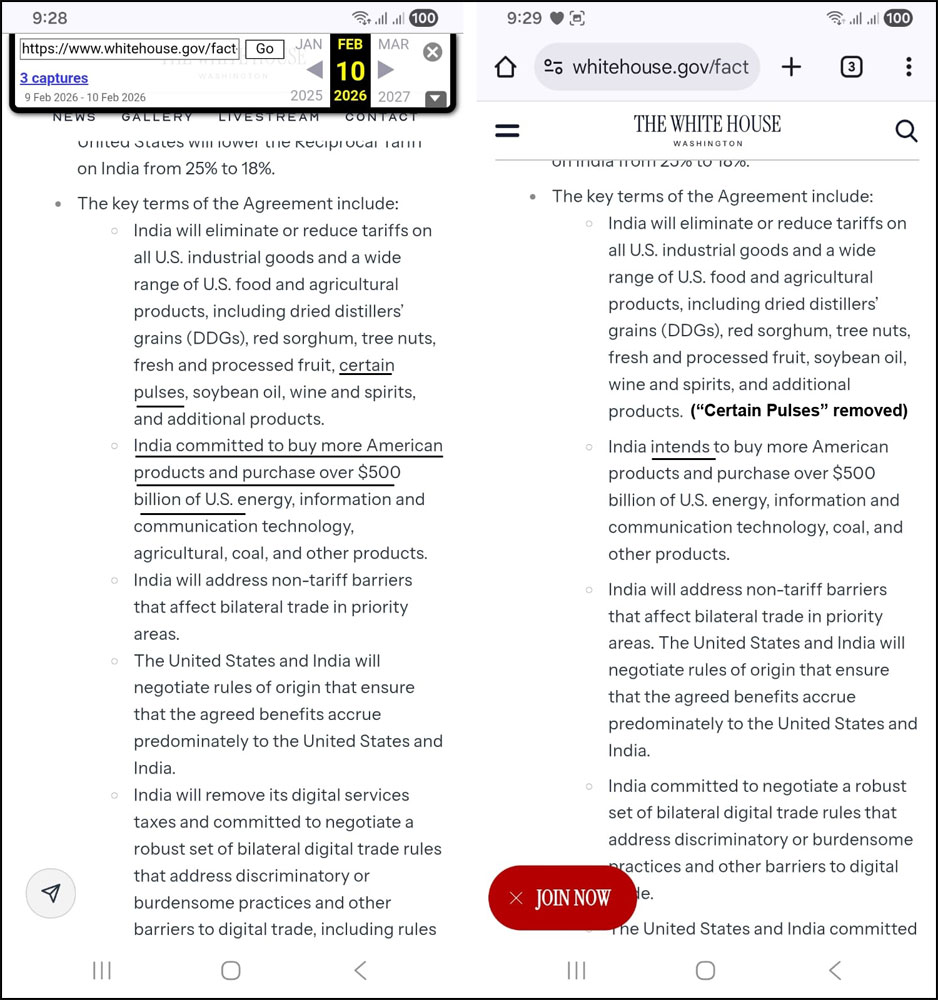
In the earlier version, Washington said India would eliminate or reduce tariffs on a wide range of American agricultural products, including “certain pulses”. The updated factsheet no longer carries any mention of pulses. However, other items such as tree nuts, soybean oil, wine and spirits remain listed.
Pulses are a politically sensitive sector in India. Notably, India is the largest producer and consumer of lentils, chickpeas and dry beans. Their removal indicates New Delhi’s pushback against language it had not agreed to.
$500 billion purchase downgraded from commitment to intent
Another key change in the factsheet is related to India’s proposed purchases from the United States. The original factsheet noted that India was “committed” to buying over $500 billion worth of American products, including agricultural goods. However, this has now been revised to say India “intends” to buy more American products, and the reference to agricultural items has been removed.
The updated version is in line with the joint statement issued earlier by both sides, which spoke of intent rather than a binding commitment.
Digital services tax claim dropped
The revised factsheet has also removed the claim that India would eliminate its digital services taxes. It now only states that India is committed to negotiating bilateral digital trade rules which will address discriminatory or burdensome practices.
Notably, India had already scrapped its 6 percent equalisation levy on digital advertising services from 1st April 2025 via the Finance Bill 2025. The development came months before the interim trade framework was announced.
According to media reports, the changes were made after New Delhi flagged the inclusion of items and wordings that were not part of the agreed framework.
Background to the interim agreement
India and the United States reached an interim trade understanding after almost a year of negotiations that began in February 2025. Under the framework, India is set to benefit from duties reduced from 50 percent to 18 percent across a range of exports, including textiles, garments, leather, footwear, chemicals, home decor and select machinery.
The agreement framework was announced last week following a telephone conversation between Prime Minister Narendra Modi and US President Donald Trump. The talks between the two countries had stalled earlier due to steep tariffs imposed by Washington over India’s trade with Russia, especially crude oil purchases.
