

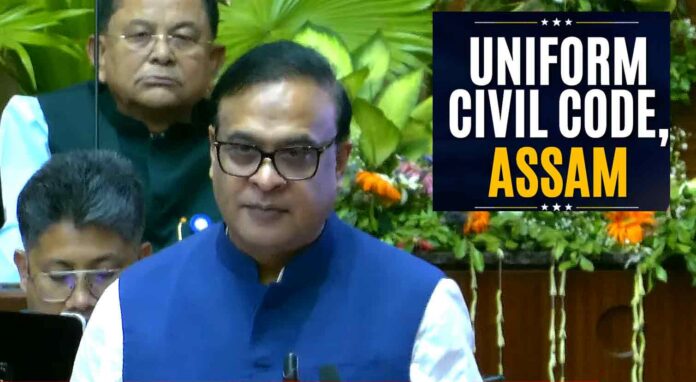
The Assam Assembly on Wednesday, 27th May, passed the Uniform Civil Code (UCC) Bill, 2026, making Assam the first state in the Northeast and the third state after Uttarakhand and Gujarat to clear such a law. The Bill was introduced earlier this week by the BJP-led government and was passed despite opposition members demanding that it be sent to a select committee for further review.
Chief Minister Himanta Biswa Sarma called the move a “historic step” and said implementing the UCC was one of the BJP’s major promises in the 2026 Assembly elections. He said the Bill will now move ahead for further approvals before becoming law.
The CM said that under the new law, every person from every religion across any region of Assam will be equal before the law in terms of civil matters.
Chief Minister Himanta Biswa Sarma said that the bill would now be sent to the Governor of Assam and then to the President of India for their assent, and will become an Act and be implemented in letter and spirit once they give their approval to it.
Opposition parties like Congress, AIUDF and the Raijor Dal opposed the Bill when it was taken up for discussion in the house. Congress Legislature Party leader Wazed Ali Choudhury questioned the very necessity of the legislation, claiming that issues covered under the UCC are already governed by existing laws.
Union Home Minister Amit Shah congratulated the people of Assam on the passage of the bill. He said that Uniform Civil Code has been the BJP’s resolve since the day of its foundation. He posted on X, “I am delighted that after Uttarakhand and Gujarat, Assam too has passed the Uniform Civil Code (UCC) Bill today. On this occasion, I congratulate Chief Minister of Assam Shri @himantabiswa Ji and all the legislators who supported this bill. We are committed to enshrining the principle of equality before the law in every part of the country.”
Congratulations to the people of Assam.
— Amit Shah (@AmitShah) May 27, 2026
Uniform Civil Code has been the BJP’s resolve since the day of its foundation. Under PM Shri @narendramodi Ji's leadership, BJP-led state governments are establishing uniform law for every citizen. I am delighted that after Uttarakhand and…
Common civil rules for all communities
The new law aims to bring a single legal framework for matters related to marriage, divorce, inheritance, succession and live-in relationships, replacing religion-based personal laws. However, Scheduled Tribes have been kept outside its scope to protect their constitutional rights, customs and traditional practices.
The Bill also states that religious ceremonies and customary marriage rituals will continue without any change. Communities can still perform marriages according to their traditions, including Vedic Bibah, Ahom Chaklong, Saptapadi, Nikah, Holy Union and Anand Karaj.
Marriage registration, monogamy and divorce rules
One of the major provisions of the Bill is compulsory monogamy, effectively banning polygamy in the state. The marriage age has been kept at 21 years for men and 18 years for women.
The law makes registration of marriages and divorces compulsory. Couples must submit marriage details to the Sub-Registrar within 60 days of marriage. Failure to register within the time limit can attract a penalty of Rs 10,000.
The Bill also brings common grounds for divorce such as cruelty, desertion and mutual consent. Children below five years of age would normally remain with the mother during early childhood custody matters.
Rules for inheritance and live-in relationships
The UCC introduces a gender-neutral inheritance system where Class-1 heirs — spouse, children and parents — will get equal rights in succession matters regardless of religion. Adults will also have the right to prepare a written and witnessed Will.
Live-in relationships have also been brought under legal regulation. Couples must register such relationships within 30 days. Children born from live-in relationships will be treated as legitimate and given equal legal rights. Deserted partners, especially women, can seek maintenance through courts.
Penalties and legal changes
The Bill proposes strict punishment for violations. Bigamy and polygamy may lead to imprisonment of up to seven years under the Bharatiya Nyaya Sanhita (BNS), 2023. Fraudulent marriages, forced marriages and concealment of facts can also attract jail terms and fines.
Non-registration of live-in relationships may lead to up to three months’ imprisonment or a Rs 10,000 fine. The Bill also proposes repealing the Assam Compulsory Registration of Muslim Marriages and Divorces Act, 2024, while protecting polygamous marriages that existed before the UCC comes into force.
