

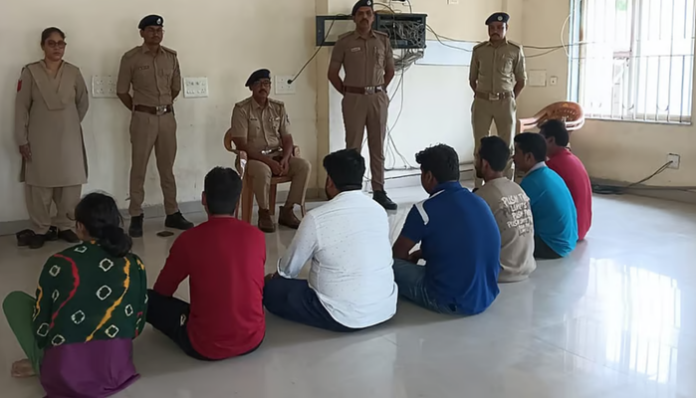
In a major crackdown on illegal immigrants in Gujarat, the state government detained 290 suspected illegal immigrants, out of whom 166 have been identified as Bangladeshi nationals. The authorities uncovered a network of unauthorised settlements, identity manipulation and cross-border financial transactions during their operations in Ahmedabad, Surat, Rajkot, and Vadodara.
As per reports, on 2nd June, in a joint operation of teams of the local police and the Crime Branch’s Special Operations Group (SOG), a coordinated search operation was initiated, which turned out to be one of the largest crackdowns on illegal immigrants in Gujarat in the past few years. The authorities conducted searches in several parts of Ahmedabad, which was at the centre of the crackdown. The police conducted raids, detentions, interrogations and verification drives to identify illegal immigrants.
Confirming the action against illegal immigrants, JCP Crime Branch, Ahmedabad, Sharad Singhal, said that searches were carried out at different locations, including Chandola, Gulabnagar and Khodiyarnagar. “In a major late-night crackdown, Ahmedabad Police and the Crime Branch launched a mega search operation targeting suspected illegal Bangladeshi infiltrators across various areas, including Chandola, Gulabnagar, and Khodiyarnagar of Ahmedabad. Over 290 suspects have been taken into police custody and are currently being interrogated at the Crime Branch. According to crime branch officials, a total of 131 individuals have been apprehended from various locations, and an additional 160 suspects are currently undergoing intense interrogation at the Crime Branch,” Singhal said.
Gujarat Dy CM Harsh Sanghavi says, "Gujarat's Home Department has adopted a strict stance against Bangladeshi nationals residing illegally in the state. A special drive is currently underway across the entire state, including Ahmedabad, Surat, Rajkot, and Vadodara, to identify… pic.twitter.com/933JlfsTrH
— ANI (@ANI) June 3, 2026
The Deputy Chief Minister of Gujarat, Harsh Sanghavi, said that the state government has toughened its stance against illegal immigrants residing in the state. “Gujarat’s Home Department has adopted a strict stance against Bangladeshi nationals residing illegally in the state. A special drive is currently underway across the entire state, including Ahmedabad, Surat, Rajkot, and Vadodara, to identify and apprehend foreign nationals residing illegally. Intensive inspections and search operations were conducted in various areas by the police, Crime Branch, SOG, and other agencies. According to reports, a large number of suspected Bangladeshi nationals were detained during this overnight operation. The state government has clarified that this campaign against illegal infiltration and foreign nationals residing unlawfully will continue in the future,” Sanghvi said.
Police Commissioner G.S. Malik said that among the illegal Bangladeshi nationals, 95 were women. He added that many of these women were engaged in prostitution while men mostly worked as labourers. “The operation was conducted under the supervision of Ahmedabad Crime Branch Joint Commissioner Sharad Singhal. Around 300 suspects were detained, out of which 166 have been confirmed as Bangladeshi nationals. These include 41 men, 95 women and 30 children. Some entered India only a few months ago, while others have been living here for several years. We are investigating the agents who facilitated their entry. Preliminary findings show that several women were engaged in spa-related and prostitution activities, while many men were working as daily wage labourers,” the Police Commissioner said.
Additionally, the police found financial trails extending beyond Gujarat, routed to Bangladesh. Several illegal Bangladeshi immigrants reportedly told the investigators that their earnings in Ahmedabad were routinely transferred to Kolkata through the angadia network before being routed to Bangladesh. They were using some mobile applications to transfer the funds. The authorities are now probing possible hawala-style channels and digital money transfer routes.
