

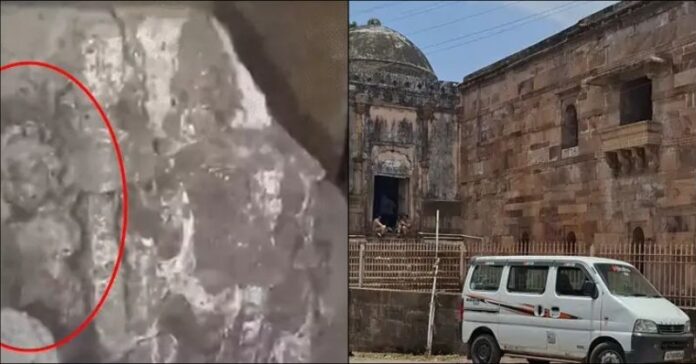
A fresh controversy has emerged over the Jama Masjid in Bharuch after several videos and photographs surfaced allegedly showing ancient Jain and Hindu idols, along with remnants of old architectural structures, in the mosque’s basement. Initially, Hindu organisations and religious leaders claimed that the remains belonged to Hindu and Jain places of worship. Now, members of the Jain community have also entered the debate and demanded an Archaeological Survey of India (ASI) investigation.
The controversy began after videos and photographs circulated on social media purportedly showing ancient Hindu and Jain idols inside the basement of the mosque. Among the artefacts reportedly visible were idols of Lord Mallinath, the 19th Tirthankara of Jainism, other Hindu deities, and fragments of ancient architectural structures. Following the emergence of these visuals, Hindu groups called for a scientific survey of the site.
Not Jama Masjid but ‘Samdi Vihar’, claim Jains
Jain monk Rajsundarvijayji Maharaj referred to three important Jain pilgrimage sites historically associated with Bharuch. According to him, the city’s history is deeply linked to Jainism, beginning with the Ashvavabodh Tirth. He said that the 20th Tirthankara, Lord Munisuvrataswami, is believed to have visited Bharuch to impart spiritual knowledge to a horse that had been his friend in a previous birth.
He also highlighted Bharuch’s significance as a “Prayashchit Tirth” (place of atonement), where Jain monks and ascetics would travel in ancient times to perform penance and seek purification for transgressions committed during their lives. They would undertake rigorous spiritual practices before Lord Munisuvrataswami, making the site especially sacred.
The most significant claim concerns what Jain traditions refer to as “Samdi Vihar” or “Shakunika Vihar”. According to Jain history, an injured bird once heard the Navkar Mahamantra from Jain monks. Due to the spiritual merit gained from that experience, the bird was reborn as a princess and later constructed a grand Jain shrine in Bharuch known as Samdi Vihar. Jain representatives now claim that a religious structure stands today at the location where this ancient Jain monument once existed.
Demand for archaeological survey
Leaders of the Jain community have alleged that numerous alterations and new constructions over the years have changed the site’s original archaeological character. They have expressed a desire to inspect the mosque’s basement to determine the facts but claim that the mosque trust and members of the Muslim community have not permitted them entry.
The Jain community has therefore demanded a scientific and impartial archaeological survey of the site.
On the other hand, the Jama Masjid Trust and members of the Muslim community have rejected the claims arising from the videos and photographs. They maintain that the material circulating on social media is misleading and does not establish the existence of a Hindu or Jain temple at the site. The trust has also submitted a memorandum to the district collector, alleging that false information is being spread on social media to hurt religious sentiments.
According to the trust, the Jama Masjid is a centuries-old historic mosque, and claims questioning its origins are baseless.
