

US President Donald Trump has indicated that Cuba could become the next major focus of Washington’s assertive foreign policy, drawing parallels between a potential operation against Havana and the dramatic US-led mission that resulted in the capture of former Venezuelan President Nicolás Maduro earlier this year.
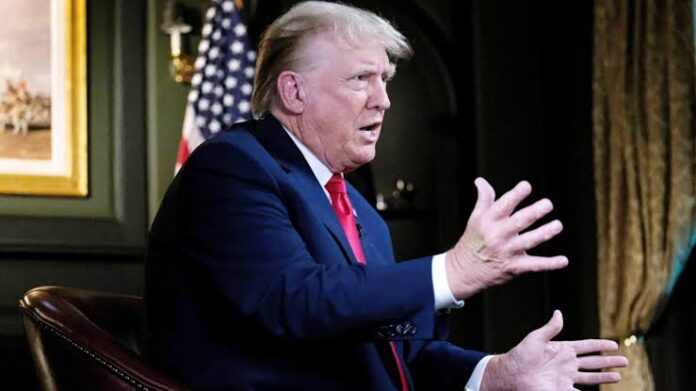
Speaking in an exclusive interview with Axios, Trump suggested that a future American operation in Cuba remains a distinct possibility and hinted that it could follow a trajectory similar to the Venezuela campaign. When asked whether the two situations were comparable, Trump responded that such an operation was “possible,” reinforcing speculation that Cuba remains firmly on the administration’s strategic radar.
The remarks come amid a broader effort by the Trump administration to reassert American influence across the Western Hemisphere. Over recent months, Washington has tightened economic pressure on Havana, expanded sanctions, and openly discussed the possibility of political change on the communist-run island. Trump has repeatedly argued that the United States should play a more active role in shaping developments in its immediate neighborhood.
While stressing that he would prefer a peaceful transition in Cuba, Trump acknowledged that contingency plans exist for a range of scenarios, including political upheaval, social unrest, or a collapse of the island’s government. According to Axios, administration officials have conducted planning exercises to prepare for potential instability should the situation in Cuba deteriorate rapidly.
Trump, however, drew a distinction between Cuba and the recent military campaign against Iran, describing the latter as a significantly larger operation in terms of both scale and firepower. He suggested that any future action involving Cuba would be assessed according to circumstances on the ground rather than following a fixed blueprint.
The comments are likely to intensify scrutiny of Washington’s Cuba policy, particularly as analysts increasingly compare it to the pressure campaign that preceded the Venezuela operation. That strategy combined economic sanctions, diplomatic isolation, military signalling and public discussion of regime change before culminating in direct action against Maduro’s government.
Despite the comparisons, experts caution that Cuba presents a far more complex challenge. The island’s political structure, geographic position and international partnerships differ substantially from those of Venezuela, making any attempt to engineer political change considerably more complicated.
Trump declined to provide a timeline for any potential move against Cuba, describing the situation as “flexible.” Nevertheless, his latest remarks are expected to fuel debate over whether Washington is preparing to expand its increasingly muscular approach in Latin America and what that could mean for the future of US-Cuba relations.
