

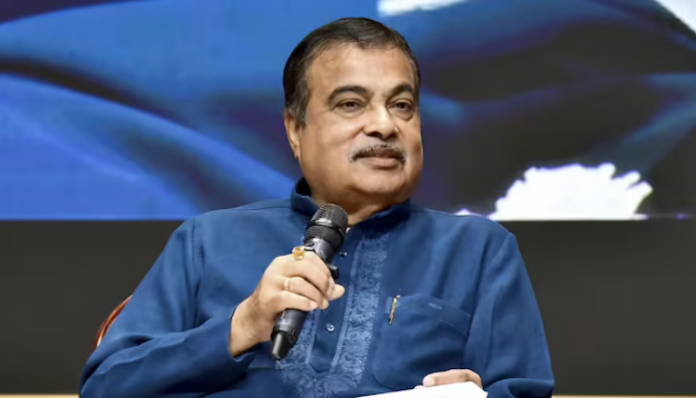
On 27th July (Monday), Union Minister Nitin Gadkari was granted permission by the Bombay High Court to bring a civil lawsuit against the online dissemination of defamatory and deepfake material against him. The decision was pronounced by Justice Abhay Ahuja. Gadkari was represented by attorney Sandeep S. Ladda, who sought the nod to file the lawsuit.
According to the minister’s appeal, unknown people have uploaded posts and deepfake content to falsely allege that he is personally in charge of the centre’s E20 (ethanol-blended petrol) program. The posts even declared that he and his family have profited financially from it. The submission highlighted that there is not a shred of truth in these accusations, which are spiteful, untrue and egregiously defamatory.
Gadkari outlined that the content is intended to deceive the public into believing that he has abused his official position for personal benefit, harming his reputation and personality rights irreversibly. He wants mandatory and permanent injunctions regarding the “defamatory content” and “deep fake content” which include social media posts, tweets, reels, videos, and other materials that employ foul and offensive language, fraudulently ascribe remarks to him and use artificially engineered audio-visuals that imitate his name, image, appearance, facial features and voice without permission.
Gadkari added that the content violates his personality and publicity rights and caused “grave and irreparable” harm to his goodwill, reputation, dignity and public image. He further stated that the lawsuit is not intended to suppress legitimate criticism or fair public discourse.
The lawsuit announced that there is no restriction on criticism and that this action does not apply to fair, honest comments that are based on accurate facts and is made without malice. The plaintiff has argued that what is at stake are careless and defamatory charges that, in his opinion, go beyond the limits of acceptable expression rather than valid critique.
“The purpose and object of filing the suit is not to curtail or prevent the public at large from engaging in discussion, debate, analysis or fair, just and bona fide criticism of any decision taken by the plaintiff himself or by his office,” the lawsuit read.
“Plaintiff has no role or nexus whatsoever with EBP or the E20 initiative, which is administered exclusively by the Ministry of Petroleum and Natural Gas. The defamatory content, insofar as it consists of profane and abusive language directed at the plaintiff, falls outside the ambit of legitimate political criticism or satire. The deep fake content constitutes an unauthorised exploitation of the plaintiff’s personality and publicity rights. That the balance of convenience lies in favour of the Plaintiff, who continues to suffer irreparable harm to his reputation not compensable in terms of money,” it charged.
Meta, X, Google LCC and YouTube are featured in the lawsuit along with Union Ministry of Electronics and Information Technology and the Department of Telecommunications. Furthermore, the unidentified names who produced and shared the same are labelled as “Ashok Kumars/John Does.”
Gadkari filed the petition in accordance with Letters Patent paragraph XII. This procedural condition is applied when a portion of the cause of action originates outside the high court’s territorial jurisdiction. Despite jurisdictional restrictions, the court must grant such leave to consider a claim on its original civil side.
Ladda contended that the accused have made the deepfake and defamatory content accessible to the general public, including those in Mumbai. He argued that a significant portion of the cause of action arises in the Maharashtrian capital because this material is available and meant to be viewed within the boundaries of Bombay High Court.
It was submitted that this affords the court the authority to hear and rule on the case. According to the counsel, the content is also available online outside of Mumbai. Hence, a portion of the ground of action originates outside the court’s territorial authority, necessitating the use of Clause XII leave. Gadkari will be able to file a substantial civil lawsuit on the court’s original side owing to the order.
