

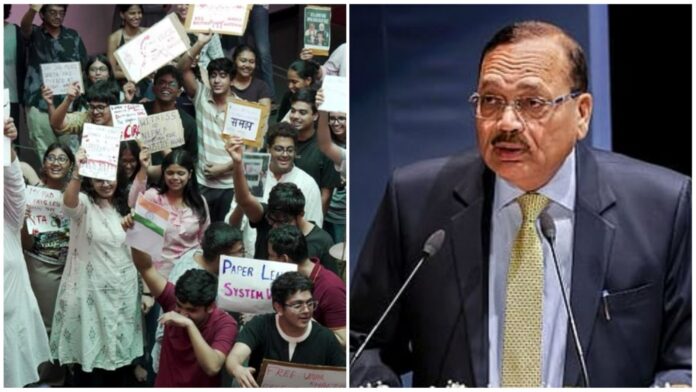
The Bar Council of India (BCI) has taken an unusually strong step against Hyderabad’s NALSAR University of Law after a section of its graduating students opposed the reported invitation to Chief Justice of India Surya Kant as chief guest for the convocation.
In a directive issued to all State Bar Councils, BCI chairperson Manan Kumar Mishra said students graduating from NALSAR in 2026 should not be enrolled as advocates until further orders. The regulator has also sought a detailed report from the university identifying those who allegedly played a leading role in initiating, organising, coordinating or mobilising the campaign against the CJI’s proposed participation.
The BCI’s action follows a controversy triggered by remarks Justice Surya Kant reportedly made during a Supreme Court hearing on alleged police action against protesters at Delhi’s Jantar Mantar. The students had submitted a representation asking the university to reconsider the invitation, arguing that the convocation should reflect NALSAR’s stated commitment to constitutional values, access to justice and reasoned engagement with grievances.
BCI seeks names, documents and details of campaign
The legal regulator has given NALSAR three days to submit an authenticated account of the episode. It has specifically asked the university to identify the students and others who were at the forefront of the campaign and furnish copies of petitions, representations, memoranda or other communications submitted to the administration concerning Justice Surya Kant’s proposed appearance.
Mishra has also alleged, citing what he described as reliable sources, that internal groupism and political activity among sections of the academic staff may have influenced the students. The BCI has sought details of any teachers who allegedly played a role in “misleading, instigating and misguiding” students.
The council said it could not remain a “mute spectator” if the conduct amounted to a challenge to the dignity, discipline and ethical standards expected of members of the legal profession. In its statement, the BCI argued that a law graduate who shows disregard for the country’s highest judicial office may face questions about their suitability to become an advocate, teacher or judge.
What did the NALSAR students object to?
The controversy began when a group of graduating students approached the Vice-Chancellor, Registrar and faculty members over the reported invitation to the CJI for the convocation.
Their objection was linked to proceedings before the Supreme Court concerning alleged police excesses during a July 20 “Chalo Sansad” protest at Jantar Mantar. The demonstration, organised by the Cockroach Janta Party, involved demands relating to the NEET examination and the functioning of the National Testing Agency, among other issues.
The protesters had attempted to march towards Parliament and clashed with security personnel. Two days later, on July 22, a lawyer sought urgent listing of a petition alleging police brutality against participants and told a bench headed by Justice Surya Kant that video evidence was available.
It was during this exchange that the CJI reportedly said, “don’t waste our time and yours” and “we don’t want to watch any videos”. Those remarks subsequently became the focus of the NALSAR students’ objection to his proposed participation in the convocation.
The BCI’s intervention has now transformed what began as a campus dispute over a convocation invitation into a larger confrontation involving legal education, professional ethics and the limits of student dissent.
