

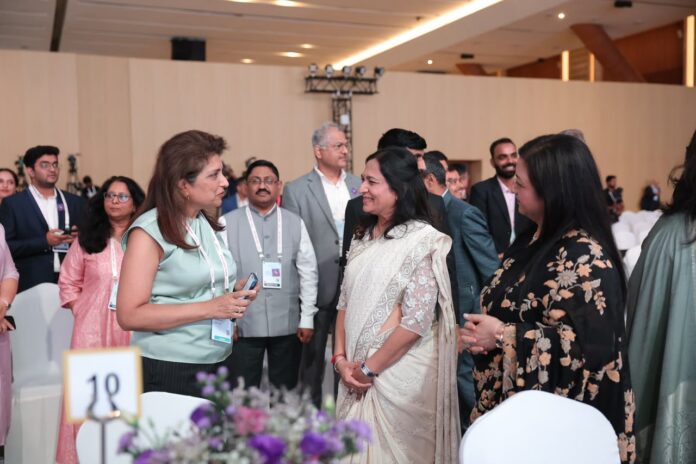
Philanthropy needs to evolve from simply funding immediate needs to strengthening the people, institutions and systems that can deliver lasting social change, Adani Foundation Chairperson Dr Priti Adani said at the AVPN Global Conference 2026 in New Delhi.
Dr Adani made the remarks while addressing a welcome dinner hosted by the Adani Foundation at Bharat Mandapam for nearly 2,000 national and international delegates attending the conference. The 13th edition of the AVPN Global Conference was held in India for the first time, bringing together philanthropists, social-impact leaders, policymakers, corporates and development practitioners from across the world.
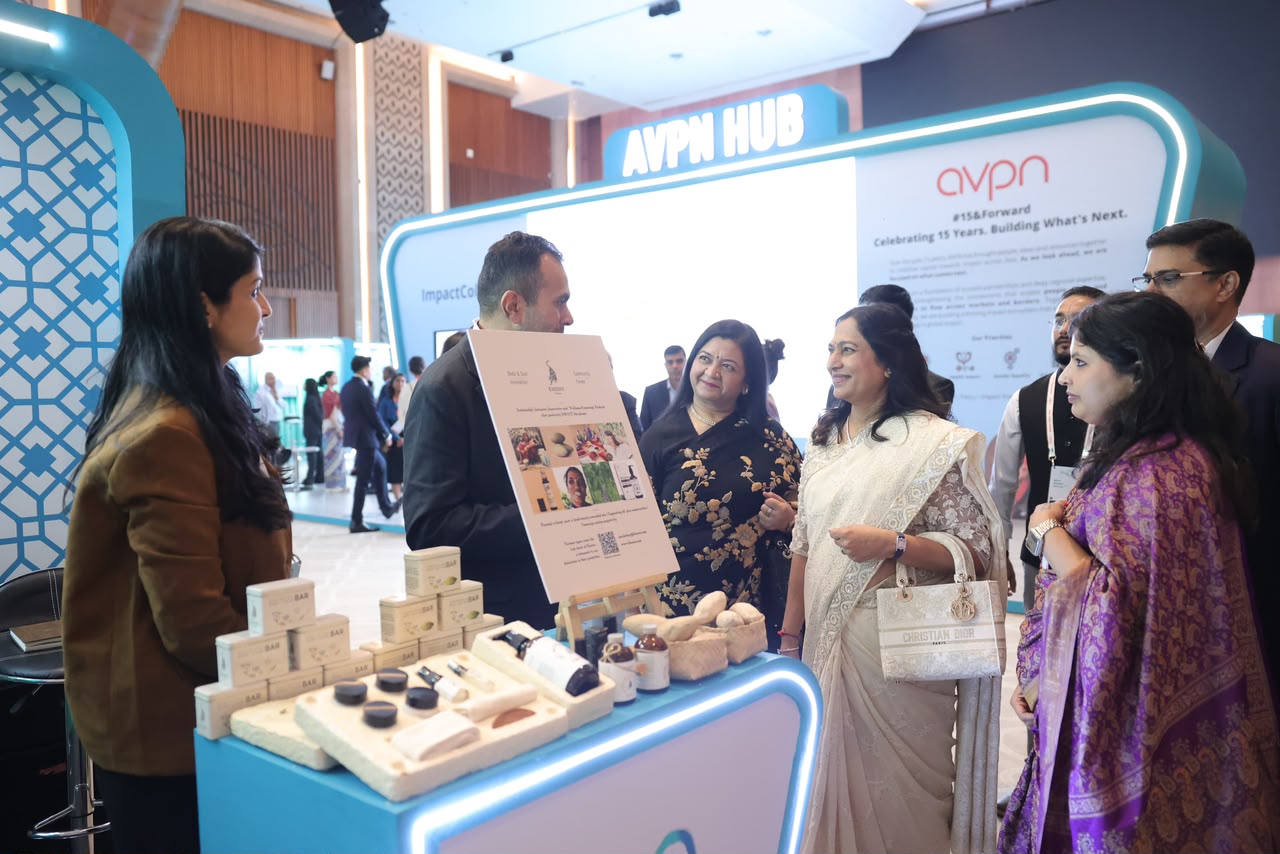
Welcoming the delegates, Dr Adani said India and Asia were emerging as important engines of growth and opportunity, and argued that the region had valuable experiences to share with the global philanthropic community.
Drawing on the Adani Foundation’s three decades of work at the grassroots, she said meaningful and lasting change comes when communities are empowered to determine their own futures.
“As social challenges become more complex, we must learn from one another, share what works and build partnerships that take impact further,” she said.
A new approach to philanthropic funding
Dr Adani’s address placed particular emphasis on what she termed “Capital for Capacity”. She said philanthropy should increasingly focus on investments that help communities and institutions become stronger and more self-sustaining.
While funding for survival and immediate relief remains important, she called for greater support for behavioural change, institution-building, skills, innovation, climate action and stronger social connections.
The objective, she said, should be to ensure that effective interventions can endure, expand and benefit more communities rather than remain limited to individual programmes.
She drew on the Foundation’s experience to underline the principle behind this approach: philanthropy should not simply seek to change people’s lives, but provide them with the means and leverage to change their own lives.
India’s innovation story
Dr Adani also highlighted the growing role of grassroots entrepreneurship and local innovation in India’s development journey.
She said innovation was increasingly emerging from small towns and villages rather than being concentrated only in major cities. Startups across the country are working on challenges including waste management, climate change, drinking water, healthcare and agriculture, she noted.
She cited the Vande Bharatam initiative launched by Adani Group Chairman Gautam Adani, which received applications from more than 26,000 startups. According to Dr Adani, many of the participating ventures were developing solutions with social and environmental impact at their core.
She argued that India’s combination of grassroots entrepreneurship, skill development and local innovation could produce solutions with relevance across the Global South.
From a dairy initiative to economic independence
Dr Adani illustrated the impact of capacity-building through the experience of Kiran Harinkhede from Churdi village in Maharashtra.
Harinkhede benefited from the Adani Foundation’s Livestock Development initiative, receiving guidance on improved cattle breeding and animal healthcare. Better breeds helped increase her milk production, enabling her to join a women-run dairy enterprise established through the programme.
She now sells between 25 and 28 litres of milk every day to a collection centre. Her increased income has helped finance her son’s college education and her daughter’s graduation.
For Dr Adani, the example demonstrates how philanthropy can create economic opportunity and independence when it equips beneficiaries with the tools to build sustainable livelihoods.
She described this economic independence as a deeper form of freedom, encompassing the freedom of choice, opportunity and upward mobility.
Adani Foundation marks 30 years
The gathering comes as the Adani Foundation marks 30 years of grassroots development work in India. Established in 1996, the Foundation operates across areas including education, healthcare, skilling, livelihoods, disability inclusion, community infrastructure, sports and grassroots climate action.
The Foundation says its programmes have reached more than 7,200 villages across 22 states and positively impacted more than 13 million lives.
Its work includes maternal and newborn healthcare, primary education, market-oriented skills training, sustainable agriculture and non-agricultural livelihoods, healthcare delivery and support for persons with disabilities.
The Adani family, led by Gautam Adani, has committed ₹60,000 crore towards healthcare, skilling and higher education. The commitment includes Adani Health Cities, conceived as integrated healthcare ecosystems featuring 1,000-bed hospitals, research facilities and medical colleges. The first phase is planned in Mumbai and Ahmedabad, while the Foundation is also establishing a 200-bed hospital in Pirpainti, Bihar.
Building partnerships across Asia
Dr Adani’s call for greater collaboration builds on her address at the AVPN Global Conference in Hong Kong in 2025, where she proposed creating a Unified Collaboration Platform to connect philanthropic experience and knowledge across Asia.
In New Delhi, she urged the philanthropic community to build on that idea by sharing what works, learning from one another and developing partnerships capable of taking successful solutions to a larger number of communities.
She also pointed to the challenges confronting the world despite unprecedented technological capability and financial resources. Climate instability, the rapid development of artificial intelligence and the harmful effects of excessive social-media and technology use, she said, underline the need for more coordinated and purposeful action.
As India pursues the vision of Viksit Bharat 2047, Dr Adani argued that development cannot be measured simply by the size of budgets or the number of programmes funded.
“Viksit Bharat will not be built by larger budgets alone; it will be built by stronger institutions,” she said, calling for philanthropic capital to support the people and systems that enable impactful programmes to endure and scale.
