

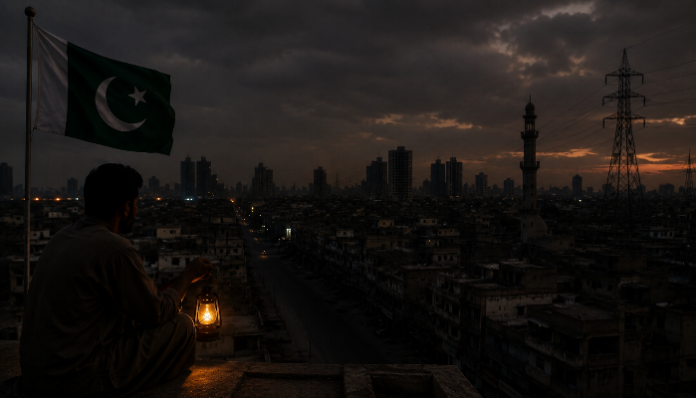
Pakistan is facing an escalating electricity crisis after declining to purchase liquefied natural gas to replace supply lost by the blockade of the Strait of Hormuz. According to traders, Islamabad received a single offer from BP Plc at $27 per million British thermal units, which is nearly three times pre-war spot levels, reported Bloomberg.
Afterwards, state-owned Pakistan LNG Ltd. cancelled an emergency tender for a shipment to be delivered by 8th September. The sources added that the offer was deemed too high-cost and the country might reopen the bidding procedure. In the absence of more supplies, Islamabad might have to keep implementing blackouts in the evening, when solar power diminishes, and fossil fuel facilities are required to make up the difference.
The conflict in Iran, which started in late February, has interrupted LNG flows from Qatar. The country is Pakistan’s main supplier, and the latter has been struggling with an energy shortage. Force majeure, a legal provision that permits suppliers to suspend contractual commitments due to unforeseen situations beyond their control, was extended by Qatar this week for supplies to purchasers in Europe and Asia through October.
Since one of its tankers was assaulted in early July, the primary exporter of the super-chilled fuel has basically stopped delivering cargoes across the strait. Pakistan has resorted to the spot market for replacements, but as prices continue to rise to almost their greatest level since the start of the conflict, such imports are getting more expensive.
A key weakness in Pakistan’s electricity grid has been revealed by the outage. According to a factsheet published by the Institute for Energy Economics and Financial Analysis, the nation remains depends on LNG to close the gap between domestic electricity supply and demand, especially after sunset.
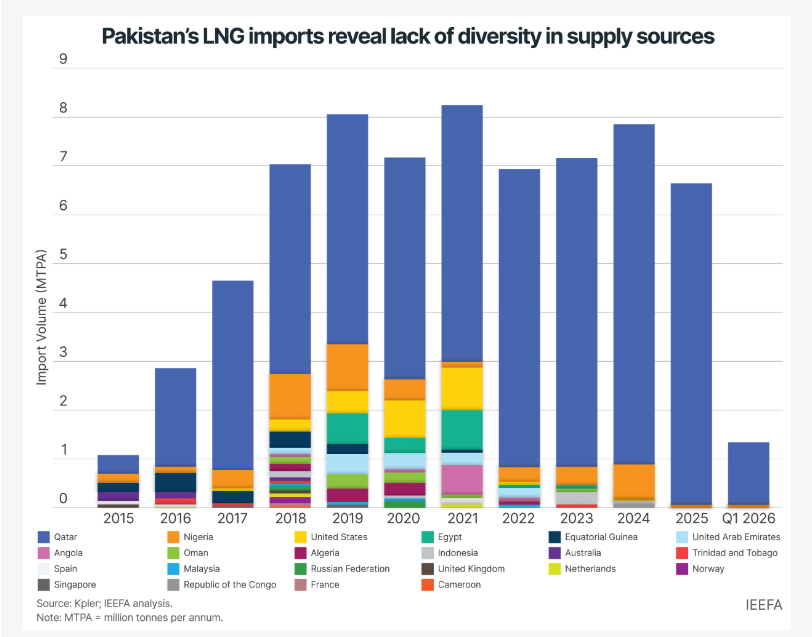
The disruption has been a challenge for Pakistan because it relied on Qatar. On the ground, the strain is already apparent. Residents of several regions of Karachi have reported outages lasting up to 16 to 24 hours, and human rights organisations have warned that extended load-shedding is interfering with work, education, household activities and water access.
The lack of energy has even extended beyond Karachi. Customers in Lahore and other parts of Punjab have also experienced load-shedding for two to three hours as Pakistan’s national power shortfall has surpassed 4,000 MW. Customers incur greater costs as a result of the shortage. As the cost of generating climbs up, the National Electric Power Regulatory Authority of Pakistan approved a hike of PKR0.75 per unit for June under the monthly fuel cost adjustment process, intensifying stress on electricity bills.
Furthermore, foreign remittances might encounter a similarly painful reality for Pakistan. According to the United Nations Development Coordination Office report, Saudi Arabia sent $9.4 billion in remittances to Pakistan in the fiscal year 2024–2025, with the UAE contributing an additional $7.83 billion.
This emphasises how crucial the area is as a source of foreign exchange. Therefore, prolonged unrest in the Middle East could simultaneously put pressure on oil imports and remittance inflows, two of Pakistan’s most important economic lifelines.
