

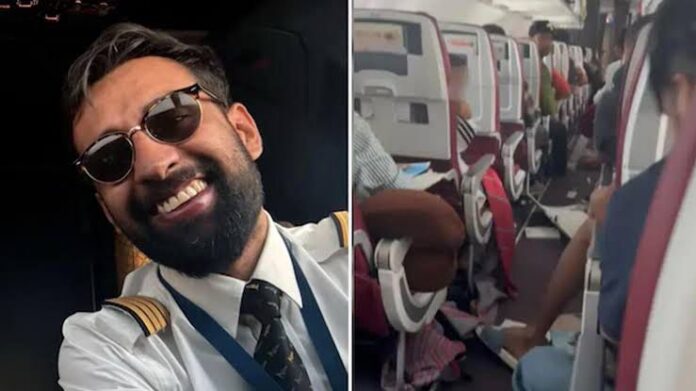
Air India has sacked the pilot-in-command of its Phuket-Delhi flight after he tested positive for a psychoactive substance, weeks after the aircraft suffered a sudden altitude loss that left 24 passengers injured.
Flight AI2379, an Airbus A320 carrying 145 people, was cruising at 36,000 feet on August 4 when it suffered a near-simultaneous loss of all three hydraulic systems. The failure caused the autopilot to disconnect and triggered a brief stall warning, following which the aircraft gained 372 feet before plunging 292 feet from its assigned altitude.
The aircraft eventually stabilised and landed safely in Delhi. The co-pilot, who was flying the aircraft when the incident occurred, initially tried to regain control before the pilot-in-command took over.
Following the incident, both pilots underwent drug-detection tests. While the co-pilot tested negative, the pilot-in-command was found positive for a psychoactive substance in the confirmatory test. The Aircraft Accident Investigation Bureau (AAIB) subsequently recommended that the Directorate General of Civil Aviation (DGCA) take appropriate action against him.
Air India has now terminated the pilot’s employment with immediate effect, citing its zero-tolerance policy on safety, fitness and regulatory violations.
“The Pilot-in-Command of the Phuket-Delhi flight tested positive for a psychoactive substance. In line with Air India’s zero-tolerance approach to violations of safety, fitness or regulatory requirements, the pilot’s employment has been terminated with immediate effect,” the airline said.
However, the preliminary investigation has not established that the pilot’s substance use caused or contributed to the hydraulic-system failure or the subsequent altitude loss. The AAIB has said that its detailed investigation into the technical and other aspects of the incident is still underway.
The incident has nevertheless raised serious questions about cockpit fitness and aviation safety. The AAIB described the confirmation of psychoactive-substance use by the pilot as a “serious concern” and recommended priority action by the DGCA.
Air India said it is cooperating fully with the investigation and providing the authorities with operational, maintenance and technical records. The airline has also begun voluntary testing of 100% of its pilots, in addition to existing training, proficiency checks, medical examinations and regulatory assessments.
The preliminary probe also found that the aircraft had undergone a pre-flight inspection, with maintenance personnel reporting no discrepancies before departure.
While the precise cause of the hydraulic failure remains under investigation, Air India’s immediate termination of the pilot underscores the seriousness with which the airline is treating violations involving crew fitness and safety.
