

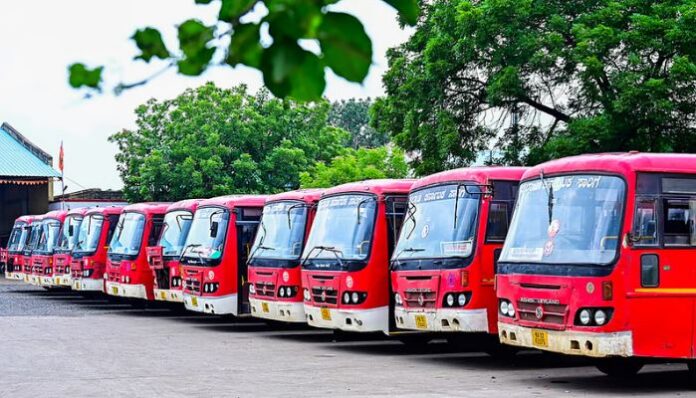
Bus services across several parts of Karnataka have been disrupted due to a shortage of diesel, leaving hundreds of buses at depots and causing difficulties for daily passengers. The shortage has affected routes in Bidar, Koppal and other areas, with rural and remote regions facing particular problems.
Diesel shortage affects KKRTC depots
The Kalyana Karnataka Road Transport Corporation (KKRTC), which operates 52 depots across eight districts, requires around 3.24 lakh litres of diesel every day. The fuel is supplied by Hindustan Petroleum Corporation Limited (HPCL). Sources said the shortage was linked to the approaching expiry of the supply tender, pending bills of Rs 170 crore and KKRTC’s lack of funds to clear these payments. Similar problems are reportedly affecting other transport corporations in the state.
The impact varies across districts. Bus services at 11 depots spread across two divisions in Kalaburagi district remain unaffected, while daily trips from some depots in Bidar have been disrupted.
In Yadgir district, four depots need 26,000 litres of diesel daily, while their current consumption stands at 23,000 litres. A KKRTC official said minor disruptions in the internal supply had forced the corporation to reduce bus trips during off-peak hours. To manage the shortage, passengers travelling on a bus with only 10 to 15 people are being shifted to another bus running on the same route.
Rural passengers face travel difficulties
The shortage has severely affected bus services from the Karnataka State Road Transport Corporation (KSRTC) depots in Gangavathi and Kushtagi. Hundreds of buses have reportedly remained stranded at the depots for the past two to three days, disrupting services on several routes.
Students travelling to schools and colleges, employees, workers and farmers have been among those affected. With several services cancelled or suspended, passengers in rural and remote areas have been forced to wait for hours at bus stops. Many have also had to rely on private vehicles and autorickshaws, increasing their daily travel expenses.
BJP workers protest in Kushtagi
The diesel shortage has triggered a political confrontation in the state. On Wednesday, October 7, BJP workers led by Doddanagouda Patil, Chief Whip of the Opposition in the Legislative Assembly, staged a protest in Kushtagi, Koppal district, after buses stopped operating due to the lack of fuel.
The protesters gathered in front of the Kushtagi bus stand carrying empty containers and symbolically sought donations from the public. Through the demonstration, they highlighted the shortage of funds for diesel and raised slogans against the state government, demanding immediate action to restore bus services.
The financial crisis has also been linked to pending payments from the government under the ‘Shakti’ scheme, which provides free bus travel for women. The government reportedly owes transport corporations hundreds of crores of rupees under the scheme. BJP workers have blamed the government’s financial management and the cost of its guarantee schemes for the difficulties faced by the transport corporation.
Karnataka Government faced earlier salary payment delays
Earlier, the Congress government in Karnataka faced criticism after thousands of government employees did not receive their March salaries by April 18. Employees across the revenue, education, police, animal husbandry, and information and public relations departments were affected. While some received their salaries around April 9 and 10, many were still waiting, affecting nearly 6.4 lakh government workers. Teachers and other employees said the delay created difficulties in managing household expenses, school fees and uniforms.
Officials pointed to technical issues and a shortage of funds as possible reasons for the delay, which extended to nearly three weeks after the financial year ended. Concerns also emerged over around Rs 6,000 crore reportedly being moved to fund the Gruhalakshmi scheme, under which payments had been pending for months.
