

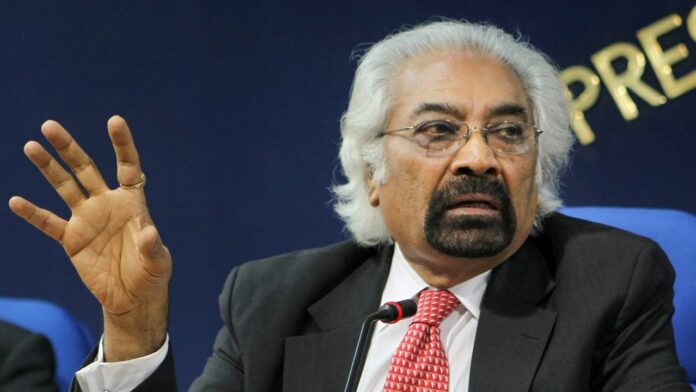
Indian Overseas Congress chief Sam Pitroda has courted another controversy as he admitted that a potential investment by Hungarian-American billionaire and global manipulator George Soros wouldn’t be a bad idea to consider and should be assessed on a case-by-case basis, arguing that the decision would ultimately rest with the government in power and the objectives behind the investment.
Speaking exclusively to IANS on Thursday, Pitroda said even a proposed investment worth $10 billion could be considered if it served a beneficial purpose, stressing that the merits of each proposal would depend on the relevant policies and circumstances.
“It’s up to the people who are in power. If George Soros is going to bring in a 10-billion-dollar investment to do something good, maybe it’s one thing to look at,” he said, adding that such decisions would depend on the policy involved and the government’s priorities.
"If George Soros is going to bring in a $10 billion investment to do something good, maybe it’s one thing to look at. It’s possible.." – Congress overseas chief Sam Pitroda. Congressis are openly admitting this. Imagine what they do behind closed doors! https://t.co/XqSQ7aVDlC
— Political Kida (@PoliticalKida) October 15, 2026
Pitroda maintained that evaluating an investment was the prerogative of those in power, rather than a decision that could be made in isolation from the country’s policy framework.
Pitroda says he has never met George Soros
Clarifying his personal association with Soros, Pitroda said he did not know the billionaire and had never interacted with him, despite having spent many years in the United States.
“I don’t know him. I’ve never met him. I’ve seen him once or twice at a public meeting where he was speaking in New York, but I didn’t say hello to him,” Pitroda told IANS, adding that he had no personal knowledge of Soros.
‘They don’t run a nation’: Pitroda on Musk and Soros
Pitroda also weighed in on the influence of prominent business figures, including Elon Musk and Soros, on politics and policymaking.
Acknowledging that influential individuals could shape policy debates, he argued that their role existed alongside those of elected politicians and the public.
“They have some influence. But they do their thing, and politicians do their thing, and people do their thing. Everybody has a job to do, and they all have a contribution to make,” he said.
Pitroda further observed that powerful individuals could push for policy changes that advance their own interests, but maintained that this did not mean they controlled the governments of the countries in which they operated.
“They try to change policy to benefit them, but they don’t run a nation,” he said.
Pitroda rejects claims that Rahul Gandhi backed Starlink’s spectrum demand
Pitroda also addressed the exchange between Leader of Opposition in the Lok Sabha Rahul Gandhi and Musk on social media platform X over Starlink’s proposed entry into the Indian market.
Rejecting suggestions that Gandhi’s response signalled support for allocating spectrum to Musk’s satellite internet venture, Pitroda said the interaction was being read too broadly.
“I don’t think Rahul Gandhi has supported it. Rahul Gandhi is not saying that you should be given spectrum. Don’t misunderstand,” he said.
According to Pitroda, Gandhi had merely responded to a note posted by Musk, and the exchange should not be interpreted as a policy commitment.
“It didn’t mean anything,” he said.
Pitroda also dismissed the suggestion that Gandhi would necessarily grant Starlink a licence if the Congress leader came to power, arguing that a social media interaction should not be treated as a promise of future government action.
“It doesn’t mean that if Rahul Gandhi came to power, he’ll give a licence to Elon Musk. That’s not what it means. But again, people read different things,” he added.
