

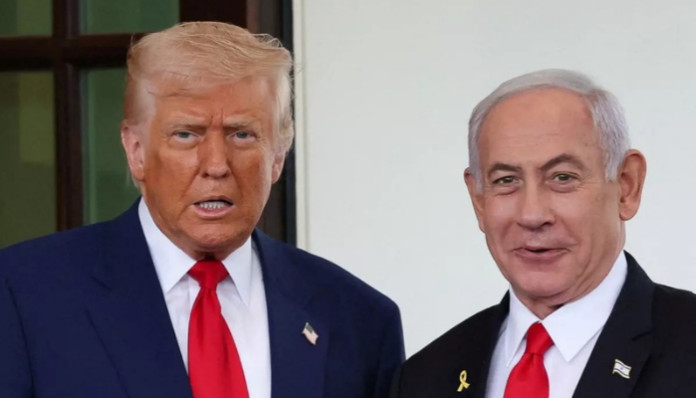
On Saturday, 31 October, President Donald Trump spoke by telephone with Israeli Prime Minister Benjamin Netanyahu, according to people familiar with the conversation, as Washington evaluates options for resuming major military operations against Iran following a White House meeting with senior military commanders earlier in the week.
The call, first reported by The Wall Street Journal, comes at a delicate moment: the United States is simultaneously pursuing indirect diplomatic contacts with Tehran while its military completes preparations for a potential new round of strikes, reportedly timed for after the 3 November midterm elections.
Military preparations advance on multiple fronts
Gen. Brad Cooper, commander of U.S. Central Command, presented Trump with military options for resuming attacks during a meeting that included Defence Secretary Pete Hegseth and Chairman of the Joint Chiefs of Staff Dan Caine, according to Israeli newspaper Yedioth Ahronoth. No final decision has been made.
Israel’s military has reportedly finalised both defensive and offensive preparations for a renewed confrontation. The Israeli Air Force has conducted repeated exercises involving dozens of fighter jets and refuelling aircraft flying through Syrian and Iraqi airspace toward Iran’s borders, rehearsing potential attack routes. In recent days, 10 U.S. military transport aircraft arrived at Israeli air bases as part of an airlift delivering military equipment to the region.
The USS Theodore Roosevelt carrier strike group is also heading toward the Middle East with roughly 9,000 Navy and Marine personnel aboard, expected to arrive by late November.
Netanyahu pushes for action; Trump holds back
Netanyahu has been pressing for a joint U.S.-Israeli military operation against Iran, but Trump has not made a final decision on how to proceed, according to Israel’s Channel 12. Israeli defence officials assess that Iran is unlikely to sign an agreement requiring it to completely abandon its nuclear program or halt ballistic missile production, and that Tehran may be deliberately prolonging negotiations ahead of the U.S. elections.
The domestic political calendar looms over both leaders. Trump faces midterm elections on 3 November, with rising fuel prices from Middle East tensions already weighing on Republican support. Netanyahu, meanwhile, is navigating the aftermath of Israel’s 27 October parliamentary election, where the formation of the next governing coalition may require weeks of negotiations.
Iran warns of “unrestricted” response
Iranian Supreme Leader Mojtaba Khamenei warned that any new military or terrorist attack by the U.S. or Israel would meet a response that is “geographically unrestricted,” adding that Iran’s armed forces would determine the timing and conditions for ending any confrontation.
The sources suggested Washington could use military threats as leverage to pressure Tehran into accepting a more favourable agreement, but any deal that fails to address Israeli concerns about Iran’s nuclear program and missile arsenal would leave unresolved the threats Israel says it faces.
