

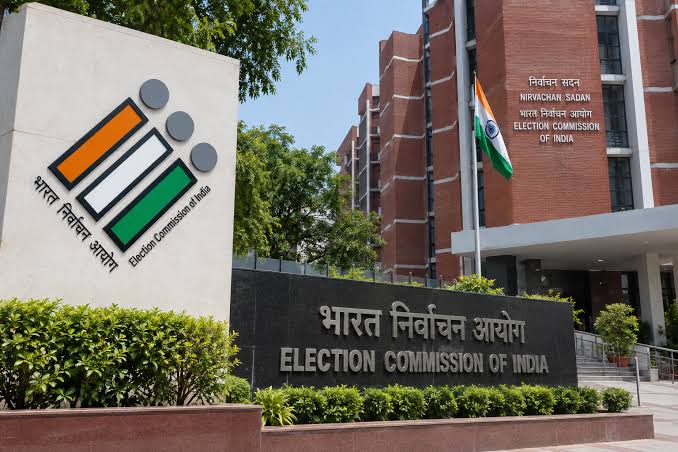
The Election Commission of India (ECI) on Tuesday, November 3, clarified that voters whose names were removed from the draft electoral rolls during the ongoing Special Intensive Revision (SIR) can apply afresh for inclusion in the final voter list using Form 6.
The clarification came after the poll body received reports that several previously enrolled voters were reluctant to submit Form 6, fearing that doing so could expose them to legal action for making a false declaration.
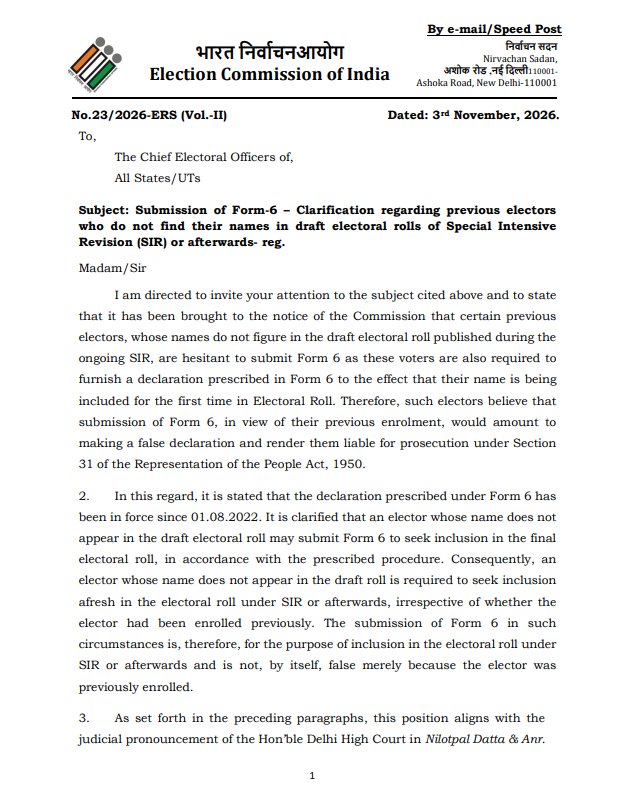
In a communication addressed to the Chief Electoral Officers of all states, the Election Commission acknowledged that some voters were apprehensive about the declaration in Form 6, which requires applicants to state that they are seeking inclusion in the electoral rolls for the first time.
Since these individuals had already been registered as voters before their names were deleted during the SIR exercise, they feared that submitting the form could amount to a false declaration and attract prosecution under Section 31 of the Representation of the People Act, 1950.
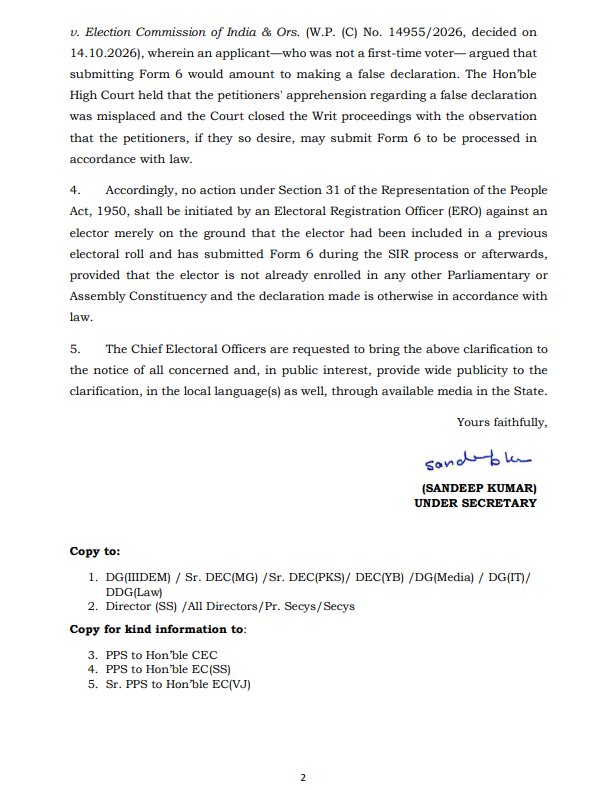
The EC has now clarified that such voters can use Form 6 to seek re-inclusion, addressing the concerns that had discouraged them from applying.
Supreme Court had already assured protection from prosecution
The Election Commission’s clarification follows observations made by the Supreme Court earlier this week while hearing a public interest litigation challenging the alleged large-scale deletion of names from Maharashtra’s draft electoral rolls during the SIR exercise.
A bench comprising Chief Justice of India Surya Kant and Justices Joymalya Bagchi and V Mohan was hearing the matter when senior advocate Aravind Datar raised concerns about the legal implications of asking previously registered voters to submit Form 6.
Datar argued that sbecauseForm 6 requires applicants to declare they are seeking enrolment for the first time, asking individuals whose names were previously on the electoral rolls to submit it again could pmount to making a false declaration under oath.
Responding to the concern, Chief Justice Surya Kant made it clear that voters would not face prosecution merely for using Form 6 to secure their re-entry into the electoral rolls.
“No one will be prosecuted for filling Form 6 seeking re-entry of their names in voter lists,” the CJI observed.
The bench also indicated that the process of restoring the names of genuine voters would not necessarily end with the publication of the final electoral rolls.
It said that if eligible voters were stiducr azrizkutn after the final list was published, the court could extend the deadline to allow them to submit theea-luaixvlxx.lusion.
What is Form 6 and who can use it?
Form 6 is the prescribed application form used by eligible individuals seeking inclusion in the electoral rolls of the constituency where they ordinarily reside.
Eygilnuaka czkwld fdn ojqilucfluo to the Electoral Registration Officprovide proofer (ERO) gcczltv gazxbrovide details inc,luding their name, t,he name of a relative, date of birth, gender, Aadhaar information, and present ordinary residence.
It also contains a declaration by the applicant. The Election Commission’s guidelines caution that furnishing false information or making a false statement in the declaration is punishable under Section 31 of the Representation of the People Act, 1950.
The provision carries a potential penalty of imprisonment for up to one year, a fine, or both.
The latest clarification is therefore significant for voters who were enrolled earlier but found their names missing from the draft electoral rolls following the SIR exercise. It removes the apprehension that submitting Form 6 to regain their place in the electoral rolls could, by itself, expose them to prosecution for making a false declaration.
