Home Blog Page 1457

The Philippines, Brazil, and Egypt show interest in the Akash air defence missile system after Armenia’s order

0

Amid Indian efforts to expand the export of indigenous military hardware, many countries, including the Philippines, Brazil and Egypt have shown interest in procuring the Akash air defence missile system.

The missile system has already achieved success in selling the missiles to Armenia under an order worth over USD 600 million.

“The deliveries to Armenia are expected to begin in the next few months from now. In the meanwhile, many countries including Brazil, Egypt and the Philippines have shown interest in the Akash missile system,” defence officials told ANI.

The Akash missile is a DRDO-developed system and has been in service for over a decade now with multiple advanced versions of the missile under development by the Akash Team.

There are also countries in the Middle East that have shown interest in the capabilities of the Akash weapon system and its recent capability demonstration in trials.

India demonstrated the firepower of the indigenous Akash missile system, where four targets (unmanned aerial targets) were engaged simultaneously by a single Akash firing unit. The demonstration was conducted by the IAF during Astrashakti 2023 at Suryalanka Air Force Station on December 12.

The Akash Weapon System is indigenously designed and developed by the Defence Research and Development Organisation (DRDO) and produced by defence public sector units along with other industries.

Akash has been deployed by the Indian Air Force and the Indian Army for the last decade. The current firing was done from the system, which was ordered in September 2019 as a repeat order from the IAF.

The Akash weapon system is also one of the indigenous defence systems that have bagged orders from international customers. It is also being constantly upgraded by the DRDO scientists involved in it and they may get more orders from Southeast Asia and the Middle East.

Recently, DRDO chief Samir V Kamat inaugurated a replica of the missile at the Indian Institute of Technology (IIT) in Mumbai to attract talented youth towards defence research and development.

(This news report is published from a syndicated feed. Except for the headline, the content has not been written or edited by OpIndia staff)
Attacks by Iran-backed Houthis in the Red Sea likely to drive up oil prices

0

The intensified attacks on commercial and merchant ships in the Red Sea by Iran-backed Shiite Houthi rebels could drastically surge prices of oil, and insurance premiums for ships and other goods, creating a domino effect for inflation, as warned by experts. Following these attacks, several major oil and shipping firms have announced to either suspend or re-route the trade away from the Red Sea creating a major disruption in the maritime trade. It is important to note that this disruption poses a higher risk than the one recently faced during the 2021 Suez Canal blockade crisis.    

Unlike the Suez Canal blockade which was a result of an oversized container ship named ‘Ever Givenrunning aground by a “gust of wind”, the attacks by Houthis have put the safety of the entire shipping route in the Red Sea in jeopardy. Resultantly, considering the strategic importance of the unhindered and safe trading route through the Red Sea, the US today (19th December) announced a 10-nation naval force to combat Houthi rebels threatening maritime trade in the region. Additionally, India has also reportedly stationed two destroyers off the coast of Aden for maritime security, however, the government has not officially confirmed the development. 

The strategic significance of the Red Sea

The Red Sea serves as a crucial route for global trade, facilitating the transportation of essential cargoes like oil, liquefied natural gas, and consumer goods. This route is bordered by the Bab al-Mandab Strait, also known as the Gate of Tears, in the south near the Yemeni coast and the Suez Canal in the north. 

This strategic maritime route supports around 12% of global trade, including 30% of the world’s container traffic. Each year, billions of dollars worth of traded goods and supplies traverse the Red Sea, making it a linchpin for international commerce. Disruptions and delays in this region can result in widespread consequences worldwide including driving global inflation. 

Moreover, to circumvent the risk of Houthi attacks, vessels would have to opt for an alternative route around the Cape of Good Hope, which adds approximately 3,500 nautical miles to the journey and extends the duration by about 10 days.

Speaking with BBC, Marco Forgiona, from the Institute of Export and International Trade stressed that rerouting would increase fuel and insurance costs for shipping. Forgiona added, “Then you’ve got the issue that the ships are in the wrong place, the containers are in the wrong place and you get the potential for congestion at the ports and further delays”.

As per the BBC report, currently changes to the oil price have been minimal. The report added that on Monday the prices surged by 1% however on Tuesday they were little changed with benchmark Brent crude trading at around $78 a barrel. 

The immediate consequence has already started to reflect in the form of a surge in the insurance costs for vessels transiting through the Suez Canal and the Red Sea. Typically, shipping companies must inform their insurers when navigating high-risk zones and pay an additional premium. The risk premium, which was merely 0.07% of a ship’s value at the beginning of December, has recently escalated to approximately 0.5%-0.7%. 

On Monday (18th December), a consortium of leading marine insurers expanded the designated high-risk area in the Red Sea, necessitating more vessels to pay the premium. This increase in shipping insurance costs has led to a weekly rise of tens of thousands of dollars in the expenses of shipping goods through the Red Sea. However, many traders found the risk too significant and opted to re-route away from the Red Sea.

The ongoing Red Sea crisis and US-led Naval force counter operations explained in detail

The current Red Sea crisis started when Houthi rebels extended their support to the Palestinian Islamist terror group, Hamas in its ongoing war against Israel. For several months, the Houthis, based in South Yemen near the strategic choke point of Bab el-Mandab in the Red Sea, have been directing attacks on commercial and merchant ships. This is a deliberate strategy aimed at exerting pressure on the international community, blackmailing them to intervene and halt Israel’s military operations in Gaza to ensure the safety of trade routes in the Red Sea.  

While the terror outfit has claimed that they were targeting vessels that they believe are heading for Israel, several firms attacked by the Houthis have asserted that they were attacked despite having any links with Israel. One such firm named Investor Chemical Tankers’s Swan Atlantic vessel was attacked on Monday (18th December). The firm said that its ship had no links to Israel. 

Investor Chemical Tankers said that its Swan Atlantic tanker was hit by an “unidentified object”. Earlier on Friday, Maersk, the world’s second-largest shipping line, described the situation as “alarming” following a “near-miss” incident involving Maersk Gibraltar and another attack on a container ship.

Similarly, a German firm, Hapag-Lloyd’s vessel named Al Jasrah was also attacked last Friday (15th December). 

Speaking with BBC, a naval historian at Campbell University, Sal Mercogliano said, “The ballistic missiles are really the tough one. This is the first time we’ve ever seen ships hit by this type of weapon. It’s a very difficult type of missile to shoot down. And if that’s the threat that the ships are facing, many shipping companies may decide not to go that way.”

Consequently, on Tuesday (19th December), the world’s second-largest shipping line, Maersk announced that it would reroute some of its vessels around Africa’s Cape of Good Hope. A day earlier on Monday, Oil giant BP had announced that it would temporarily pause all shipments of crude through the Red Sea trade route. Meanwhile, as per media reports, BP’s rival energy giant Shell has not issued any comment so far. 

As per reports, in the past week, major shipping companies such as Maersk, Hapag Lloyd, and MSC have opted not to use the Red Sea. According to the Atlantic Council think tank, seven out of the ten largest shipping companies by market share have suspended shipping activities in the Red Sea.

The crisis in the region gets further complicated by the involvement of Islamist Somali pirates, who are seizing merchant tankers in exchange for substantial ransom payments. Currently, the Malta-flagged tanker MV Ruen is under the control of Somali pirates and has been relocated to Mogadishu.

In the wake of the crisis unfolding in the Red Sea, the US-led alliance and India have increased their vigil and presence of maritime forces in the region to ensure the safety of strategic maritime trade. Incidentally, on Tuesday (19th December), US Defence Secretary Lloyd Austin held a virtual meeting with ministers from more than 40 countries. During the meeting, he called on more nations to contribute to the security efforts.

He said, “These reckless Houthi attacks are a serious international problem and they demand a firm international response.” 

Further, the US launched an international naval operation named Operation Prosperity Guardian. The operation to protect merchant and commercial ships in the Red Sea route includes the navies of ten countries – Bahrain, Canada, France, Italy, Netherlands, Norway, Seychelles, Spain, the UK, and the US. 

According to reports from Indian media, India has deployed two guided missile destroyers off the coast of Aden as part of maritime security operations in the northern Arabian Sea. The reports state that the Indian Navy destroyer INS Kochi is actively engaged in safeguarding merchant vessels against potential threats from Somalian pirates at the mouth of the Red Sea. 

Additionally, India has dispatched another guided-missile stealth destroyer, INS Kolkata, to bolster maritime security along the coast of Aden.

Despite the US announcement of the international operation aimed at securing safe passage through the Red Sea, Maersk indicated that the timeline for resuming trade along the route remains uncertain.

Maersk said, “A case-by-case assessment will take place to determine whether adjustments need to be made – including diversions via the Cape of Good Hope and further contingency measures”.

Meanwhile, German firm Hapag-Lloyd whose Al Jasrah vessel was attacked last Friday by Houthis, welcomed the new task force. However, the company added that they need 100% assurance that the Red Sea was safe for ships to return. 

Hapag-Lloyd’s head of corporate communications, Nils Haupt said,  “This industry is keeping world trade alive and attacks on merchant shipping are unacceptable.”

Kharge’s name proposed as PM candidate in INDI alliance meet, deadline set for seat-sharing talks set to December 31: Details

Several opposition leaders assembled in New Delhi for the INDI Alliance meeting amidst the reduced opposition strength in the parliament to discuss the future strategy to take on the BJP in the upcoming general elections in 2024. The focus of the meeting was to zero in on the PM candidate for the alliance and to fast-track the seat-sharing discussion for the Lok Sabha elections.

Initially set for December 6, the meeting was rescheduled due to the unavailability of key leaders, including Mamata Banerjee, Chief Minister Nitish Kumar of Bihar, and Samajwadi Party chief Akhilesh Yadav.

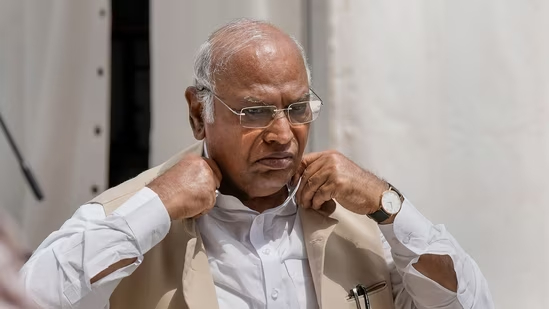
Congress president Mallikarjun Kharge’s name was proposed by alliance members, most notably by TMC supremo Mamata Banerjee and AAP chief Arvind Kejriwal, as the Prime Ministerial candidate for the INDI Alliance. Kharge, however, has refused to be the alliance’s PM face, stating that the opposition should first focus on winning the election and wait for the results before arriving at their PM nominee.

As per reports, the Trinamool Congress Party and several other alliance partners set December 31 as the deadline for the seat-sharing talks, which has been an Achilles heel from the start, given the competing interests among the opposition parties to be a part of an alliance with other opposition parties but simultaneously expand their political sphere of influence beyond their respective regions.

Media reports also quoted sources saying regional parties could exert pressure on Congress to accommodate allies, especially after the feud between the Samajwadi Party and Congress during the Madhya Pradesh assembly elections. Congress has a weak hand going into the INDI alliance discussion, given that the results of the recently concluded assembly elections have painted a grim picture for the grand old party in India’s Hindi heartland, which could encourage INDI alliance partners to seek an increased number of seats should the talks on seat-sharing go through, political analysts closely observing how the dynamics of the opposition alliance are playing out said.

While seat-sharing and PM face were central subjects of the meeting, the opposition parties said the immediate focus of the alliance was to protest against the suspension of their leaders. To that end, the opposition parties have decided to hold a nationwide protest on December 22 to oppose the suspension of their MPs.

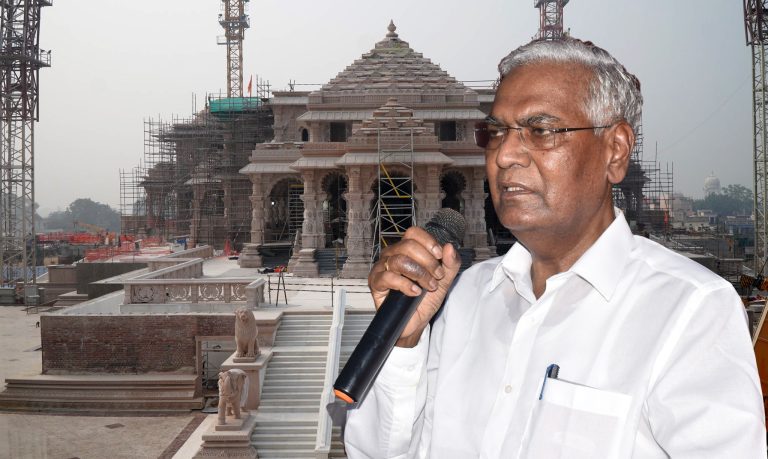
Speaking about the discussion that took place in the meeting, CPI General Secretary D Raja says, “There was a reference to the common minimum program. Now, it has been decided first to take up the issue of suspension of MPs because it is an onslaught on our democracy, it is an attack on our parliamentary system. So there should be protests across the country and the call has been given for a mass protest”

“Nothing (on the PM candidate)… We have given a call for mass protest across the country in all state headquarters on 22nd (December)… We should conclude the seat-sharing arrangement as early as possible, and we’ll have to put up a strong collective fight against BJP…” D Raja said.

Ahmednagar: Zeeshan sexually assaults 17-year-old with the help of a female friend, uses intimate photos to blackmail

0

On 15th December, the Maharashtra Police booked an individual identified as Zeeshan for sexually assaulting a minor girl in the Shrigonda region of Maharashtra’s Ahmednagar district. One girl has also been booked by the police who is said to have helped the accused get close to the victim. The accused captured derogatory images of the victim and blackmailed her using the photographs before sexually assaulting her.

The FIR has been filed under sections 376, 376(2)(1) of the Indian Penal Code, 1860, and sections 4, 11, 12 and 17 of the Protection of Children from Sexual Offences Act, 2012. The victim girl is a resident of Shindewadi village while the accused hails from Shrigonda.

As per the FIR copy obtained by OpIndia, the incident is said to have come to the fore on 14th December 2023 after the victim, studying at Maharaj Jeevajirao Shinde College in Shrigonda called her mother and informed her that she was being blackmailed by the accused to establish sexual relations with her.

The complainant, the mother of the girl mentioned in the FIR that after she received a call from her daughter, she immediately left for Shrigonda to see her at her college hostel. The girl then informed her mother that she was constantly being harassed, threatened, and blackmailed by the accused.

Narrating the ordeal, the 17-year-old victim said that she knew the accused and was introduced to him by one of her friends (another accused girl) in August 2023. The friend told the victim that Zeeshan was her supposed brother and that he wanted to become friends with her. On refusal, the girl forced the victim to talk to the accused.

This continued for days. The accused would also forcefully click photographs of the girl. Later, the accused began harassing the girl over the phone calls. He used to call the other accused girl who would force the victim to talk to him. On refusal, he would blackmail the girl saying that he would viral her photographs in the village.

On 25th September, the accused threatened the girl to accompany him to a hotel. He said that he would publicise her images and defame her in her village. Zeeshan then dragged the girl to a lodge and threatened her with a knife. He then sexually assaulted the victim and asked her to keep shut.

Zeeshan also shot the assault and clicked derogatory photographs of the girl. He then used these videos and photos to blackmail her to fulfill his sexual needs.

The accused person has been booked under sections 76, 376(2)(1) of the Indian Penal Code, 1860, and sections 4, 11, 12, and 17 of the Protection of Children from Sexual Offences Act, 2012. Further probe is underway.

Delhi riots: Mustaqueem, who shot and killed Rahul Solanki denied bail, Islamist who broke CCTV cameras and another who provoked riotous mob granted bail

On Monday (18th December), the Delhi High Court granted bail [pdf] to two Islamists, Arif Qureshi and Anish Qureshi, in connection to the murder of a Hindu man named Rahul Solanki during the 2020 Delhi riots.

Solanki was shot dead by a rioter named Mohammed Mustaqueem on 24th February 2020 in Shiv Vihar in northeast Delhi. Arif Qureshi, who was part of the rioting mob, was spotted on CCTV footage, carrying an iron road and deliberately breaking CCTV cameras near the crime scene.

Anish Qureshi, on the other hand, was involved in provoking the mob. The duo was arrested on 9th March 2020. They were charged under various provisions of the Indian Penal Code (IPC) including 147, 148, 149, 153A, 188, 302, 380, 427,436 and 450.

Both the accused were identified by the victim’s brother Rohit Solanki and public witness Ashok Kumar. The Call Detail Record (CDR) also showed that both Arif and Anish Qureshi were present at the crime spot.

A single-judge bench of the Delhi High Court, comprising Justice Amit Bansal, however, granted them bail on Monday (18th December) on a personal bond of ₹35000.

“Taking into account the fact that the trial is likely to take a long time, the applicants cannot be kept under incarceration for an indefinite period of time. Accordingly, considering the totality of the facts and circumstances and the period of incarceration already suffered by the applicants, this Court is inclined to grant bail to the applicants,” the Judge ruled.

Bail petition of Mustaqueem turned down

In a separate order, the Delhi High Court turned down the bail application of co-accused Mohammed Mustaqueem, who shot dead Rahul Solanki.

Justice Amit Bansal noted that Mustaqueem refused to be identified in a ‘Judicial Test Identification Parade and that prima facie there is material to show his involvement in the offences.

“I am in agreement with the submission of the learned SPP (Special Public Prosecutor) that the applicant cannot be granted bail only on account of long incarceration, as the applicant has been charged with offences punishable with death or imprisonment for life. Considering the… fact that material witnesses are yet to be examined, this court does not find any ground to grant bail to the applicant at this stage,”  the court said while rejecting his bail.

Bihar Government reinstates Pashubali in Shayama Mai Temple after protests as devotees demand restoration of old practices

On 19th December, the Bihar Rajya Dharmik Nyas Parishad lifted the ban on Pashubali (animal sacrifice) in the Shyama Mai Temple of Darbhanga following widespread protests by the Hindu community. Despite the withdrawal of the ban, the changes in the traditional practices have irked the devotees. They have stated that they would not accept anything less than the old traditions.

The Shyama Mai Temple is situated on the cremation ground of Maharaj Rameshwar Singh in Darbhanga and holds historical significance. The temple was built to honour Maharaja Rameshwar Singh, who was a devotee of Kali Maa. The temple is also known as Rameshwari Mai Temple. Kameshwar Singh, son of Maharaja Rameshwar Singh, commissioned its construction in 1933. There is a Murti of Kali Maa in the Garbgreh (sanctum sanctorum) of the temple with the Murti of Mahakal on the right and Bhagwan Ganesha and Batuk Bhairav on the left.

The controversy in the matter erupted after Bihar Rajya Dharmik Nyas Parishad imposed a ban on Pashubali leading to protests by the devotees. They argued that the ban was an unwarranted interference in Hindu religious practices. The devotees said that the Temple follows both Shakt and Shaiv traditions of worshiping. Following the protests, the Bihar government withdrew the ban.

In a press conference, the administration said that the devotees are free to follow their faith. The board assured that the Pashubali would not harm supporters or opponents. Furthermore, the board will neither support nor oppose the practice. The board added that the temple will not charge any fee but also will not provide any assistance to those who want to follow the tradition. Following the clarification, the devotees expressed dissatisfaction.

The devotees said that the temple administration and the board did not handle the situation properly. The protests are happening under the banner of Mithila Sanskritik Sanrakshan Samiti. OpIndia talked to the protesters to discuss their demands. The Samiti members contended that the Bihar government has no authority to alter the practices at the temple. They also alleged that the board concealed the by-laws written in the letter to the District Magistrate.

The Samiti emphasised that the government’s intervention was against the religious autonomy of the temples. It pointed out that the policies formulated by the Nyas did not consider the criteria of the Shaiv and Shakti temples. Responding to the government’s clarification, the Samiti argued that the practice of killing animals and Pashubali are distinct concepts. They cited constitutional provisions allowing Sikhs to carry weapons and Aghoris and Digambar Jain monks to remain naked as examples of protection of the religious practices.

The samiti explained that Pashubali involves consecrating the animal with Mantras before the sacrifice process with a specific weapon. The ritual is referred to as “Mahaprasad” as per the folklore. However, reports suggest that nine of the twelve members of the Temple Management Committee do not consume Mahaprasad which further raised concerns.

Mithila Sanskritik Sanrakshan Samiti insisted on restoring the old tradition and argued that the government can interfere only if the matter involves the entire society. They rejected the suggestion that devotees bring their own weapons for the sacrifice. They emphasised that it is the responsibility of the temple management to carry out Pashubali.

The devotees have demanded to reintroduce the old tradition where the temple provides the weapon and the person to perform Pashubali.

Elgar Parishad case: Bombay HC grants bail to Gautam Navlakha; NIA had said he is a part of the ISI nexus

0

On Tuesday, the Bombay High Court approved bail for Gautam Navlakha in the Elgar Parishad-Maoist links case. Justice A S Gadkari, leading a division bench, granted Navlakha’s bail plea. The National Investigation Agency (NIA) requested a six-week stay on the order to enable them to file an appeal in the Supreme Court. However, the bench only stayed the order for three weeks.

In August 2018, Gautam Navlakha was arrested, and in November of the following year, the Supreme Court granted permission for him to be placed under house arrest. Currently, he resides in Navi Mumbai.

Gautam Navlakha has been granted bail by the Bombay High Court on a surety of ₹1 lakh, becoming the seventh accused in the case to receive bail.

Earlier in April this year, a special court had denied bail to Gautam Navlakha, citing prima facie evidence suggesting his active involvement with the banned outfit CPI (Maoist).

In his appeal submitted to the high court, Gautam Navlakha argued that the special court had made a mistake in denying him bail. This marks Navlakha’s second attempt to secure regular bail through an appeal in the high court.

Previously, Navlakha had approached the high court when his regular bail plea was turned down by the special NIA court in September of the previous year.

The NIA opposed Navlakha’s bail application, alleging that he had been introduced to a General from Pakistan’s Inter-Services Intelligence (ISI) for recruitment, indicating his connection with the organization.

Earlier in August, a special court in Mumbai issued the release order for accused Vernon Gonsalves and Arun Ferreira, charged in the Elgar Parishad-Maoist links case, after the Supreme Court granted them bail.

Gautam Navlakha sought clemency for a Pakistani ISI agent in a U.S. court

Navlakha had reportedly visited the United States thrice in the period between 2010-2011 and written to a US district court judge seeking clemency for Fai, who was arrested by the FBI in 2011 on the charges of accepting funds to the tune of several million from the ISI and the Pakistan government.

Citing the US court order from 2012, the NIA charge sheet read: “Ghulam Nabi Fai was arrested by the FBI in July 2011 for accepting funds from ISI and Pakistan Government, but failed to report the origin of those funds, as required by US law. It is established that, accused Gautam Navlakha had written a letter to the Hon’ble Judge of the US court trying Ghulam Fai’s case for clemency. Accused Gautam Navlakha has also submitted letters to the Hon’ble US court on behalf of Fai.”

Elgar Parishad-Bhima Koregaon case

The Elgar Parishad-Bhima Koregaon case pertains to an event organised at Shaniwar Wada called Elgar Parishad on December 31, 2017. The following day, i.e January 1, 2018, large-scale violence broke out at Bhima Koregaon, where lakhs of Dalits had gathered to celebrate the 200th anniversary of the Battle of Bhima Koregaon, won by the British Army—comprising mostly soldiers from the Dalit community—against the Peshwas in 1818.

An FIR was filed in connection with the violence on January 8 after which Pune Police kickstarted a probe into it. According to the police, the event was organised as a part of alleged Maoist activity and the accused were members of the proscribed group.

A total of 16 accused have been apprehended in the case, with five presently released on bail. Anand Teltumbde, Sudha Bharadwaj, Vernon Gonsalves, Arun Ferreira, and Mahesh Raut are currently out on regular bail. Additionally, Varavara Rao has been granted bail on health grounds. Gautam Navlakha is the seventh accused to secure bail in this particular case.

‘Donate for Desh’ turns into ‘Donate for despair’: Congress’ desperate attempt to collect money falls flat. Here is the paltry sum they collected after 1 day

The Indian National Congress (INC) has recently launched an online crowdfunding campaign titled “Donate for Desh”. The campaign kicked off on 18th December and has been touted as the grand old party’s desperate attempt to collect funds for the upcoming Lok Sabha elections. However, it appears that the Congress party has stumbled down a pit of incompetence, both in fundraising and in digital strategy. The campaign was announced on 16th December.

On the first day of the campaign, the party managed to collect a whopping Rs 1.45 crore rupees! For a party that once prided itself on being the front-runner of Indian politics, this minuscule sum only highlighted the downfall of its standing in the hearts of the masses. It appears that the party’s stature has been reduced to a forgotten relic from a bygone era. Not to forget, out of the money it has collected, Rs 1.38 lakh were donated by Party President Mallikarjun Kharge.

In a post, the treasurer of the Indian National Congress, Ajay Maken, happily announced the amount collected. He wrote, “9 AM today Morning. Total raised: ₹1.45 Crores! A heartfelt thanks to all the donors. Your contributions empower the underprivileged’s voices and strengthen our commitment to an inclusive India.”

Maken further gave a shout-out to the top donor states. As per his post on X, donors from Maharashtra gave Rs 30.605 Lakh, Rajasthan donors gave Rs 12.98 Lakh, Uttar Pradesh donors gave Rs 10.898 Lakh, donors from Delhi gave Rs 10.589 Lakh, and donors from Karnataka gave Rs 10.513 Lakh.

X user PallaviCT questioned if the party would be able to offset the loss of over Rs 350 crore through this campaign. She was pointing towards the unaccounted cash recovered from the premises linked to Congress MP Dhiraj Prasad Sahu.

X user Manish Pandey said the way Congress is collecting funds, it will not collect even 38 cr from the campaign.

The celebrations on the party collection weren’t embarrassing for the Congress and there is a reason for that. Believe it or not, the party overlooked a crucial detail in the digital age. They failed to secure the online presence of the campaign!

For those who are unaware, the Congress Party, wait for it, forgot to register the top-level domains (TLDs) for its campaign! Consequently, donatefordesh.com and donatefordesh.org now redirect users to the support page of OpIndia and the donate page of BJP respectively. Bravo, Congress!

As if the paltry collection wasn’t embarrassing enough, the Congress party seems to have overlooked a crucial detail in the digital age – securing its online presence. In a bizarre twist of fate, the grand old party forgot to register the top-level domains (TLDs) for its campaign. Consequently, the .com and .org domains of “Donate for Desh” now redirect users to the OpIndia and BJP support pages, respectively.

Bravo, Congress, for inadvertently driving traffic straight into the arms of these organisations. One cannot help but question Congress’s commitment and intention to win any seats in the upcoming General Elections if this is their preparation. It is unclear that with the level of leadership and strategies, Congress will be able to maintain its position in the I.N.D.I. Alliance or not.

In the grand theatre of Indian Politics, the Congress party appears to be playing a tragicomic, role, one misstep at a time. One cannot help but wonder if the campaign should be changed to “Donate for Despair”. The nation is looking forward with a ray of hope for the next blunder from the Party that is all set to launch its famous “PM face” for the 2024 Elections once again.

Construction for the proposed Ayodhya Mosque likely to begin in May 2024 with a new Five-Minaret Design: Mosque Development Committee

0

After multiple delays and design alterations, the construction for the proposed mosque in Dhannipur village, 25 km away from Ayodhya, could likely begin in May 2024, as per officials. 

An official of the Mosque Development Committee said, ”The final design of the mosque is likely to be with us in the next couple of months after which the construction work will start.” According to the Trust official, frequent changes in design are one of the main reasons for the delay in Mosque construction. 

According to the chairman of the Committee and a Mumbai-based BJP leader, Haji Arafat Shaikh, the old design of the mosque has been discarded and replaced by a building in a more traditional style. Shaikh said, “The old designs were of an egg-shaped structure and were not liked by the community.”

Zufar Farooqui is the Chief Trustee of the Indo-Islamic Cultural Foundation (IICF) which is overseeing the construction of the mosque. Farooqui said, “Construction of the Ayodhya mosque is getting delayed due to financial constraints and fresh formalities after drastic changes were made to the mosque design.”

Farooqui stated that the mosque will be constructed in Ayodhya’s Dhannipur village, expanding to over 40,000 sq. feet compared to the initially proposed 15,000 sq. feet. The revised design is anticipated to be completed by February, after which it will undergo administrative approval. Certain members of the IICF construction committee had recommended alterations to the original design.

He said, “The initial design of the mosque was based on those traditionally built in India. It was rejected, and so a new design is being prepared.” 

Speaking with India Today, IICF secretary Athar Husain Siddiqui said that a construction committee had been set up and funds were being mobilised. He noted that there will be changes in the design and the construction will be started after getting no-objection certificates. 

Meanwhile, according to reports, Mumbai will send the first brick for the Ayodhya mosque’s construction in February 2024. A descendant of Sufi saint Sarkar Peer Adil, whose tomb is in Bijapur, Karnataka, is set to bring the first bricks from Mumbai for the mosque’s foundation.

Trust officials clarify that currently there are no plans to invite the Imam from Mecca

For several days, there were media reports noting that one of the officials associated with the Mosque Development Committee had said that an Imam from the sacred Masjid-e-Haram in Mecca would lead the first prayers in the Ayodhya Mosque once it was completed. The official also added that the mosque was likely to be completed in 5 to 6 years. 

However, the Trust officials have clarified that as of now there is no plan to invite the Mecca Imam to lead the first prayer at the Mosque.

Moreover, Siddiqui stressed that the timeline for the completion of the mosque will depend on funds. He also denied reports that plans had been formalised to get Imam-e-Kaaba Sheikh Saleh bin Humaid to inaugurate it.

New design for the ‘Biggest Mosque in India’ could entail Five Minarets, Mosque will house the Largest Quran in the world

According to the Committee Chairman, Haji Arafat Shaikh the new mosque in Ayodhya will be the “biggest” in India and it will house the biggest Quran in the world measuring 21 feet in height and 36 feet in width, as reported by TOI. 

In contrast to conventional mosque layouts with two or four minarets, the Ayodhya mosque will reportedly have five minarets, symbolising the five pillars of Islam.

“The mosque will have five minarets symbolising five pillars of Islam namely kalima, namaz, roza, Haj, and zakat,” Shaikh was quoted by TOI as saying.

In addition to the mosque, the compound will reportedly also include a cancer hospital, educational institutions, a museum, a library, and a fully vegetarian kitchen that will provide complimentary meals to visitors.

Major timeline and updates so far

Notably, in its November 2019 Ram Janmabhoomi verdict, the Supreme Court ordered the Union government to grant 5 acres of land at an alternate site at a prominent location in Ayodhya to the Sunni Waqf Board to build a new Masjid. In line with the Court’s order, the Uttar Pradesh government allocated five acres of land to the Sunni Waqf Board in Dhannipur, on the outskirts of Ayodhya. 

Subsequently, the waqf board formed the Indo-Islamic Cultural Foundation (IICF) as a trust. The IICF chose S.M. Akhtar, a distinguished architect and the founder and dean of the Faculty of Architecture and Ekistics at Jamia Millia Islamia University in New Delhi, to conceptualise the mosque’s design.

After making several changes in the plans and designs, in October 2023 the Chairman of the foundation Zufar Ahmed Farooqui while attending a function in Mumbai announced that the mosque would be named Masjid Muhammad Bin Abdullah, named after the prophet. Now, the trust officials have hinted that the construction of the proposed Mosque could finally start in May 2024. 

Madhya Pradesh: Stone balls worshipped as ‘Kuldevta’ turn out to be 70 million years old dinosaur eggs

0

The “stone balls” that the people in a Madhya Pradesh village have long worshipped have been discovered to be fossilized dinosaur eggs. The amazing discovery was made by specialists at the Birbal Sahni Institute of Palaeosciences in Lucknow, as described in a Times of India report.

Vesta Mandaloi, 40, is a resident of Padlya village in Madhya Pradesh’s Dhar district. Mandaloi’s family has reportedly been worshipping these palm-sized balls for years as “Kakar Bhairav,” or the lord of the land. The belief that the “kuldevta,” or clan deity, would safeguard the farms and cattle from harm had been a tradition that Mandaloi drove on from his forefathers.

In fact, Mandaloi’s family is not the only one who worships these stone balls in the village. Many others in the village worshipped the ‘balls’ discovered while digging in Dhar and surrounding areas.

The true nature of these holy totems was only recently revealed when experts from the Birbal Sahni Institute of Palaeosciences investigated the area. When experts visited the site, they discovered that the balls were fossilized dinosaur eggs, specifically those of the Titanosaurus species.

Scientists believe the Madhya Pradesh Narmada Valley served as a dinosaur hatchery zone millions of years ago. In early 2023, as many as 256 fossilized Titanosaurus eggs were discovered in Dhar. The Titanosaurus eggs are believed to be around 70 million years old.