

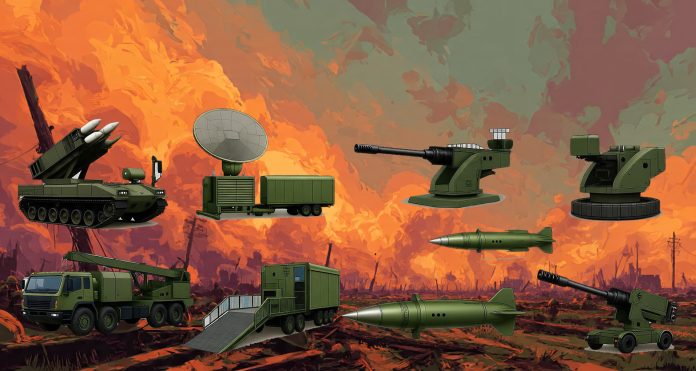
The Defence Acquisition Council (DAC), chaired by Defence Minister Rajnath Singh, approved proposals worth approximately ₹79,000 crore to enhance the operational capabilities of the Indian Armed Forces on Thursday. The approvals, finalized during a meeting at South Block, New Delhi, cover advanced weaponry and systems for the Indian Army, Navy, and Air Force, reinforcing India’s defence preparedness across diverse operational domains.
Here are the procurements approved by the DAC for the three armed forces:
Indian Army: Enhanced Firepower and Mobility
The DAC granted Acceptance of Necessity (AoN) for several systems to bolster the Indian Army’s capabilities:
- Nag Missile System (Tracked) Mk-II (NAMIS): An advanced anti-tank guided missile system, NAMIS is designed to neutralize enemy combat vehicles, bunkers, and field fortifications. Mounted on a tracked vehicle, it offers enhanced mobility and precision, making it a critical asset in both offensive and defensive operations.
- Ground Based Mobile ELINT System (GBMES): This electronic intelligence system provides continuous monitoring and analysis of enemy radar and communication signals. GBMES strengthens situational awareness by detecting and tracking enemy emitters, enabling strategic decision-making on the battlefield.
- High Mobility Vehicles (HMVs) with Material Handling Crane: These vehicles are equipped to improve logistical support in challenging terrains, ensuring efficient transport and handling of supplies and equipment for troops deployed in diverse geographical regions.
Indian Navy: Strengthening Maritime Operations
The Indian Navy received approvals for systems to enhance its operational versatility and combat effectiveness:
- Landing Platform Docks (LPDs): These amphibious warfare ships enable the Navy to conduct joint operations with the Army and Air Force, facilitating troop deployment and equipment transport for amphibious assaults. LPDs also support peacekeeping missions, humanitarian assistance, and disaster relief operations, enhancing India’s maritime reach.
- 30mm Naval Surface Gun (NSG): Designed for low-intensity maritime operations and anti-piracy roles, the NSG equips Navy and Coast Guard vessels with rapid-fire capabilities to engage small, fast-moving threats effectively.
- Advanced Light Weight Torpedoes (ALWT): Developed indigenously by the Naval Science & Technological Laboratory (NSTL) of DRDO, ALWTs are capable of targeting conventional, nuclear, and midget submarines. Their lightweight design enhances deployment flexibility across naval platforms.
- Electro Optical Infra-Red Search and Track System: This system improves the Navy’s ability to detect and track targets in various weather conditions, enhancing situational awareness and targeting accuracy.
- Smart Ammunition for 76mm Super Rapid Gun Mount: This advanced ammunition enhances the precision and effectiveness of the Navy’s 76mm gun systems, crucial for engaging surface and aerial threats.
Indian Air Force: Precision and Autonomy
For the Indian Air Force, the DAC approved the Collaborative Long Range Target Saturation/Destruction System (CLRTS/DS), a cutting-edge system capable of autonomous take-off, landing, navigation, and payload delivery. CLRTS/DS enhances the IAF’s ability to strike distant targets with precision, bolstering its strategic and tactical strike capabilities.
The approvals underscore India’s focus on modernizing its armed forces and promoting indigenous defence technologies, such as the ALWT developed by DRDO. The new systems will enhance the military’s operational readiness across land, sea, and air, ensuring a robust response to evolving security challenges. The inclusion of amphibious and autonomous systems also highlights India’s commitment to multi-domain operations and disaster response capabilities.
