

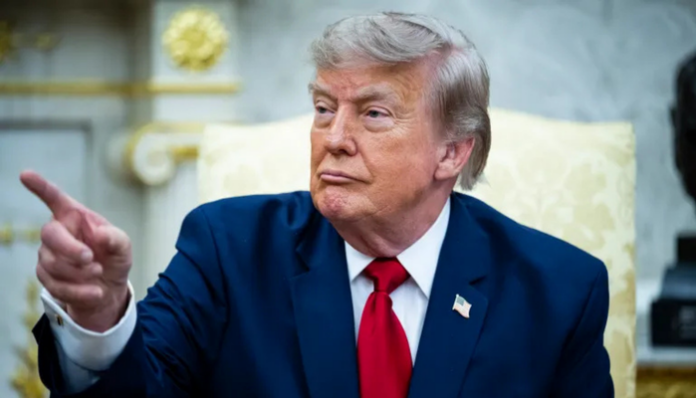
US President Donald Trump is at it again, as he imposed fresh tariffs on dozens of US trade partners, including India, on Thursday (23rd July) in the name of curbing imports of goods produced with forced labour. The decision comes as temporary tariffs imposed by the US earlier expire on Friday. The new tariffs, ranging between 10% and 12.5%, will replace the previous temporary tariffs.
The fresh levies have been imposed on countries comprising 99.4% of US trade partners, as a result of what the Trump administration describes as the US President’s long-standing opposition to involuntary labour. According to Washington, the countries on whom the fresh tariffs have been levied failed “to impose and effectively enforce a prohibition on the importation of goods produced with forced labour.” The US has placed 10% tariffs on India, which is on par with Pakistan, Sri Lanka, Bangladesh, and several Latin American and Asian countries.
“President Trump recognises that decades of moral suasion have not eradicated forced labour from global supply chains. The United States has had a forced labour import ban for nearly a century, and rigorously enforces it; it’s well past time for our trading partners to do the same,” United States Trade Representative, Jamieson Greer, said announcing the tariffs.
American workers should not have to compete against goods made with forced labor because our trading partners refuse to close their doors to it. President Trump is righting this wrong by imposing tariffs to strengthen America’s competitiveness. pic.twitter.com/12r9NtaVcO
— United States Trade Representative (@USTradeRep) July 23, 2026
“Today’s action will begin to correct what is both a human rights abuse and a distortive trade practice to improve the welfare of workers everywhere. I am encouraged by the trading partners who have moved quickly to adopt forced labour import prohibitions, and look forward to ensuring their effective enforcement,” he added.
The stopgap levies that are set to be replaced by the new tariffs were imposed by Trump in February 2026, after the US Supreme Court struck down his much-criticised reciprocal tariffs. To keep the tariffs effective, the Trump administration turned to Section 122 of the Trade Act of 1974. The provision empowers the US President to impose temporary import surcharges (up to 15%) to deal with large and serious balance-of-payments deficits. However, there is a statutory limit of 6 months on tariffs imposed under the provision.
The new American tariffs have also been introduced under the Trade Act of 1974 but under a different provision, i.e. Section 301. Earlier, in March, the U.S. Trade Representative’s office launched an investigation into whether 16 countries, accounting for 70% of U.S. imports, have overproduced goods, pushing down prices and putting U.S. companies at a disadvantage in global markets. The administration has yet to complete that investigation.
Some US imports, such as the products governed by the US-Mexico-Canada Agreement and oil and gas, have been exempted from the new tariffs.
