

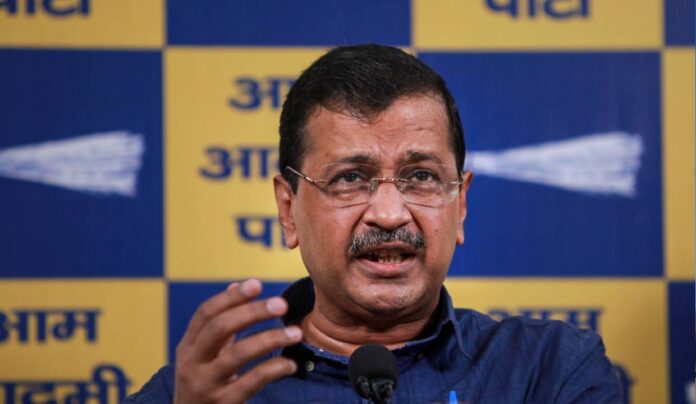
Aam Aadmi Party chief and former Delhi Chief Minister Arvind Kejriwal on Wednesday escalated his attack on the Centre over the NEET-UG 2026 paper leak controversy, invoking the violent Gen-Z protest movements seen in Nepal and Bangladesh in a bid to weaponise students’ anger over the NEET paper leak row
The remarks came days after the National Testing Agency (NTA) cancelled the May 3 NEET-UG 2026 examination following evidence of a paper leak uncovered during a whistle-blower-led probe. With more than 22 lakh medical aspirants now waiting for fresh examination dates, the controversy has triggered nationwide outrage and a CBI investigation.
Addressing the issue, Kejriwal alleged that paper leak incidents have become rampant since Prime Minister Narendra Modi assumed office in 2014. Claiming that 93 exam paper leaks have taken place during the BJP’s tenure, he said that nearly 6 crore youths had been affected by such scandals.
“The majority of paper leaks happened in BJP-ruled states like Rajasthan, Uttar Pradesh, Uttarakhand and Gujarat,” Kejriwal claimed, while further alleging that Rajasthan appeared to be the “epicentre” of the latest NEET paper leak operation. He insinuated that political protection may have enabled these rackets to flourish and questioned whether investigative agencies would be able to act impartially if influential leaders were involved.
However, it was Kejriwal’s direct appeal to India’s Gen-Z population, drawing parallels with anti-government youth uprisings in Nepal and Bangladesh, that drew the sharpest attention.
Kejriwal references Nepal, Bangladesh protests
Invoking last year’s violent Gen-Z unrest in Nepal and similar youth-led mobilisation in Bangladesh, Kejriwal asked why Indian youth could not similarly “hold accountable” those linked to examination corruption.
“I want to ask the Gen-Z: Should this continue? If the Gen-Z of Nepal and Bangladesh can come out on the roads and change their governments, then can’t our Gen-Z send ministers involved in the paper leak incidents to jail?” he said.
SHOCKER 🚨 Kejriwal now says "I have a direct question for Gen Z after Paper Leak. If the Gen Z of Nepal-Bangladesh can take to the streets and change their Govt, can’t our Gen Z send these ministers responsible for paper leaks to jail?" pic.twitter.com/bbPf5qmauU
— News Algebra (@NewsAlgebraIND) May 13, 2026
The reference is significant given the scale of unrest witnessed in Nepal in 2025. Kathmandu and several other regions were rocked by massive Gen-Z-led protests against political corruption and the government’s controversial move to ban multiple social media platforms including Facebook and X.
The protests in Nepal quickly spiralled into violence, with reports stating that at least 14 protestors lost their lives during clashes and subsequent treatment for injuries. Government buildings were vandalised, public offices were set ablaze, journalists were injured, and curfews had to be imposed in several parts of Kathmandu. The Nepal Army was eventually deployed to secure critical government infrastructure and political leaders amid fears of escalating instability.
By invoking those movements, Kejriwal appeared to frame India’s NEET outrage as a potential trigger for wider youth-led political mobilisation against the ruling establishment.
Questions over CBI credibility
Kejriwal also launched a direct attack on the credibility of the Central Bureau of Investigation, alleging that previous paper leak investigations have followed a repetitive cycle of arrests followed by bail and eventual recurrence of similar crimes.
“The NEET paper has been leaked, and like every time before, the investigation has once again been handed over to the CBI. Like every time, the CBI has arrested 10–15 people. And like every time, within three or four months, all of them will be released on bail,” he said.
According to Kejriwal, the repeated recurrence of examination leaks despite multiple investigations has eroded public trust in the system. He questioned whether there was “any trust left” in the investigative agency among students and parents who continue to witness recurring scandals year after year.
The NEET-UG controversy has emerged as one of the biggest education-related political flashpoints in recent years, with opposition parties accusing the Centre of failing to secure the examination system, while the government has maintained that strict action will be taken against those involved in the leak network.
How Kejriwal hopes to sow chaos over NEET leak row
Arvind Kejriwal crossed a dangerous line by invoking Nepal and Bangladesh-style street uprisings while addressing frustrated students over the NEET paper leak controversy. By directly asking Indian Gen-Z why they could not emulate youth movements that destabilised governments in neighbouring countries, Kejriwal appeared to encourage confrontation-driven politics instead of democratic or institutional remedies. His remarks have triggered concerns that an already emotionally charged issue involving lakhs of students could be weaponised into a broader anti-state agitation.
It is worth noting that the Nepal protests Kejriwal referenced were not peaceful symbolic demonstrations. The unrest witnessed in Kathmandu last year escalated into violent clashes, arson, attacks on public property, curfews, and deployment of the Army after protestors targeted government offices and security forces. Against that backdrop, Kejriwal’s attempt to romanticise such movements risks normalising chaos and extra-constitutional pressure tactics among India’s youth.
By repeatedly portraying institutions like the Central Bureau of Investigation as ineffective while simultaneously urging Gen-Z mobilisation, Kejriwal is fostering distrust in democratic institutions and attempting to channel student anger into sustained street confrontation against the Centre.
