4th May marked a turning point in West Bengal’s political history. The lotus finally bloomed in the land of Shyama Prasad Mukherjee, ending the 15-year rule of the All India Trinamool Congress (AITC or TMC) and pushing it out of the corridors of power. The Bharatiya Janata Party had promised the people a brighter tomorrow, who had endured the reign of terror and misgovernance under Mamata Banerjee and her party.
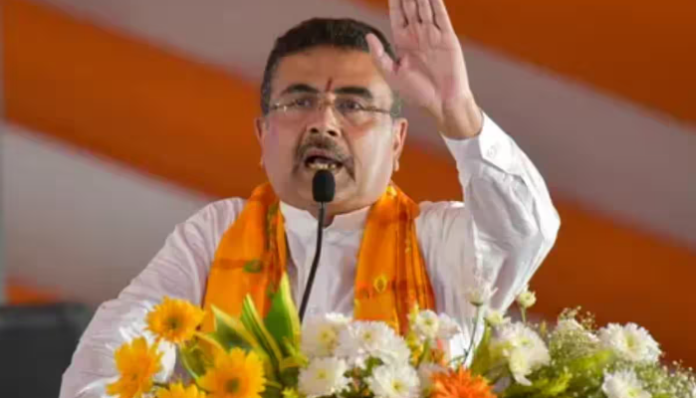
This struck a chord with the voters, earning the saffron party their trust and paving the way for its stunning victory, with Suvendu Adhikari taking charge as chief minister of the state. The weight of responsibilities on his shoulders has been as substantial as the mandate his party had received in the assembly elections.
Adhikari has vowed to honour every commitment and usher in a better, more secure life for citizens who had been deprived of the same under previous governments. Hence, it is time to assess how far he has moved in that direction in the first 100 days of his government. Of course, it is too short a period for a definitive evaluation, and his government needs more time to undo decades of blunders.
However, this initial performance can offer a glimpse of where it is headed in terms of development and fulfilling the assurances made to the people.
Judge my performance after a year: Adhikari
“On 9th May 2027, I will complete one year in power. I will sit with you in an exam where you will give me marks. If I don’t get 9 on 10, then I will accept my shortcoming. But you will say that we took the right person and the right party,” Adhikari stated on 17th August (Monday).
He inaugurated a Rs 1,296.25 crore drinking water project in Purulia district’s Manbazar region, which is going to take the supply to more than 8.13 lakh residents across five blocks and the local municipality. It was completed with financial help from the Japan International Cooperation Agency (JICA).
“This project did not materialise despite repeated promises made to the people,” he charged, adding that they lacked this basic amenity “even when the country is celebrating its 80th Independence Day.” However, he declared that “things will rapidly change” and also pledged a slew of other initiatives.
Adhikari conveyed that 1 lakh job opportunities will be made available for schoolteachers, police, and other departments and asserted that transparency would be followed for each appointment in the Police Recruitment Board, Public Service Commission (PSC) and School Service Commission (SSC).
He shed light on how his government commenced swift industrialisation by inaugurating the Amul milk production project in Howrah and a steel plant in Mejia in Bankura district. He ensured that extensive industry in Purulia and Bankura would provide at least 20,000 jobs as he invited young people who had left Jungle Mahal and moved to neighbouring states in search of work to return home.
According to Adhikari, official project evaluation will no longer depend strictly on investment volumes and the ability to generate employment opportunities locally would be prioritised. He announced specific regional welfare measures to support the industrial push.
He even went over North Bengal’s development projects, including plans to create jobs. For this reason, he has set aside Rs 50 crore for the Kurmi Development Board and retained the Home and Hill Affairs ministry. He also committed to offer private industry opportunities along with government jobs for the tribal people.
Rolling out of several flagship central welfare schemes
Adhikari pointed out that his government also began the Ayushman Bharat Pradhan Mantri Jan Arogya Yojana in the state for the first time. On 16th August, 1.23 crore people received their cards under the program, which involves 600 state government institutions and 1,240 private hospitals. It also covers Asha (Accredited Social Health Activist) and anganwadi personnel.
He also mentioned that the 125-day program (Viksit Bharat – Guarantee for Rozgar and Ajeevika Mission, Gramin) was in the process of implementation. “The youth would get work as Rs 3,45,500 crore would be spent in 12 months” under various rural projects. Rs 12,000 crore is set to be invested in the next six months, and each panchayat would receive Rs 50 lakh worth of developmental schemes.
Similarly, 30 lakh residences will be provided to the underprivileged under the Pradhan Mantri Awas Yojana. Notably, former chief minister Mamata Banerjee had refused to introduce these significant schemes and opted to impose her own state alternatives due to her consistent stand-off with the centre. The people were left to suffer as she placed her political ambitions above their interests.
Adhikari disclosed that unlawful recipients of these programs during the TMC government’s period have returned the funds. He also cited the Annapurna Bhandar program, which provides a monthly payment of Rs 3000 to rural women living below the poverty level. He informed that 28 lakh women collected their money in June and that figure is expected to rise to 1.29 crore by September.
Revamping the state’s schools
“The government is giving extra stress on infrastructure building in schools. New schools will come up. They will be provided with Aqua Guard drinking filtered water facilities, clean lavatories and sanitary enclosures,” Adhikari further outlined. Ceiling fans will be present in all Jungle Mahal schools to combat excessive heat.
The BJP government was attacked by the opposition for not including eggs in ISCKON’s (International Society for Krishna Consciousness) midday meals. However, Adhikari used the podium to counter that the funding was increased to Rs 10 per pupil in government-run primary schools and eggs are distributed twice a week. He also mentioned improving the cost of three daily meals in government hospitals to Rs 110 per patient.
From land grabbing to land purchasing, pooling
Adhikari also participated in the groundbreaking ceremony of the 148-acre Amit Metaliks plant as its foundation stone was laid. The 1.2 million tonnes and Rs 4000-crore venture will create employment for 10,000 workers. Purulia has also been given a civil airport under the regional UDAN (Ude Desh ka Aam Naagrik) scheme. He spoke at the occasion and clarified that his government would buy land and then give it to businesses instead of pressurising farmers.
“Land was acquired forcefully at gunpoint during the Left Front’s term in office. This was a bad practice for any democracy. The Trinamool regime of the last 15 years followed a completely hands-off policy, and industrialists were asked to purchase land on their own. You cannot expect industry to come,” he accused.
Today, I was immensely proud to lay the foundation stone for the Rs. 4,000 crore integrated greenfield Steel Plant by Amit Metaliks in Raghunathpur, Purulia district.
— Suvendu Adhikari (@SuvenduWB) August 17, 2026
Our primary mission is clear: driving rapid industrial growth to ensure our youth no longer have to leave our… pic.twitter.com/gHjAs3CSeZ
The state will have both a land-pooling policy and a land-purchasing strategy. Adhikari explained that the government would purchase land from farmers and develop it for industry, remarking, “This approach is successful in many states and will be successful in Bengal as well.” According to him, the new strategy will ensure that investments above Rs 100 crore won’t need “local permissions.”
He stressed that West Bengal must abandon the “negativity” of the Left Front government, including “militant trade union politics and the culture of industrial lockouts”, and also needed to break away from TMC’s “politics of doles and syndicate.”
Regulation of sand mining ghats
Adhikari declared that his government would not permit extortion or syndicate activities as all sand ghats in the state would be incorporated under a legal framework. The action would lower sand prices for consumers, boost government revenue and assist in overseeing the sector. “We will legalise all sand ghats. There will be no extortion, no syndicate and no cut money,” he vowed.
Adhikari acknowledged that growing sand prices were a worry and confirmed that people building homes under government programs would receive Rs 1,200 to assist with sand costs. He stated, “I know the price of sand has gone up a little. There is a problem. You will get Rs 1,200 for sand when you build a house under the PM Awas Yojana or West Bengal Awas Yojana.”
He requested people to allow some time to the government to regulate the sector, urging, “Let us regularise it. If you want money to come into the government coffers, then we will be able to give it back to you.” He issued a strong warning against corruption in relation to the housing programs and instructed, “If anyone asks you for even one rupee, inform me.”
Crackdown on the cut-money, extortions and syndicates to invite industries
The BJP government enacted the Public Safety and Control of Anti-Social Activities Act, popularly known as the Goonda Act, in June, and Adhikari expressed that it will be utilised to address attempts at hooliganism and destruction in industrial zones. He underscored that the act will also aid in eradicating the culture of syndicates, cut money and extortion to revitalise the state’s deteriorating industrial sector.
“The first thing we did was restore law and order. We brought in the law against goondas (goons). If anyone locks the gates of a factory, they will be in jail. If anyone enters a factory and vandalises it, we will recover three times the cost of the damage. There will be no hooliganism. No syndicates, no cut money, no extortion. The moment we get information, we’ll blow them up. We will crush them completely,” he warned.
The statement was made during the laying of the Rs 15,000-crore Shyam Steel plant’s foundation stone in Bankura. This is the largest investment in the heavy industry field since Adhikari’s selection to the office. He also hit out at the Left and Trinamool governments for seriously damaging the once-expanding industrial sector in the state.
“Dr Bidhan Chandra Roy laid the foundation for industrial development. Then came 34 years of Left rule, strike after strike and 24-hour shutdowns. Through endless strikes and hartals, industries were closed. While chanting the slogan ‘Duniyar majdoor ek hao’ (Workers of the world, unite), they destroyed the jute mills on both banks of the Ganga, the ancillary industries, Chittaranjan, Durgapur and everything,” he charged.
Adhikari emphasised the TMC’s absurd appeasement tactics, adding, “After that, those who came to power had an agenda of creating a Greater Bangladesh. Thanks to the people, you have saved West Bengal.” BJP officials continually highlight that over 6,668 firms moved their operations from West Bengal to other states due to rising nepotism, syndicate raj and unrestrained extortion during the TMC government.
“If law and order is not maintained and there is no business-friendly environment, no one will come to invest. Hold your head high, work confidently, and invest,” Adhikari argued, reiterating the importance of having a business-friendly environment in the state.
He also talked about the Urban Land Ceiling Act and recounted that land was “acquired by force, even via police firing” during the 34 years of Left rule, which was succeeded by the Trinamool government,t which told investors, “You go and buy the land yourself. We have nothing to do with it.”
However, he assured, “Under the 2013 land purchase policy, you only need to tell us how much land you require, and we will acquire it and hand it over to you.”
BNS replaces IPC, green signal for census
Adhikari called for prompt execution of the long-awaited census exercise in the state and the formal launch of the Bharatiya Nyaya Sanhita (BNS) and Bharatiya Nagarik Suraksha Sanhita (BNSS), shortly after the fresh government entered office. “On 16th June 2025, the home ministry sent the necessary communication regarding the census. For nearly a year, the file remained untouched, ed and instructions were pending. This was not just a betrayal of Bengal, but of the entire country,” he charged.
The chief minister stated that the census would begin right away and the procedure for data compilation would be essential to future planning for governance and delimitation. The state cabinet also accepted the execution framework for BNS and BNSS to overthrow the Indian Penal Code (IPC) and Code of Criminal Procedure (CrPC) system that was in place since colonial times.
Adhikari exclaimed that he was “surprised” to discover that no official regulations had been created in the state even over two years after the new criminal laws went into effect nationwide.
65 Muslim sub-groups removed from OBC list
The OBC list, which exemplified Mamata Banerjee’s blatant catering to the Muslim electorate, was trimmed by the BJP government in June. The state assembly passed two bills that changed the reservation norms for the Other Backward Classes (OBCs). 77 Muslim communities were removed from the list in accordance with a judgement by the Calcutta High Court.
The OBC list was initially revised by the TMC government to include 113 subgroups with 77 Muslim subgroups, but the decision was overturned by the high court. Mamata Banerjee consistently sought to circumvent the order but was obstructed by the court. Her government had approached the Supreme Court over the matter, but the appeal was withdrawn by the incoming BJP government.
The OBC classification was also modified by the BJP government, and the reservation quota was lowered from 10% to 7%. Amendments were also made to the West Bengal Backwards Classes Commission Act, 1993. The state’sBackwardsd Classes Welfare Minister Gourishankar Ghosh said that the Trinamool government’s action “to grant special benefits to Muslims without conducting any survey” has been revoked on the grounds of the high court’s verdict.
He expressed, “The 66 communities included based on surveys have been retained. The West Bengal Backwards Classes Commission will now assess the actual socio-economic status of the OBC communities. The previous government had acted by completely bypassing the commission. The new legislation will also help curb the issuance of fake OBC certificates.”
“We had pledged in our manifesto that if we formed government, we would reinstate the original OBC list from 1993, a list that the Trinamool government had scrapped without any proper inquiry,” Ghosh added.
Strengthening India’s long-stalled border security
The West Bengal cabinet approved the swift handover of 600 acres of land along the India-Bangladesh border to the Border Security Force (BSF) in order to deal with long-standing border security issues. A strict deadline was imposed to expedite the construction of pending border walls across sensitive areas.
“In our very first cabinet meeting today, we have decided to transfer the land to the BSF. The process of transferring this land commences today. It will be transferred to the MHA (Ministry of Home Affairs) within the next 45 days. Once this is accomplished, the BSF will complete the border fencing, and the ongoing issue of illegal infiltration will be resolved within a short period,” Adhikari informed.
The Modi government advocated for blanket barbed-wire fencing, floodlights and BSF Border Outposts (BOPs) to fight illegal infiltration, cattle smuggling, narcotics trafficking, counterfeit currency and other criminal activity. State governments must allot the appropriate land area for these efforts, and the centre is responsible for bearing the expenses.
The central government gave compensation or purchased sizable portions of land in about nine border districts in West Bengal. However, the border wall project was chronically slowed down over the years by the delays triggered by the Mamata Banerjee government’s unwillingness to give the BSF physical control of the purchased territory.
In fact, the MHA even presented an affidavit in the Supreme Court outlining these challenges in 2023. It read, “The West Bengal government follows a far slower, more complex Direct Land Purchase Policy even for national security projects such as border fencing.”
The submission pointed out, “Due to the non-cooperation from the state government regarding resolving various issues of land acquisition, considerable delays have occurred in acquiring the necessary land, thereby impeding the timely completion of fencing in West Bengal along the Indo-Bangladesh border, which is a vital national security project.”
The Calcutta High Court also castigated the Trinamool government for the perpetual postponement, which amounted to a refusal to surrender the obtained land, even though the centre already paid for it.
Fresh momentum to connectivity
Predictably, connectivity across the state too suffered badly under the Mamata Banerjee government, weighed down by needless interruptions, continuous holdups and her infamous political tussle with the centre. However, the picture started to change once the BJP government came to power, putting many long-pending projects back on track.
On 15th May, Ashwini Vaishnaw, the Union Minister of Railways, declared that the stalled construction of the Kolkata Metro Orange Line’s Chingri Ghat segment would be resumed. A 366-metre portion of the route was halted for years under the TMC regime. “The government in West Bengal has changed. A double-engine government has come to power. The problem of Chingri Ghat, stuck for three years, has been resolved. Permission has also been obtained from the Kolkata Police. Now the work is starting,” he stated.
The BJP government also aims to transform the state into a maritime hotspot with a Rs 19,209 crore investment pipeline by 2031. In June, Adhikari and Sarbananda Sonowal, Union Minister for Ports, Shipping and Waterways, met to discuss the potential for West Bengal to become the maritime centre of eastern India.
Afterwards, Adhikari highlighted a number of projects and development endeavours that will be carried out under the Maritime Amrit Kaal Vision 2047. He stated that the state will be incorporated into the Sagarmala 2.0 venture of the Union government. This will provide more than 62,500 direct and indirect job opportunities in the course of enhancing the state’s infrastructure.
“The previous government did not join the Sagarmala 1 project. A committee was supposed to be formed under the chairmanship of the chief minister, but Sagarmala 2 is starting again. We will join it. A proposal worth Rs 22,700 crore will be prepared for five years. It will plan development for port connectivity, coastal fishing infrastructure and easing the hardships of fishermen in areas such as Sagar, Kakdwip, Namkhana, Nayachar and Khejuri right up to the Odisha border,” Adhikari conveyed.
Kolkata would also be the 18th city to participate in the centre’s water metro project.
The BJP government even shared intentions to resuscitate Kolkata’s historic tram network by deploying modern, advanced tram cars, around two years after the Trinamool government opted to phase out the service. The move intends to restore and enhance Asia’s oldest operational tram system, transitioning it from a fading heritage relic to an effective, long-term component of the city’s public transport infrastructure.
The decision is set against a backdrop of years of steady reduction in tram operations under the leadership of Mamata Banerjee. By the early 2020s, the once-extensive tram network had been reduced to only a few active lines due to route closures, the conversion of many tram depots into bus facilities and restrictions on bridge access.
It is noteworthy that the TMC government has consistently encountered allegations from the centre due to its refusal to collaborate, especially concerning development initiatives. Vaishnaw in June asserted that a “lack of cooperation” from the TMC government led to several railway and metro projects in West Bengal remaining on hold for years. However, he added that work will move forward faster as a result of a shift in the state’s strategy owing to the BJP’s rise to power in the state.
Last year, he told Parliament that the state’s persistent absence of collaboration brought major corridors throughout the city to a halt as the centre accused the Trinamool government of dragging its feet on Kolkata Metro extension projects for more than 20 years.
Vaishnaw charged that numerous important clearances and land-related licenses had been languishing with the state for years, impeding the development of various metro routes meant to link Kolkata with its rapidly expanding suburbs, in a written response to TMC MP Kalyan Banerjee.
Conclusion
As aforementioned, 100 days is a very limited timeframe to judge the performance of any government, let alone a newly elected one in a state like Bengal, which has been stifled by pressure and poor governance for decades. Yet, Suvendu Adhikari has managed to take several steps to set things back on track, offering at least a peek of where he intends to take the state during its five-year term.
However, this is only the tip of the iceberg. Much more remains to be done to restore people’s trust in the government and live up to the expectations they showcased with their overwhelming support for the party in the elections. After all, with greater power does come greater responsibility.