

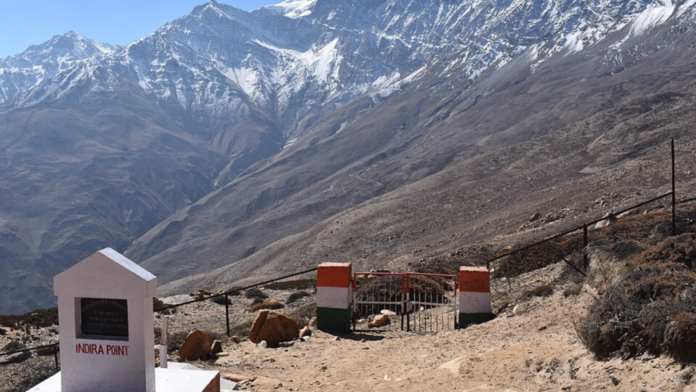
Cross-border trade between India and China through the historic Shipki La pass in Himachal Pradesh’s Kinnaur district resumed on Saturday, marking the revival of one of the oldest trade routes connecting India with Tibet after a six-year suspension.
The reopening restores commercial activity along a section of the ancient Silk Route that had remained closed since 2020 due to the Covid-19 pandemic and deteriorating India-China border ties following military tensions.
Himachal Minister flags off first batch of traders
Himachal Pradesh Revenue and Horticulture Minister Jagat Singh Negi flagged off the first batch of 16 registered traders after presenting them with traditional Khataks (ceremonial scarves) before they departed towards Shipki village in Tibet.
The minister said trading would continue under the traditional barter system, with traders allowed to remain in the Tibetan region for a maximum of 72 hours before returning to India.
Negi also inaugurated the Chhuppan Trade Mart, constructed at a cost of ₹1.70 crore in the Shipki La area of Namgya Gram Panchayat in Kinnaur district. The facility has been developed to streamline customs procedures, trader registration and border trade operations.
What can be traded?
According to the approved framework, traders will be permitted to carry 72 categories of goods from India while bringing back 30 categories of items from the Chinese side.
The minister urged traders to strictly comply with the import-export guidelines issued by the Union Ministry of Commerce to ensure transparency and adherence to regulations.
The approved list broadly includes Indian products such as dry fruits, spices, tea, coffee, grains, handloom products, processed foods, copper utensils and medicinal herbs. Imports from the Tibetan side include pashmina, raw wool, yak hair, carpets, sheepskins, china clay and traditional herbal products.
Trade in live animals has not been permitted this season because of the absence of quarantine facilities in the region.
Traders seek expansion of commodity list
Responding to demands from the Traders’ Association to expand the list of tradable goods, Negi said the proposal would first be placed before Chief Minister Sukhvinder Singh Sukhu before being forwarded to the Ministry of External Affairs, which would take up the matter with the Chinese side through the prescribed diplomatic channels.
Economic boost for border areas
Negi said the reopening of the Shipki La trade route would provide a major economic boost to Kinnaur and other border areas by generating employment, encouraging self-employment among local youth and increasing commercial activity.
He added that the Himachal Pradesh government remains focused on the holistic development of border villages through improved road connectivity, communication infrastructure and other essential public facilities.
Located at an altitude of nearly 3,930 metres in the Sutlej valley, Shipki La has historically served as a vital trade corridor between India and Tibet. The seasonal trade window is expected to remain open until November 30.
Revival amid improving bilateral engagement
The resumption of trade comes as India and China gradually restore select channels of engagement after years of strained relations. Besides its economic significance for border communities, the reopening of the Shipki La route is also seen as an important confidence-building measure in the broader effort to revive traditional cross-border exchanges.
For residents of Kinnaur, where livelihoods have historically depended on frontier commerce, the return of trade through the ancient Silk Route marks the restoration of a centuries-old economic and cultural link between India and Tibet.
