

Iran’s Islamic Revolutionary Guard Corps (IRGC) Navy has issued a sharp warning against a newly announced alternative shipping route through the Strait of Hormuz, declaring it unacceptable and dangerous because it was introduced without prior coordination with Tehran. Several vessels that tried to use the southern corridor closer to Omani waters have been compelled to turn back after receiving direct warnings from the IRGC, underlining that only routes designated by Iran are considered authorised. IRGC has also said that ships passing the Strait must contact them on the radio before doing so.
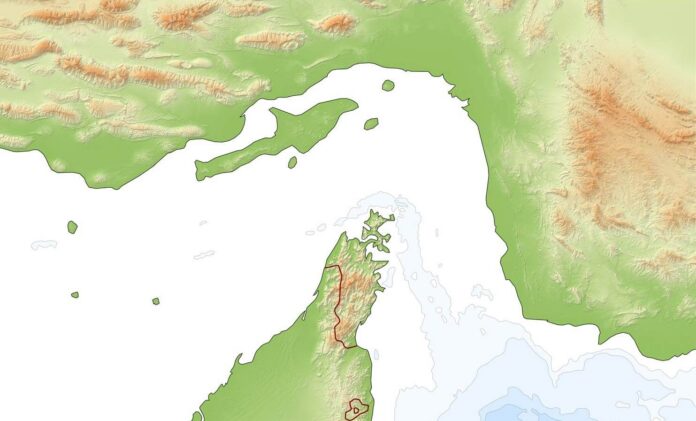
The disputed route is a temporary southern passage through Omani territorial waters, announced by Oman in coordination with the International Maritime Organisation. It was meant to provide a safer option for commercial traffic and to help evacuate thousands of stranded seafarers from the Gulf amid lingering mine risks in the central lanes. Iran, however, has rejected this southern option outright, saying that only maritime routes designated by Iran are permitted for passage through the Strait of Hormuz.
The Sultanate of Oman has unilaterally announced the establishment of a temporary maritime corridor in the southern part of the Strait of Hormuz, without prior consultation with Iran.
— World Source News (@Worldsource24) June 25, 2026
Vessels had previously been transiting the Strait through Omani territorial waters on an… pic.twitter.com/mAY3mUr1fZ
Ships were already using the Omani water on an informal basis, and this created risks of collision and other incidents. Therefore, the Sultanate of Oman formally announced the establishment of a temporary maritime corridor in the southern part of the Strait of Hormuz. However, Iran says that it was not consulted before creating the route, and is not recognising it.
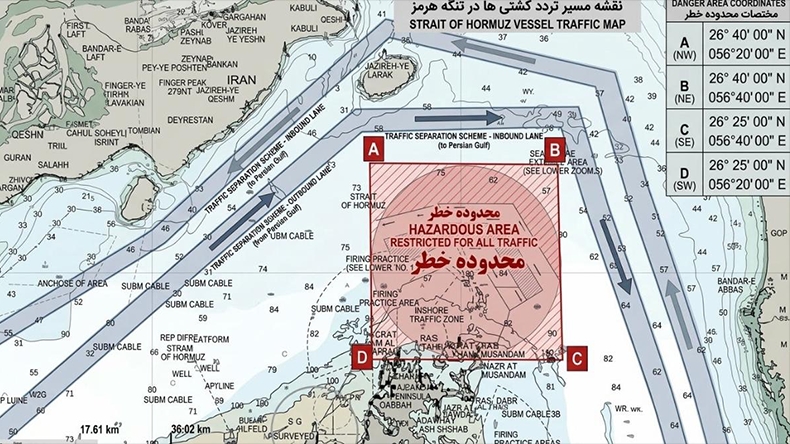
The IRGC has pointed to its own April map of acceptable routes, which keep vessels closer to the Iranian coast, and has made it mandatory for all ships to maintain contact with the IRGC Navy on VHF Channel 16 before any transit. Navigation outside these Iranian-approved corridors has been termed highly dangerous and prohibited, with clear threats of enforcement action against violators. However, the new southern route was selected after it was confirmed to be clear of mines.
IRGC is broadcasting messages over radio to the ships in the region that they must use the Iran-designated routes, and warns against using any other route including the new souther route near Oman.
BREAKING 🔴
— Open Source Intel (@Osint613) June 25, 2026
Ships are again turning around in the Strait of Hormuz. The IRGC Navy continues to broadcast that the strait is closed, warning that only vessels with Iranian permission may pass and threatening consequences for noncompliance.@_martinkelly_ pic.twitter.com/Vdmjx25YmD
The IRGC navy said in a statement via official media Sepah News on Wednesday that “some authorities” announced a new route for Hormuz transit “without notifying or coordinating with” Iran, though it didn’t name any entity involved in what it called an “unacceptable and completely dangerous” plan. “The only permitted route for passage through the Strait of Hormuz is the routes announced by the Islamic Republic of Iran,” the IRGC said.
This warning comes just days after a fragile memorandum of understanding between Iran and the United States that was signed last week to halt hostilities following months of conflict. The MoU included commitments to reopen the Strait of Hormuz for commercial vessels without charges for an initial 60-day period, along with Iranian demining operations. Both sides had publicly stated that the waterway was now open, and shipping traffic had shown some recovery. Yet the IRGC’s actions on the ground tell a different story.
Iran’s Islamic Revolutionary Guard Corps (IRGC) Navy said on Wednesday only maritime routes designated by Iran are permitted for passage through the Strait of Hormuz, warning vessels against using any alternative paths announced by other authorities.
— Iran International English (@IranIntl_En) June 25, 2026
"A few hours ago, without…
According to reports, at least three tankers – the UAE-owned Blue Star I, Japan’s Azumasan, and the Japan-managed Omega Trader – were forced to turn back while attempting to use a US-coordinated corridor in Omani waters. The IRGC has also been broadcasting messages that the strait remains restricted and that only vessels with Iranian permission may pass.
What these developments make clear is that, despite the claims and the recent Iran-US understanding, the Strait of Hormuz is not fully open for normal, unrestricted international navigation. Iran, through its IRGC Navy, continues to exercise effective control over this critical chokepoint that handles a substantial share of global oil and energy supplies. The episode shows that Tehran still holds the decisive leverage on who passes and under what conditions, even as diplomatic talks for a broader settlement are underway.
