

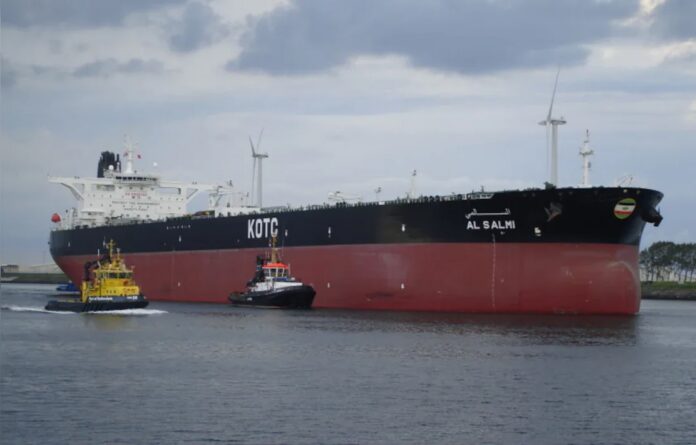
In a sharp escalation of the ongoing West Asia conflict, Iran has reportedly targeted a fully loaded crude oil tanker anchored at Dubai port, setting off a fire and raising fresh alarms over the security of global energy routes. The vessel, identified as the Al Salmi, sustained damage to its hull after a drone strike, marking yet another attack on commercial shipping in the strategically vital Gulf region.
According to Dubai authorities, the strike triggered a blaze onboard the tanker late Monday night. Emergency maritime firefighting teams managed to bring the situation under control by early Tuesday, preventing what could have been a catastrophic spill. Officials confirmed that all 24 crew members were safe and, crucially, no oil leakage was detected despite the scale of the incident.
Kuwait Petroleum Corporation (KPC) attributed the attack directly to Iran, stating that the tanker was carrying approximately 2 million barrels of crude sourced from Kuwait and Saudi Arabia. The cargo, estimated to be worth over $200 million, was reportedly en route to Qingdao, China, underscoring the global implications of the disruption.
The timing of the attack is particularly significant. It came just hours after US President Donald Trump issued a stark warning to Tehran, threatening to “obliterate” Iran’s energy infrastructure if it failed to reopen the Strait of Hormuz, a chokepoint through which nearly 20% of the world’s oil and LNG supplies transit.
Markets reacted swiftly. Crude oil prices briefly surged following initial reports of the strike, reflecting investor anxiety over potential supply disruptions. Although prices moderated slightly after indications that Washington may still prioritise negotiations over immediate military escalation, the broader trend remains volatile. Brent crude is now on track for an unprecedented 59% surge in March, a reflection of the mounting geopolitical risk premium.
The broader conflict, now entering its second month, is showing clear signs of expansion. Thousands of US troops from the elite 82nd Airborne Division have begun deploying to the region, signalling that Washington is preparing for a wider range of military contingencies, including potential ground operations.
At the same time, the White House has indicated that diplomatic channels remain open. Press Secretary Karoline Leavitt reiterated that the administration is seeking a negotiated resolution before the April 6 deadline set by President Trump for Iran to reopen the Strait of Hormuz.
However, with repeated strikes on commercial vessels and no de-escalation in sight, fears of a wider regional conflagration are intensifying. Beyond the battlefield, the economic fallout is already being felt globally, from surging fuel prices to mounting pressure on household budgets, particularly in the United States, where rising energy costs are fast becoming a political flashpoint ahead of the November midterm elections.
