

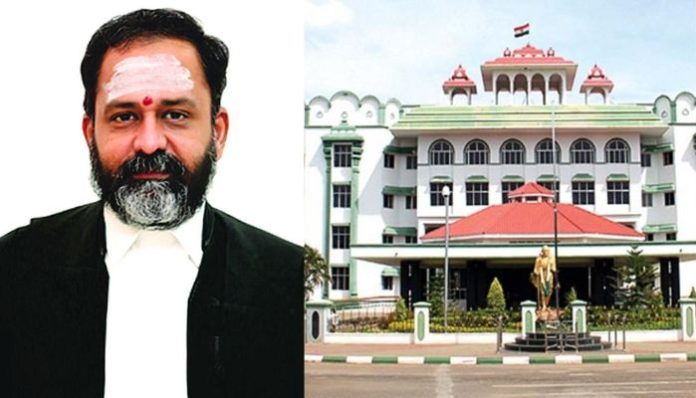
The Madras HC has recently given an important judgment concerning religious freedom and free use of public land. The Madurai Bench of the Madras High Court has permitted a Hindu group to hold Annadhanam (community feast) on a public ground in Tamil Nadu’s Dindigul district, dismissing objections that the site had been reserved exclusively for Christian Easter celebrations for over a century. The judge said this right comes under Article 25 of the Constitution of the country, guaranteeing freedom of religion.
Public Ground Used By One Community Can't Be Denied To Other: Madras HC Paves Way For Annadhanam, Calls It Fundamental Right | @UpasanaSajeev #madrashighcourt #ReligiousFreedom https://t.co/w3MZ4H2Dly
— Live Law (@LiveLawIndia) October 31, 2025
The court explained that it is the duty of the local administration and police to protect this right. They cannot simply ban an event by citing potential “law and order problems.” Instead, the police must stand by the rights of a person and deal with any issue that may arise.
This judgment was the result of a case where a man wanted to conduct an Annadhanam in an open public ground near the Kaliyamman Temple. He applied to the local authorities, who rejected his request. The applicant was not granted permission to use the ground but was instead allowed to hold the event at a location on a public road. He felt this was unfair and approached the High Court. The court asked the police why the request was refused. The police replied that they were afraid it would create law and order issues.
During the course of the hearing, it was brought to the attention of the court that a stage was built on one side of the ground about 100 years ago. A convention was that the stage would be used by the local Christian community for holding programs during the Easter festival.
The Christians argued that Hindus were never allowed to use that ground for any of their religious functions. The peace committee meeting in 2017 was also mentioned, which had decided not to allow any new functions on the ground, but only those that had been traditionally permitted for the past 100 years.
Justice GR Swaminathan, who heard the case, examined who owns the land. He found that the open space had been identified as a vacant site or gramamatham and was owned by the Panchayat, and therefore, by the government. The judge observed that if the land is owned by the government, it should be available for all sections of society, irrespective of their religious or communal background.
He held that if a public ground is available to the general public, a particular section cannot be excluded from using the same. If the only reason for such exclusion is their religion, then it clearly amounts to a violation of Article 15 of the Constitution, which prohibits discrimination.
The judge explained his reasoning very clearly: “A public ground should be available for the use of all communities or none.” He said he could not accept the argument that Christians are allowed to use the ground for Easter, but Hindus are not allowed to use the very same place for Annadhanam.
He did add that, of course, when the Christian community is holding its Easter celebrations, they alone should be allowed to use the ground, and any other group asking to use it on that specific occasion should be refused.
The court also took note of the village’s population, which includes about 2,500 Christian families and 400 Hindu families. It appeared the police had simply cited the Christian community’s opposition as the “law and order situation.” Justice Swaminathan termed it “a very sorry state of affairs.” He said there should be participation by people of other faiths at every religious event.
He even shared a personal story, saying, “When a Christian friend celebrates Christmas, I should greet him first,” and recalled a time a Muslim friend prepared vegetarian Nonbu Kanji (a rice porridge) just so he could have some. The judge said, “Such is the beauty of our culture,” and explained that these kinds of interactions are the only way to build inter-religious harmony and peace in society.
The court finally set aside the order of rejection passed by the authorities and directed the Tahsildar to grant permission to the petitioner to hold the Annadhanam in the open ground as sought by him. The court, however, clarified that the petitioner was to make all the arrangements himself and was obliged to return the ground in the same condition as it was before the event.
