

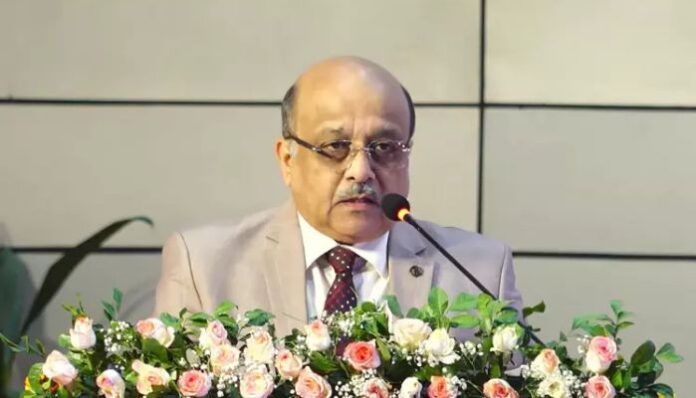
Speaking at a recent event, Madras High Court Chief Justice SA Dharmadhikari raised concerns about the direction in which legal education in India is heading. Addressing students at the 2nd NLIU SBA Law Conclave held at National Law Institute University in Bhopal, he said that while National Law Universities (NLUs) are producing highly talented students, many of them are becoming too focused on earning money quickly.
“We are increasingly witnessing that though NLUs are producing prodigies who are way ahead of their contemporaries, the drawback is that they are graduating with the ultimate aim of becoming millionaires at the fastest pace,” the judge said. He also pointed out that many students seem disconnected from their cultural and ideological roots.
Need to reconnect with Indian traditions
Justice Dharmadhikari stressed the importance of including Indian knowledge systems in legal education. He said students should learn about traditions and texts like Jainism, Buddhism, Manusmriti, and Arthashastra, as these can help build a more balanced and thoughtful mindset.
“The correlation of all these texts and rich literature must be necessarily known to all law students. They will not only bring stability and maturity in their thinking but also make them enlightened about the great organic Indian culture of being extra conscious of our duties and karma,” he said.
He also suggested that law schools should introduce a dedicated course on Indian culture, traditions, and values. Referring to stories like the Panchatantra, Jataka tales, and teachings of Chanakya and Ashoka, he said these ideas have influenced many parts of India’s Constitution and should be taught to students.
Warning against ‘Robot-like’ thinking
The judge warned that if this trend continues, law schools may end up producing graduates who are technically sound but lack human sensitivity.
“The time is not far when premier law schools may be successful in producing intelligent graduates but thinking like robots and not like human beings with the sensitivity they ought to nurture and develop for serving the common man,” he said.
He added that the legal profession is not just about earning wealth but about upholding the rule of law and serving society.
मद्रास हाईकोर्ट के मुख्य न्यायाधीश एस.ए. धर्माधिकारी ने एक कार्यक्रम में कहा कि देश की नेशनल लॉ यूनिवर्सिटीज़ प्रतिभाशाली छात्र तैयार कर रही हैं, लेकिन उनका ध्यान तेजी से धन कमाने की ओर अधिक रहता है। उन्होंने कहा कि ऐसे कई ग्रेजुएट्स अपनी सांस्कृतिक और वैचारिक जड़ों से दूर होते… pic.twitter.com/82boclXCX5
— Jantantra TV (@JantantraTv) April 26, 2026
Call for ‘Indianisation’ of the legal system
Speaking on the theme “Beyond Colonial Hangovers: Rethinking and Reforming The Western Influence On India’s Legal System,” Justice Dharmadhikari said that India still carries the burden of colonial-era thinking in its legal system.
He described this colonial influence as a “fog” that prevents people from seeing their own identity clearly. He urged students to question existing laws and adapt them to suit India’s needs.
According to him, Indianisation of the legal system is not about rejecting the past but about reshaping it. “It is not about erasing the past… but about decolonising the mindset of the legal institution,” he said.
Issues of language and accessibility
The judge also highlighted how complex legal language creates barriers for ordinary citizens. He pointed out that many laws are written in difficult English, making them hard to understand for common people.
“If the litigant cannot understand the reasoning of the court, then justice has remained locked behind the colonial gate,” he said.
He also criticised the use of terms like “lordship” and “ladyship,” calling them remnants of colonial culture where people had to plead for justice instead of claiming it as a right.
