

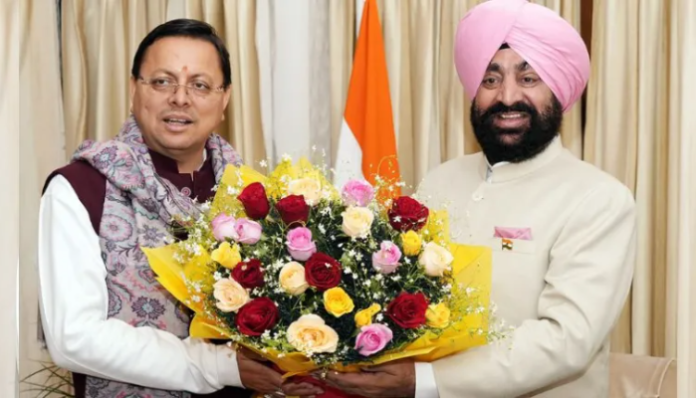
Uttarakhand Governor Lieutenant General Gurmeet Singh (Retd.) has given his approval to the Uttarakhand Minority Education Bill, 2025 which will lead to the dissolution of the Uttarakhand Madrasa Board. Now, all madrasas within the state will be mandated to affiliate with the Uttarakhand Board of School Education (Uttarakhand Board).
Chief Minister Pushkar Singh Dhami termed the development as a significant advancement towards equality and modernization. Uttarakhand has now become the first state in the nation to eliminate the Madrasa Board.
Key changes in the bill
The newly enacted law introduced three significant modifications to the management of madrasas. These institutions were earlier governed by a distinct board (Uttarakhand Madrasa Board). This arrangement will now change and every madrasa functioning within the state must first secure government recognition (permit) from the Uttarakhand Minority Education Authority.
Afterward, they will be obligated to affiliate (associate) with the Uttarakhand Board of School Education (Uttarakhand Board) which is the same board that oversees all other government and private schools in the state. Madrasas will now need to acquire dual government approval for their identity and operations, thereby integrating directly into the state’s mainstream education system.
Furthermore, this new regulation will align madrasas with other educational institutions. It will incorporate minority educational establishments into the mainstream education framework of the state. Their curriculum, pedagogical approaches and assessment methods will now mirror those of modern schools.
CM Dhami had indicated that the National Curriculum for Children (NCF) and the New Education Policy (NEP-2020) will be enforced in 2026. Students attending madrasas will enjoy the same educational advantages and opportunities as their peers in the state. This implies that they will receive both religious instruction and modern education alongside general education similar to that of students in other schools.
The law will also aid in improving and streamlining the education system. When madrasas are affiliated with the main board, there will be transparency regarding their funding, teacher recruitment and examination methods. All processes will be conducted openly and in accordance with the regulations.
If there are any deficiencies in educational standards or compliance with rules, it will be easier to hold them accountable. They will be obligated to explain why they are not adhering to the regulations. This new policy will ensure that the quality of education provided in madrasas is satisfactory and government funding is utilized properly, leading to a more promising future for the children.
Equality and modernity in education
Dhami expressed gratitude to the governor on social media and wrote, “With the approval of the Honorable Governor, the path for this bill to become law has now been paved. An authority will be established for the education system of minority communities which will handle the task of granting recognition to minority educational institutions.”
“Additionally, after the implementation of this bill, minority educational institutions such as madrasas will be required to obtain recognition from the Uttarakhand Education Board. Undoubtedly, this law will prove helpful in making the education system in the state more transparent, accountable and qualitative,” he added.
अल्पसंख्यक शिक्षा विधेयक–2025 को स्वीकृति प्रदान करने के लिए माननीय राज्यपाल @LtGenGurmit जी (सेवानिवृत्त) का हार्दिक आभार!
— Pushkar Singh Dhami (@pushkardhami) October 6, 2025
माननीय राज्यपाल महोदय की स्वीकृति के साथ ही इस विधेयक के कानून बनने का मार्ग प्रशस्त हो गया है। इस कानून के अंतर्गत अल्पसंख्यक समुदायों की शिक्षा व्यवस्था…
Moreover, education will be imparted in accordance with the New Education Policy (NEP-2020). The Chief Minister’s main aim is to guarantee equal education for all children within the state. His objective is to offer equal opportunities to all individuals, irrespective of their class or community. The government seeks to ensure that every child progresses with modern educational practices.
