

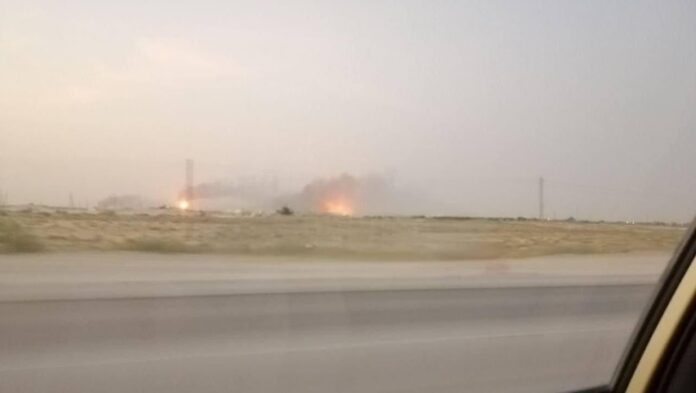
A massive fire broke out at Saudi Aramco’s Abqaiq oil processing facility after drones struck the refinery and the nearby East-West Pumping Station, triggering fresh concerns over the security of critical energy infrastructure in the Gulf. Satellite imagery released by NASA’s Fire Information for Resource Management System (FIRMS) showed extensive fire activity at the site, indicating significant damage to one of the world’s most strategically important oil facilities.
The Abqaiq plant is regarded as the world’s largest crude oil stabilisation facility and is responsible for processing nearly 5 to 7 per cent of the global oil supply. Any disruption at the facility has the potential to send shockwaves through international energy markets, given its central role in Saudi Arabia’s oil export network.
Following the attack, Saudi authorities initiated emergency flaring operations at multiple production sites to stabilise operations and minimise further risks. While officials have not yet disclosed the extent of production losses, the visible fire damage has heightened fears of possible disruptions to global crude supplies.
Saudi Arabia has accused Iran-backed armed groups operating in Iraq of carrying out the drone strikes. Condemning the attack, the kingdom asserted that it reserves the right to respond, raising the possibility of renewed regional tensions.
NASA FIRMS satellite imagery confirmed multiple active fire hotspots at the Abqaiq complex after the strike, reinforcing reports of substantial damage. The facility processes a significant share of Saudi crude before it is shipped to international markets, making it a critical node in the global energy supply chain.
Energy analysts are closely monitoring the situation, as any prolonged disruption at Abqaiq could have implications far beyond Saudi Arabia. The facility acts as a critical processing hub where crude oil is stabilised by removing volatile components before it is transported to export terminals. A reduction in its processing capacity could tighten global oil supplies and put upward pressure on crude prices, particularly at a time when geopolitical tensions in the Middle East remain elevated.
The latest strike also revives concerns over the vulnerability of oil infrastructure in the Gulf despite years of investments in air defence systems and surveillance capabilities. Saudi Arabia has repeatedly faced drone and missile attacks targeting its energy assets, underscoring the growing use of unmanned aerial systems by armed groups to strike high-value strategic installations. Such attacks not only threaten the kingdom’s energy sector but also carry broader implications for global energy security.
Previous disruptions at the Abqaiq facility have had an immediate impact on international oil markets, causing sharp spikes in crude prices and raising concerns about supply stability. Traders and governments are therefore expected to closely watch Saudi Arabia’s assessment of the damage and any updates regarding restoration of normal operations.
Saudi authorities are continuing to evaluate the extent of the damage while emergency teams work to secure the affected facilities and restore operations. The kingdom has reiterated that it reserves the right to respond to the attack, signalling that the incident could further intensify geopolitical tensions in an already volatile region.
