

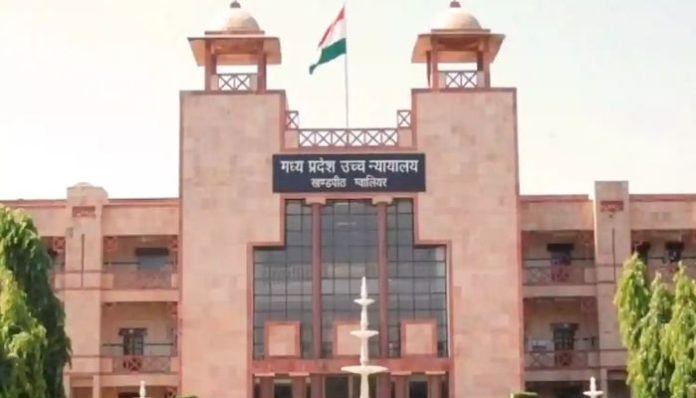
The High Court of Madhya Pradesh has quashed the termination order passed by the Indira Gandhi National Tribal University against its Professor Rakesh Singh, accused of sexually exploiting a student. The court observed that the university had no business to interfere in what it called a private relationship between two consenting adults when the woman was not even a student at the commencement of the relationship.
Justice Vivek Jain, who delivered the judgment, observed that the relationship between the professor and the woman was an old one, dating back to 2013, while she joined the university only as a research scholar in 2021. The court also commented that she was a 30-year-old married woman as was the professor, and their private relationships could not fall under the jurisdiction of the University and its ICC.
“The university had no business to inquire into the relationship between the petitioner and complainant once the complainant stated that the relationship was going on since 2013 and she became a student only in 2021,” the court said. It added that what two adults did in their personal lives was not a matter for the university to investigate, especially since their alleged sexual relationship began before she became a student.
It is a case dating back to 2022, when the woman filed a complaint accusing Professor Singh of rape and claimed that she became pregnant. The ICC at the university was constituted under the Sexual Harassment of Women at Workplace (Prevention, Prohibition and Redressal) Act, 2013, popularly known as the POSH Act.
It inquired into the complaint and found the allegations substantiated. The university subsequently issued a chargesheet, and an Enquiry Officer found Singh guilty. His services were then terminated by the Executive Council of IGNTU.
Professor Singh challenged his dismissal in the High Court, arguing that the ICC was not properly constituted, and several members had not taken part in the proceedings. He also said that the POSH Act could not apply in his case because the alleged acts happened years before the complainant became a student. Singh further told the court that he had already been acquitted of rape charges earlier this year by a sessions court.
After reviewing the evidence, the High Court found serious flaws in the way the ICC was formed and how it conducted the inquiry. One member was on maternity leave, and another recused herself after being accused of bias by the complainant. This left only five active members on the committee, which, according to the court, violated the UGC regulations for ICC composition.
The court also noted that the ICC’s final report was unreliable. Many members had not properly signed the report, and in some cases, their signatures were taken on blank papers. Justice Jain described the ICC’s report as “a totally farce and bogus document” that could not be relied upon.
The court went on to observe that the university failed to take into account that the relationship between the professor and the complainant had started long before she enrolled at the university. It concluded that, at best, the case could be seen as an extramarital affair between two consenting adults, not sexual harassment under the POSH Act.
The High Court also found several charges against Singh to be baseless. For instance, the university accused him of misconduct for not attending work during the time he was seeking bail in the rape case. But the court said this could not be considered misconduct since he was under suspension at that time and was not required to attend office.
Similarly, the court rejected the allegation that Singh had acted improperly by approaching the High Court for relief in the criminal case. Justice Jain emphasized that seeking legal remedies was a fundamental right and could not be treated as misconduct.
Another charge related to his social media posts, in which Singh had criticized the university. The court said there was no evidence to show what those posts contained, as neither printouts nor records were produced. It observed that expressing frustration against the university did not amount to misconduct, especially when the professor believed he was being unfairly targeted.
However, the court said that one particular allegation, of leaking a question paper to the complainant, needed further investigation. Singh’s defense was that it was common practice at IGNTU for teachers to share important questions with students before exams, and that the papers in question were not even prepared by him.
Justice Jain directed the university to re-examine this charge carefully, taking into account whether Singh was the paper setter and whether sharing certain questions was a regular academic practice. The court noted that the earlier inquiry report was completely silent on these details and must be reviewed in a proper manner.
In the end, the court dismissed most of the charges against Professor Singh and ruled that he should be reinstated in his job while the question paper issue is re-investigated. “Let the petitioner be reinstated in service forthwith and would remain under suspension till fresh order is passed as to charge No. 5,” the court ordered.
