

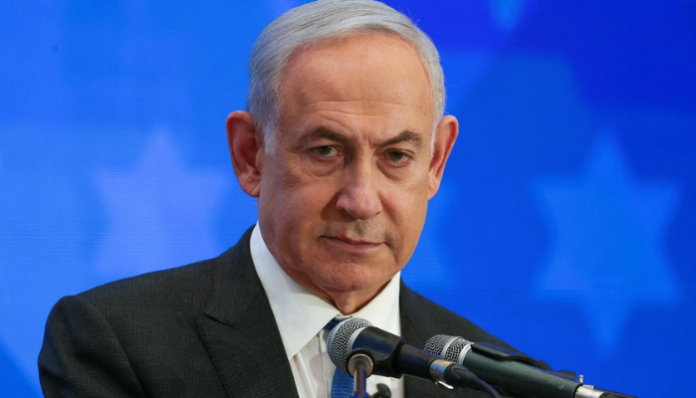
Israeli Prime Minister Benjamin Netanyahu believed that Israel is likely to face a hostile US administration in the future, potentially threatening its military assistance and strategic relationship with Washington. He called for the country to build alternative alliances, explicitly naming India as a key partner.
On Sunday (18 October), Netanyahu made the remarks while presenting his security doctrine nine days before Israel’s October 27 election. This is the first time Netanyahu has openly admitted the possibility of a breakdown in the US-Israel alliance. His comments came hours before US President Donald Trump publicly backed his re-election bid.
“In two years, a President, man or woman, could come to power who is very hostile to Israel,” Netanyahu said. “How would you deal with that? How would you operate in relation to the United States? And beyond that, what solutions would be necessary?” He urged Israel to use the remaining years of Trump’s presidency to shore up its position in Washington while preparing for a possible shift in American policy.
Netanyahu also said He is working with many countries to form alliances. While talking about India, he said, “India is not a small country, and there are many others.” He also pointed to political developments in Latin America, suggesting that “there could be an enormous change in Brazil in just a few days” as another opening for expanded diplomatic ties.
Breaking: For the first time, Prime Minister Netanyahu openly acknowledges the possibility of a breakdown in the U.S.–Israel alliance and suggests forging alternative alliances, including with India. “In two years, a president – man or woman -who is extremely hostile to Israel could come to power. How will you deal with that? How will you operate vis-à-vis the United States? And beyond that, what are the necessary solutions?” Netanyahu, who did not assume responsibility for the current state of relations with the United States, continued: “First of all, we must do everything in our power during these two years, and in the two years that follow, to engage with the American arena, through good times and bad. The second thing is to forge other alliances. That is what I am working on now with many countries in our region, as well as countries outside our region. India is no small country, and there are many other countries as well….“There is a major shift taking place in Latin America, and there may be an enormous change in Brazil in just a few days. We must expand our network of alliances and develop capabilities that make us a valuable asset to everyone.”
— נדב איל Nadav Eyal (@Nadav_Eyal) October 18, 2026
This is not the first time Netanyahu has taken India’s name to counter narratives of Israel’s international isolation. In May, he described India as a “huge power” with which Israel had a “unique relationship” and claimed there was “crazy love” for Israel in the country. His latest remarks elevate that rhetorical device into a declared strategic hedge against a potential rupture with Washington.
With Israel’s election just over a week away, Netanyahu’s explicit turn toward India and other alternative partners places the durability of the U.S.–Israel alliance at the centre of the national debate. He signals that Jerusalem is beginning to plan for a world in which Washington may no longer be its unquestioned anchor.
