

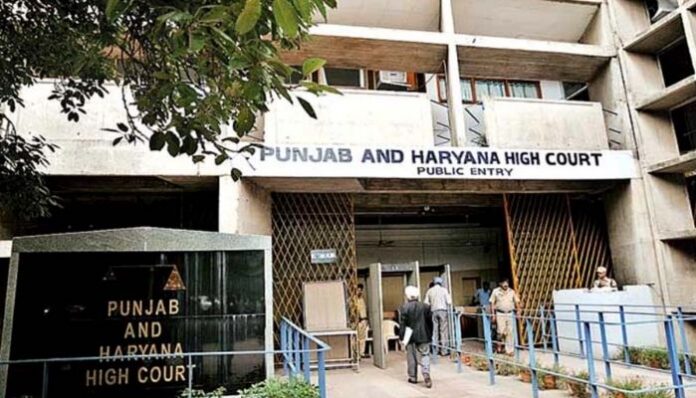
On Tuesday, 1st September, the state government informed the Punjab and Haryana High Court that more than 44% of prisoners lodged in jails across Punjab are dependent on drugs.
The figures came to light while the court was hearing a suo motu case related to drug addiction among jail prisoners. After examining the status report filed by the Punjab government, a bench comprising Acting Chief Justice Ashwani Kumar Mishra and Justice Rajesh Gaur noted that 15,768 of the 35,449 inmates in Punjab’s jails are drug-dependent.
The situation is particularly concerning in some of the state’s major jails. In Amritsar, 2,124 out of 4,918 inmates are dependent on drugs, while in Bathinda, the figure stands at 1,064 out of 1,978 inmates.
‘There cannot be anything more serious than this’
The court observed that most of the drug-dependent inmates are young and said the figures point to a serious challenge for the state. It stressed that the issue needs to be given the highest priority.
“There cannot be anything more serious than this. What kind of a policy do we have to bring these inmates out of drug dependence?” Justice Mishra remarked.
The Acting Chief Justice also considered concerns that inmates could face health problems if they are suddenly denied the medicines they currently receive for drug dependence. “That may be true, but then I think there has to be something worked out,” Justice Mishra said.
The court made it clear that such inmates cannot be left in a helpless situation indefinitely and said the matter would be taken up every week.
OOAT clinics treating drug-dependent inmates
The case was initiated by the High Court in July after it received a report from the administrative judge of the Mansa Sessions Division. The report highlighted the extent of drug addiction among prisoners and the treatment being provided inside jails.
According to the report, many inmates who are dependent on drugs are being given Buprenorphine along with Naloxone. The dosage ranges from one to four tablets depending on the inmate’s medical condition and treatment needs.
The report also mentioned an OOAT (Outpatient Opioid Assisted Treatment) Clinic operating inside a jail. Out of 767 inmates, 530 were registered with the clinic, meaning around 69% of the inmates were undergoing treatment for drug dependence.
On 20th August, the High Court had directed Punjab to provide details of the total number of inmates in each jail and those currently registered with OOAT clinics. It also appointed advocate Tanu Bedi as amicus curiae to assist the court.
Haryana and Chandigarh also asked to submit data
The court has now asked Haryana and the Chandigarh Administration to provide details of drug-dependent inmates in their respective jails. It also directed the Union government to assist in addressing the issue.
Advocate Abhinav Sood appeared for Chandigarh. The court asked him to coordinate with health authorities, including the Director of PGIMER, and seek their assistance.
Advocate Tanu Bedi was also asked to examine the state’s affidavit and assist the court at the next hearing. The matter will be heard again on 8th September.
