

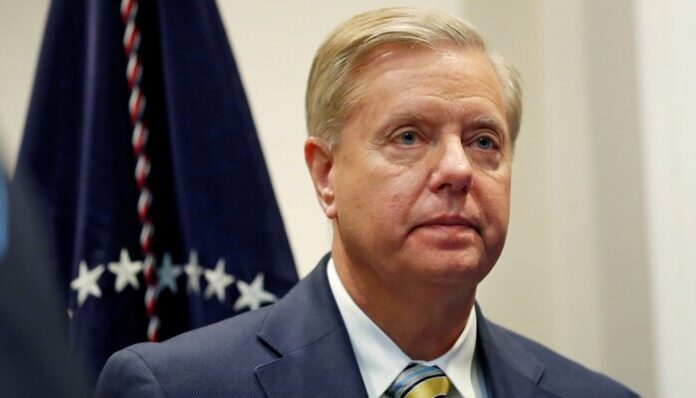
Republican Senator Lindsey Graham on Wednesday (27th May) questioned Pakistan’s role as a mediator in the ongoing US-Israel-Iran war and said that it was “more than problematic”. Graham’s remarks came after Pakistan’s Defence Minister Khwaja Asif said he is not in favour of Islamabad joining the Abraham Accords. The Republican Senator cast suspicion on Pakistan’s ability to be a neutral mediator by highlighting the Islamic country’s long-standing hatred towards Israel.
“It has been apparent to me for quite a while that Pakistan as a mediator is more than problematic. Their animosity towards Israel is long-standing. It is undeniable that Iranian military aircraft are being housed on Pakistani air bases, and past rhetoric from the highest Pakistani officials against Israel is disturbing,” Graham wrote on X on Wednesday, asking Pakistan to clarify its stand on joining the Abraham Accords.
“As to the defence minister’s comments about the Abraham Accords, saying that Pakistan would never join because they don’t trust Israel: The clip may be a year old, but I fear the sentiment is fresh. In that regard, it is imperative that Pakistan give an answer now to President Trump’s call to join the Abraham Accords,” he added.
It has been apparent to me for quite a while that Pakistan as a mediator is more than problematic. Their animosity towards Israel is long standing.
— Lindsey Graham (@LindseyGrahamSC) May 26, 2026
It is undeniable that Iranian military aircraft are being housed on Pakistani air bases and past rhetoric from the highest… https://t.co/ksLqpw4ZQ4
In an interview with a Pakistani TV channel, Khawaja Muhammad Asif stated that Pakistan will not join the Abraham Accords, adding that he would not support any agreement that goes against Pakistan’s fundamental ideologies.
Notably, U.S. President Donald Trump had called on mediators in the U.S.-Iran war to join the Abraham Accords. The Accords are a series of agreements establishing official diplomatic relations and normalising relations between Israel and several Arab and Muslim-majority nations. The agreements were brokered by the United Nations and were signed in 2020, during the first term of Trump.
