

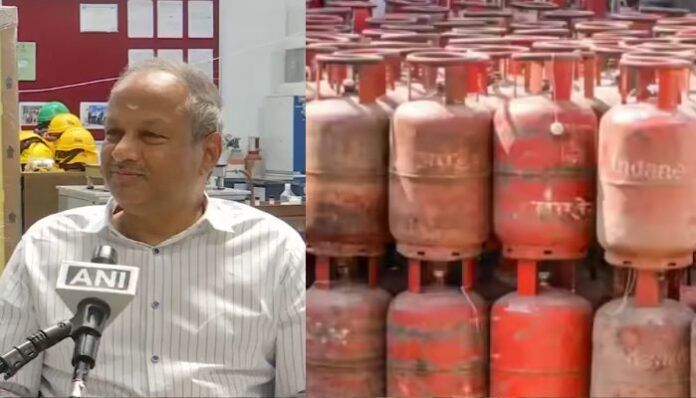
At a time when global supplies of Liquefied Petroleum Gas (LPG) are facing pressure due to ongoing Middle East disruptions, scientists in India have developed a potential alternative fuel. Researchers at the Council of Scientific and Industrial Research’s National Chemical Laboratory (CSIR-NCL) in Pune have successfully produced Dimethyl Ether (DME) gas, which could act as a substitute for LPG in the future.
#NewsPunch | CSIR-NCL Pune develops eco-friendly DME gas as a cheaper, indigenous LPG alternative. Made from methanol, it can be blended up to 20% in existing cylinders & stoves, reducing import dependency and saving ~₹9,500 crore annually. Pilot underway, aiming for large-scale… pic.twitter.com/i0J8CqtmWc
— DD News (@DDNewslive) March 16, 2026
The research team, led by scientist Tirumalaivami Raja, has developed a special catalyst needed to produce DME gas. This achievement comes after nearly two decades of research and experimentation. According to a release issued on Sunday, 15th March, the scientists have already started producing the gas at a pilot facility, where about 250 kilograms of DME are currently being produced every day.
Experts say that if the technology is adopted on a commercial scale with the help of industrial partners, DME gas can be blended with LPG at around 8%. Such blending could help India reduce its dependence on imported LPG and provide relief during supply shortages.
A cleaner and potentially cheaper fuel
Scientists also say that DME burns more cleanly compared to LPG and produces a transparent flame, which makes it a more environmentally friendly fuel. It can either be used independently or mixed with LPG for household and industrial fuel needs.
Researchers believe that once large-scale production begins, the fuel could also be cheaper than LPG, making it a cost-effective option for consumers.
Speaking to ANI about the long research journey, Dr Raja said, “Two decades ago, we started this kind of chemistry to attain DME in a cost-effective and legally sustainable way. With this lab, we made it all happen.”
#WATCH | Pune, Maharashtra: Indian scientists developed DME (Dimethyl Ether) technology as an alternative to LPG.
— ANI (@ANI) March 16, 2026
Dr Thirumalaiswamy Raja, Chief Scientist at CSIR-NCL, says, "…Two decades ago, we started this kind of chemistry to attain DME in a cost-effective and legally… pic.twitter.com/emtFrz4B0v
He explained that the research initially focused on producing DME from synthesis gas, or syngas, which is made from carbon monoxide and hydrogen. “We developed syngas to methanol, and syngas to direct DME for using syngas, because CO + H₂ from wherever it comes (natural gas, biomass, etc.). Later, we focused on methanol to DME, an indirect route,” he said.
Technology backed by patents and industry collaboration
Dr Raja said his team developed a special catalyst that plays a key role in converting methanol into DME. “We developed a catalyst and obtained around five patents for this catalyst,” he added.
The technology has been developed under the Catalysis for Sustainable Development mission launched in 2017 and has reached a Technology Readiness Level of 6–7, meaning it is close to large-scale demonstration.
The scientists are now working with industrial partners to take the project forward. According to Dr Raja, discussions are underway with major companies, including Indian Oil Corporation and Oil and Natural Gas Corporation.
“We are working with industrial partners… Our fabricator is ready to deliver shortly to meet India’s needs. Now we are talking with ONGC, which is willing to set up a 2.5-ton-per-day plant,” he said.
Once a semi-commercial demonstration plant is successfully validated, the technology can be scaled up for larger production. “Once it’s validated with a semi-commercial demonstration plant, it can be scaled to any size. We are ready to roll,” Dr Raja added.
