

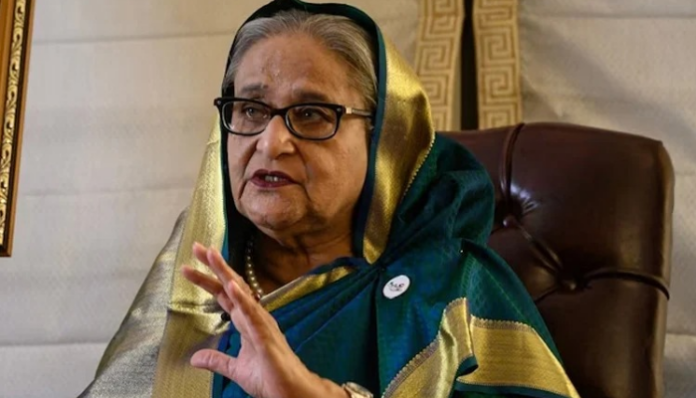
Sheikh Hasina, the former prime minister of Bangladesh, has stated that she and senior Awami League leaders intend to go back home in December and surrender before the courts. She was sentenced to death by a court in her country and has been living in exile in Delhi after she was forced to flee on 5th August 2024 amid violent protests.
Now, she and members of her banned political outfit will make the voluntary return after 2 years since her government was toppled, reported Reuters. However, she did not specify any date.
“They may arrest me on my return. They may even kill me. Still, I have to go. My party leaders and workers are being subjected to tremendous repression. If death comes, I want it to come on my own soil, where my parents are buried and where their blood was shed,” she expressed while talking to the media house on 9th July (Thursday). She will also be joined by former Home Minister Asaduzzaman Khan Kamal who also faces a death penalty.
Hasina mentioned that authorities in Dhaka “want to take me back, they are repeatedly sending letters to India seeking to have me sent back” and hence she decided, “I will go myself.” She highlighted, “Cases have been filed against almost all of our leaders and workers, and many of them are in hiding. So, I said that this time I am returning home, and one day, all of you should come. All together, we will all surrender in court.”
Hasina added, “I believe in justice and I feel that once proceedings start, it will be clear to the people how farcical the court is and that I want to prove it.” She has not communicated her homecoming plans to Dhaka and remarked, “Democracy, voting rights, the political rights of the Awami League and justice are not subjects for secret talks.”
She dismissed any concern about a jail term, citing previous arrests. She was imprisoned several times during campaigns against the military government after emerging from exile in 1981 following her father, Sheikh Mujibur Rahman’s killing. He was the former prime minister and the founding father of the country.
A military-backed caretaker leadership imprisoned Hasina once more in 2007 on suspicion of corruption. She was later released and elected in 2008. She indicated that threats to her life, as crowds moved closer to her residence, caused her to escape this time. “When a government works for a long time, mistakes can happen, no government is above error. But the right to judge the good and bad, the right and wrong of a government belongs to the people. I leave that judgment to the people,” she asserted.
As part of her efforts to restructure the Awami League, Hasina disclosed having conducted online meetings in 125 of Bangladesh’s 300 parliamentary constituencies. “They may have convicted me, and I may not be able to contest elections. But why should they suspend the Awami League? If we have done badly, let the people decide,” she asserted.
The 78-year-old has been the longest serving prime minister of the nation. Her reign of power lasted 20 years across multiple terms. In November, she was condemned to death in her absence by Dhaka’s International Crimes Tribunal for directing a crackdown on student protests that later turned into the brutal persecution of minorities, particularly Hindus. She has vehemently refuted the accusations.
