

The newly elected BJP government in West Bengal may soon bring several pending Comptroller and Auditor General (CAG) reports before the state Assembly, a move that could put the previous Mamata Banerjee-led Trinamool Congress (TMC) government under fresh scrutiny over financial management and irregularities. TMC is already facing severe charges for its corruption during the last 15 years’ regime. The state Budget will be presented on Monday, 22nd June.
The reports cover the financial years 2021-22, 2022-23, 2023-24 and 2024-25. The last CAG report presented in the Assembly was for the 2020-21 financial year, during the TMC government’s tenure. Since then, the auditor’s reports have not been tabled despite directions from then-Governor C. V. Ananda Bose.
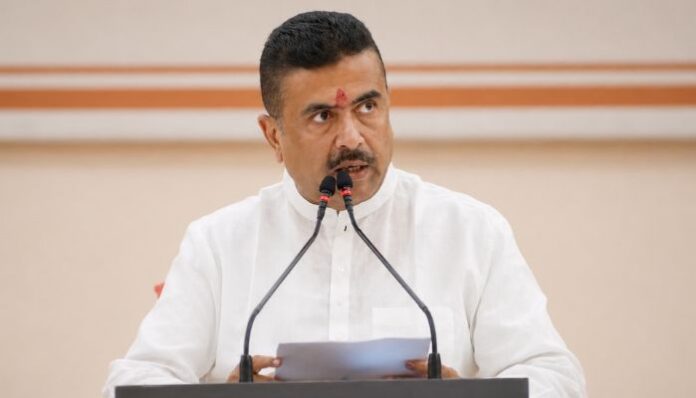
The development comes during the ongoing Budget session of the Assembly. While the BJP government led by Chief Minister Suvendu Adhikari is presenting its Budget for the current financial year, officials indicate that the pending CAG reports could also be released during the session, which is scheduled to continue until June 25 before resuming on July 6 after a short break.
Why were the reports not tabled?
According to officials, CAG reports become publicly available only after they are tabled in the Assembly. Until then, their contents remain largely inaccessible to the public.
A senior official from the state Finance Department revealed that the previous government was uncomfortable with the findings of the auditor.
“The CAG reports always flagged corrupt practices of the TMC government. Naturally, the state government was not happy with the CAG reports and did not want them to be published,” the official said.
The reports are expected to trigger renewed political debate because earlier audits had raised serious questions about the handling of government funds and financial accountability.
Questions over utilisation of Central funds
One of the major concerns highlighted in previous CAG reports relates to the non-submission of utilisation certificates (UCs) for Central grants.
The auditor had pointed out that between 2011 and 2020, the West Bengal government failed to submit utilisation certificates worth around ₹2.29 lakh crore. These certificates are required to confirm that government funds were spent for the purpose for which they were allocated. Under state rules, departments are expected to collect and submit these certificates within a year of disbursing funds.
Officials say the absence of utilisation certificates raises concerns about whether the money was properly used.
“It is assumed that UCs are not submitted if the funds have not been utilised properly and have been misappropriated,” an official said.
The 2020-21 CAG report showed that the highest number of pending utilisation certificates came from the Panchayat and Rural Development Department, followed by the School Education Department and the Urban Development and Municipal Affairs Department.
The report noted that without these certificates, it was impossible to verify whether the funds had been used for their intended purpose.
“In the absence of UCs, it could not be ascertained whether the recipients had utilised the grants for the purposes for which these were given. This assumes greater importance as pendency in non-submission of UCs is fraught with the risk of misappropriation,” the report stated.
Thousands of bills still pending
The auditor had also flagged another issue involving the non-submission of Detailed Contingent (DC) bills after funds were withdrawn through Abstract Contingent (AC) bills.
AC bills are used when money needs to be released quickly for emergencies such as floods, droughts, erosion or other unforeseen situations. However, government rules require departments to submit DC bills within 60 days, providing a detailed account of how the money was spent.
According to the last available CAG report, as of March 2021, a total of 11,321 DC bills worth around ₹3,400 crore had not been submitted.
The auditor warned that such delays weaken financial accountability and increase the possibility of misuse of public funds. “Pending DC bills reflect accounting indiscipline by government functionaries and controlling authorities, leading to risk of fraud, temporary misappropriation and embezzlement of funds,” the report stated.
