

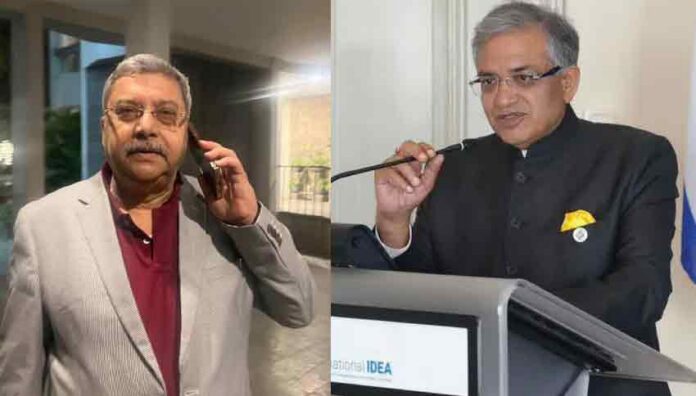
A petition has been filed in the Calcutta High Court contesting the Election Commission of India’s (ECI) decision to transfer senior administrative and police officials in West Bengal, just days after the announcement of the 2026 Assembly election schedule. Advocate Arka Kumar Nag filed an application seeking permission to file a petition against the ECI on behalf of Trinamool Congress (TMC) MP Kalyan Banerjee, challenging the reshuffle of IAS and IPS officers ordered by the ECI.
The division bench, headed by Chief Justice Sujoy Pal, granted permission to file the petition, and the plea is likely to be heard on Monday. In the petition, Banerjee argued that while the EC’s mandate is to conduct elections, it does not have the authority to transfer top officials across all departments, which disrupts administrative functioning.
The moves come in the wake of the ECI announcing poll dates on March 15, 2026, for the West Bengal Assembly elections, along with other states. In the next couple of days, the poll panel initiated a series of transfers, including the replacement of the state’s top bureaucrats. Chief Secretary Nandini Chakravorty was replaced by Dushyant Nariala, while Home Secretary Jagdish Prasad Meena made way for Sanghamitra Ghosh. The Director General of Police (DGP) Peeyush Pandey and Kolkata Police Commissioner Supratim Sarkar were also shifted.
Subsequent orders saw the transfer of 13 IAS officers serving as District Magistrates-cum-District Electoral Officers and 20 IPS officers, part of a larger reshuffle involving around 60 senior officials. Several officers were also deputed as election observers to other states. On Wednesday, the ECI further appointed five new DIGs across police ranges and posted new District Magistrates in key districts. ECI has ordered similar reshuffles of government officers in other states too where assembly elections are taking place, but the scale of such reshuffle is larger in West Bengal.
West Bengal Chief Minister Mamata Banerjee expressed strong reservations over the timing and manner of the transfers. In a letter to Chief Election Commissioner Gyanesh Kumar, she described the changes as “arbitrary” and carried out “without any cogent reasons” or allegations of misconduct. She argued that the ECI acted unilaterally without consulting the state government or following established conventions, terming it a breach of cooperative federalism.
The ECI, however, maintains that such administrative changes are essential to ensure a level playing field and free, fair elections. The Commission derives its powers from Article 324 of the Constitution of India, which vests it with the “superintendence, direction and control” of the preparation of electoral rolls and the conduct of all elections to Parliament and State Legislatures. This constitutional mandate empowers the ECI to issue directions, including officer transfers and postings, when it deems them necessary for electoral integrity, especially once the Model Code of Conduct is in force. The poll body regularly orders such transfers ahead of elections. However, the developments have triggered protests from the TMC, with party MPs walking out of Parliament in objection.
Assembly elections in West Bengal will be held in two phases on 23rd April and 29th April, and the counting of votes will take place on 4th May. Assan, Kerala, and Puducherry will have single-phase voting on 9th April, while Tamil Nadu will vote on 23rd April.
