

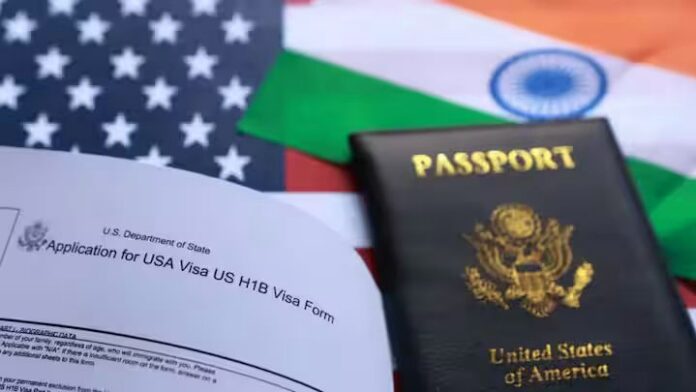
The Trump administration is proposing a major change to the US immigration system that could significantly affect foreign skilled workers, including thousands of Indians on H-1B visas. A new Department of Homeland Security proposal seeks to eliminate the 60-day grace period that currently gives certain temporary visa holders time to find a new employer after losing their jobs.
Under the proposed rules, H-1B workers and holders of several other temporary employment visas could be required to leave the United States once their employment ends, rather than receiving up to two months to secure another sponsor or arrange their departure.
The proposal, published in the Federal Register on Thursday, represents another move by President Donald Trump’s administration to tighten legal immigration since his return to the White House in January 2025.
H-1B workers could face immediate pressure
The 60-day grace period was introduced in 2017 and has become an important safety net for foreign workers who suddenly find themselves unemployed. It allows them to search for another job, transfer their visa sponsorship or make arrangements to leave the country.
For many workers, those 60 days are about far more than finding another paycheque. They may need time to sell or vacate a home, arrange their children’s schooling, dispose of belongings and organise an international move.
The proposed change would substantially compress that timeline.
Immigration lawyers have warned that employers could also face greater pressure when handling layoffs involving foreign workers. HR departments would have far less time to complete immigration-related formalities and determine whether a worker can remain legally employed.
Major impact on India’s skilled workforce
The implications could be particularly significant for Indian professionals.
The H-1B programme, created by Congress in 1990, allows US employers to hire foreign workers for specialised occupations. Indian nationals have historically accounted for a substantial share of H-1B beneficiaries, making changes to the programme closely watched in India.
The technology sector is particularly dependent on the visa programme, with major technology companies, consulting firms and IT services providers regularly sponsoring H-1B workers.
Among prominent sponsors are consulting firms such as Deloitte, PwC and EY, along with Indian IT giants including Tata Consultancy Services, Infosys, HCLTech and LTIMindtree.
The administration, however, argues that companies facing vacancies could instead offer those positions to qualified American workers. The DHS proposal says employers would generally be expected either to hire equally qualified US workers or initiate the necessary petition process if they still require a foreign employee.
That could fundamentally alter how companies manage foreign employees during layoffs and subsequent rehiring.
H-1B isn’t the only visa affected
The proposed elimination of the grace period would extend beyond H-1B workers.
The changes would also affect several other categories of temporary workers, including L-1 visa holders employed by multinational companies, O-1 workers recognised for extraordinary ability in fields such as science, business, education, athletics or the arts, and TN professionals from Canada and Mexico.
H-1B1 workers from Singapore and Chile, E-3 speciality occupation workers from Australia and certain E-1 and E-2 visa holders could also be affected.
For workers in all these categories, losing a job could therefore trigger a far more immediate immigration crisis.
Latest in a broader immigration crackdown
The proposal comes amid a broader effort by the Trump administration to tighten America’s immigration system.
The administration has already pursued measures aimed at increasing the cost and scrutiny associated with skilled-worker visas. It has also taken steps affecting immigrant visa processing at US diplomatic missions overseas.
Taken together, the measures signal a more restrictive approach not only towards undocumented migration but also towards legal immigration programmes used by American businesses to recruit international talent.
For US companies, however, the proposed change could create a new dilemma. While the administration argues that restricting foreign-worker access could create opportunities for Americans, businesses contend that specialised talent cannot always be replaced immediately from the domestic workforce.
Two months to decide
The proposal is not yet law. It will undergo a public comment period lasting 60 days, during which businesses, immigration lawyers, workers and other stakeholders can submit their views before DHS decides whether and how to implement the changes.
If ultimately adopted, the measure could fundamentally change the consequences of losing a job for thousands of foreign professionals in the US.
For Indian H-1B workers in particular, the difference could be stark: instead of having two months to find another sponsor and remain in America legally, losing a job could leave them facing an immediate race against time to either secure a new immigration pathway or leave the country.
