

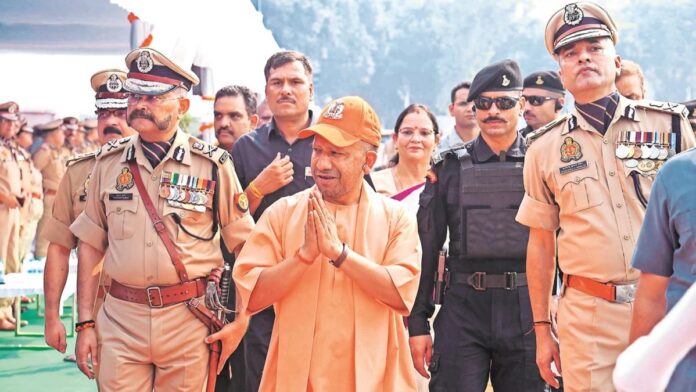
The Yogi Adityanath government in Uttar Pradesh, which is credited with improving the law and order situation in the state, is set to recruit over 1 lakh police personnel. CM Yogi Adityanath announced on Tuesday (28th April) that one lakh recruitments will be carried out in the state police and allied forces this year. The decision will serve the twofold purpose of strengthening law enforcement in the state while providing employment opportunities for youth.
पिछले 9 वर्षों में उत्तर प्रदेश में 2,20,000+ पुलिस कार्मिकों की भर्ती की गई है।
— Government of UP (@UPGovt) April 29, 2026
—मुख्यमंत्री @myogiadityanath जी pic.twitter.com/hiocATjkrr
Speaking at the Indira Gandhi Pratishthan in Lucknow, the Chief Minister highlighted that around 57,000 police constables have already been recruited and are being deployed across districts. The recruitment process is being carried out by the Uttar Pradesh Police Recruitment and Promotion Board across categories.
Detailing the progress of the ongoing recruitment process, CM Yogi said that written examinations for over 41,000 home guard posts were conducted over the past three days, while recruitment processes for civil police, sub-inspectors and other units are already underway and gaining momentum. He added that over the past nine years, over 2.20 lakh personnel have been recruited into the Uttar Pradesh Police.
CM Yogi pointed out the improvement in the training capacity for the recruits across the state. He said that before 2017, only around 3,000 personnel could be trained at a time, but now the state can train over 60,000 recruits simultaneously across centres. Explaining the state government’s emphasis on increasing the strength of personnel in the state, CM Yogi said that economic growth is directly linked to improved law and order. He said that strong law and order create a favourable environment for investment, which helps the state’s economy.
He said that the recruitment system has undergone an overhaul to ensure fairness and merit-based selection. He said that recruitment processes during previous years were marred by irregularities, but the situation has changed for good. Now the selections are made strictly on merit and in accordance with reservation norms, which has eliminated the need for recommendations or monetary influence.
