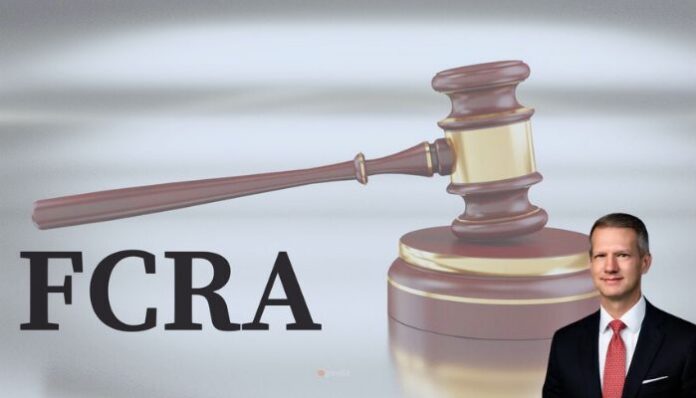
US Representative Riley M. Moore has criticised the proposed Foreign Contribution (Regulation) Amendment Bill, 2026. The first-term Congressman claimed that the FCRA Amendment Bill permits the government to “take over churches and religious charities”, calling it “a clear attack against Christians.”
“Christians have been in India since St. Thomas the Apostle travelled to the Malabar Coast just decades after the resurrection of our Lord Jesus Christ. But despite this long Christian history, India’s Parliament is considering amending Foreign Contribution Regulation Amendment (FCRA) rules to permit government takeovers of churches and religious charities,” Moore wrote on X on 4th August.
“This is a clear attack against Christians. If this bill proceeds in this way, it would be a point of major concern in our bilateral relationship with India,” the Congressman representing West Virginia’s 2nd District added.
Christians have been in India since St. Thomas the Apostle traveled to the Malabar Coast just decades after the resurrection of our Lord Jesus Christ.
— Rep. Riley M. Moore (@RepRileyMoore) August 4, 2026
But despite this long Christian history, India’s Parliament is considering amending Foreign Contribution Regulation Amendment…
Amusingly, Moore’s “takeover of churches” claim is as true as his claim about Thomas the Apostle’s visit to South India in the 1st century.
However, the factual inaccuracies and alarmist framing of the FCRA Bill by the US Congressman warrant scrutiny. Introduced in March 2026, the FCRA Amendment Bill primarily addresses organisations whose FCRA registration is cancelled, surrendered, or fails renewal. The Bill empowers the Central government-appointed “Designated Authority” to manage “foreign contributions and assets created from those foreign funds” in such cases for oversight and to prevent diversion or abandonment.
Separately, the Foreign Contribution (Regulation) Rules, 2011, which were amended by a Gazette notification published by the Union Ministry of Home Affairs on 22nd June 2026, have excluded proselytisation for several groups within the religious community.
Interestingly, Moore is not the first US senator to cry hoarse over India’s FCRA. Amendment Bill. Ahead of US Secretary of State Marco Rubio’s late May 2026 visit to India, US Congressman Chris Smith has urged him to bring up the issue of suspension of the Foreign Contribution Regulation Act (FCRA) licence of the controversial Mother Teresa’s Missionaries of Charity.
Indulging in fear mongering, Smith claimed that if adopted, India’s FCRA Amendment Bill, “the total property of entire churches and dioceses could soon be at risk of being taken over by the Indian state.”
Similar to Riley Moore’s threats, Smith had also threatened that if the FCRA Bill was not put on hold, it might cause long-term harm to relations between the two sides.
Not only foreign politicians, but even Indian media outlets are framing the FCRA Bill as some sort of attack on religious minorities and civil society.
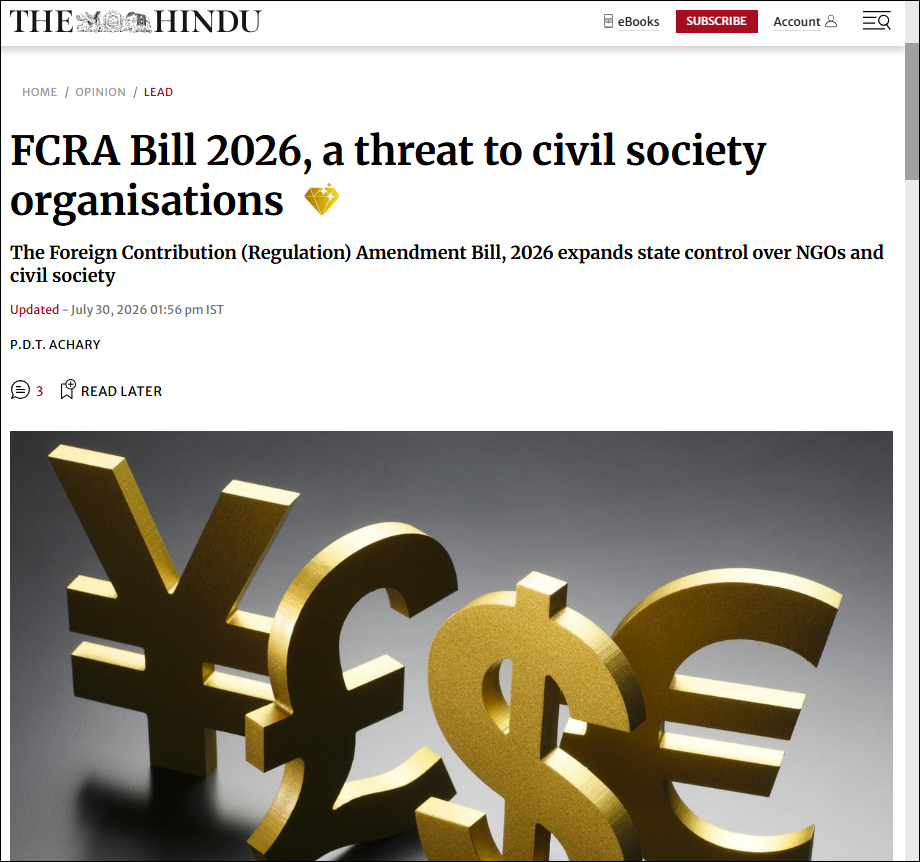
FCRA is a foreign funding regulatory law, not religious legislation
Riley Moore, however, has surpassed even the Indian left liberals in fear-mongering and victimhood propaganda. His claim that the FCRA Amendment Bill will empower the Indian government to arbitrarily take over churches is false. The authorities cannot take over or alter the religious character of places of worship.
As per the rules, the powers of the authorities are limited to foreign-funded assets under specific cessation conditions, and even those orders are subject to revision or appeal.
It is also interesting that Riley Moore, and even several Indian NGOs and ‘prominent’ individuals, have singled out Christians even as the law is religion-neutral and applies to all FCRA entities. Existing FCRA law, and even if the proposed amendment bill is passed, shall remain a funding law and not transform into a religious law. The law explicitly states that it applies uniformly.
In fact, comparable laws exist in other democracies to regulate foreign funding. The US has the Foreign Agents Registration Act (FARA), the United Kingdom has the Foreign Influence Registration Scheme (FIRS), the Foreign Influence Transparency and Accountability Act (FITAA), and many other countries have similar foreign funding regulatory laws.
The only core difference in India’s FCRA is that it operates as a pre-approval and permission-based regime, in view of national security.
A question here arises: Why is the US opposing, and even ‘warning’ of damage to India-US relations over the FCRA Amendment Bill? The answer is geopolitical interests and religious ambitions.
Numerous US-based evangelical and missionary networks have channelled huge funding into India over decades for church planting, conversions among vulnerable groups, be it poor tribals or Dalits, and related works. From Compassion International to World Vision India, Joshua Project, to several other foreign Christian groups are still active in India, furthering Christian conversion and geopolitical interests of their home countries.
OpIndia has consistently raised alarms over the activities of the US-based World Vision International. The Christian NGO received funding from the now-defunct USAID, which had a record of funding anti-India and anti-Hindu outfits and individuals. With activities confined not just to Northeast India, World Vision pretends to be a humanitarian organisation; in reality, it is a Christian fundamentalist organisation that has allied with other Christian fundamentalists to convert unsuspecting Hindus, especially children and women, for seven decades, as the Nehru government gave the Christian fundamentalist outfit a free hand.
In 1972, the Indira Gandhi government even allowed World Vision’s Billy Graham to visit Nagaland, much to Graham’s own surprise, since at that time, due to instability, foreigners were not getting permission to visit the Indian state. World Vision openly ran its conversion activities to harvest thousands of Hindu souls for Christianity under Indira Gandhi’s watch.
In 2024, the Modi government revoked its FCRA license, denting its conversion activity in India. OpIndia earlier reported how US-based Christian outfits like the World Council of Churches, the World Evangelical Alliance and World Vision rallied against anti-conversion laws. And now, foreign and local Christian missionaries are outraged over the FCRA Amendment Bill since it will cut the uninterrupted flow of funds for entities aiming to alter the religious demographics of India and undermine national security.
Besides, several NGOs and leftist ideological networks have long faced scrutiny for roles in inciting protests, anti-development agitations, and dissemination of propaganda undermining Indian interests.
In fact, government lists of FCRA cancellation reasons included anti-development acts, inciting protests, and forced religious conversions.
Kudankulam Nuclear Project and how foreign-funded NGOs stalled the project for years
It is important to recall how the Kudankulam Nuclear Power Plant Project was stalled for years by leftist political parties and foreign-funded NGOs.
Kudankulam Nuclear Power Plant (KKNPP), located in the Tirunelveli district of Tamil Nadu, was envisioned as India’s largest nuclear power station, with a total capacity of 6,000 megawatts. The construction of the facility began in 2002, but continuing demonstrations and political resistance hampered it.
This protest reached its peak in 2011 when people feared a Fukushima-style disaster would strike the nuclear plant. SP Udayakumar, leader of the People’s Movement Against Nuclear Energy (PMANE), was a significant figure in the anti-Kudankulam movement.
Back in 2012, many international Christian propaganda outlets had boasted how Churches and Catholics were playing a central role in leading the protests. The Lady of Lourdes Catholic Church in Idinthakarai and two Catholic priests were on the Coordinating Committee for PMANE.
Most of the anti-nuclear activists, including PMANE’s convenor S P Udayakumar and activist G Sundarajan, joined the Aam Aadmi Party (AAP). Sundarajan was also AAP’s Lok Sabha candidate in the 2014 elections. It is an interesting fact that the founder of Cockroach Janta Party (CJP), which led the recently concluded ‘students protests’ in Delhi, Abhijit Dipke, has also been an AAP functionary in the past.
Notably, the court petitions, protests and continued fearmongering about the Kudankulam Nuclear Power Plant Project came despite the former President and noted scientist APJ Abdul Kalam assuring that there was no need to panic as the KNPP had state-of-the-art safety features.
In fact, then Prime Minister Dr Manmohan Singh had publicly called out the NGOs involved in activism for stalling the Kudankulam Nuclear Power Plant project.
Singh had said that these NGOs received foreign funding, particularly from the US, and were deliberately stalling the use of genetic engineering in agriculture and leading protests against the KNPP.
“There are NGOs, often funded from the United States and the Scandinavian countries, which are not fully appreciative of the development challenges that our country faces. The atomic energy programme has got into difficulties because these NGOs, mostly I think based in the United States, don’t appreciate the need for our country to increase the energy supply,” PM Singh told the journal Science in an interview in February 2012.
Behind the veneer of human rights advocacy, promotion of democracy and education, foreign-funded NGOs under India’s development
Exploiting human rights, democratic freedom, economic fairness, government accountability, promotion of education and other such high-sounding purposes, several non-governmental organisations in India receive foreign funding. However, their real agenda has been to stall Indian development projects, stir anarchy, and fracture the economy.
A 2014 leaked Intelligence Bureau (IB) report revealed the modus operandi of several foreign NGOs making concerted efforts to stall various development projects.
The report said that a significant number of Indian NGOs receiving funding from the UK, US, Germany, Netherlands, etc, were picking up people-centric issues to create an environment which lends itself to stalling development projects.
“These include agitations against nuclear power plants, uranium mines, Coal-Fired Power Plants (CFPPs), Genetically Modified Organisms (GMO), mega industrial projects (POSCO and Vedanta), hydel projects (at Narmada Sagar; and in Arunachal Pradesh) and extractive industries (oil, limestone) in the North East. The negative impact on GDP growth is assessed to be 2-3% p.a,” the report said.
Explaining the modus operandi of these foreign-funded NGOs, the IB report said, “Identified foreign donors cleverly disguise their donations as funding for protection of human rights; ‘just deal for project-affected displaced persons: protection of livelihood of indigenous people; protecting religious freedom, etc.”
“These foreign donors lead local NGOs to provide field reports, which are used to build a record against India and serve as tools for the strategic foreign policy interests of Western Governments. Some donors like Greenpeace International and CORDAID focus their efforts entirely on such activities, while others such as Action Aid, Amnesty International, etc. dedicate a small portion of their annual donations to such projects. under varied veils such as ‘democratic and accountable Government’, economic fairness’, etc,” it added.
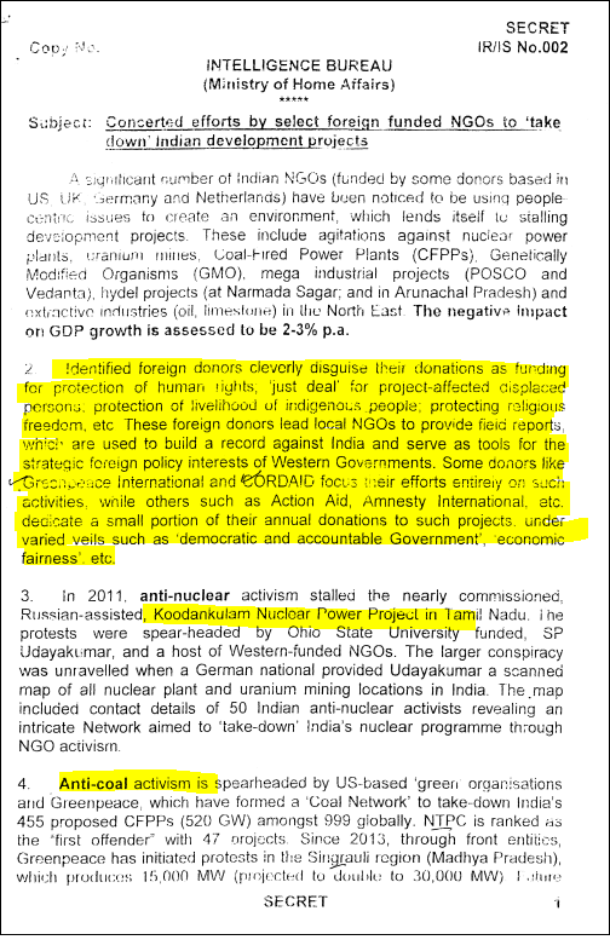
The IB had cited examples of anti-nuclear activism against the Kudankulam Nuclear Power Project, Anti-coal activism against 455 proposed CFPPs, and anti-Genetically Modified Organism activism targeting mega industrial projects, like POSCO and Vedanta. The report found that foreign entities were funding and using NGOs in India as proxies to stall India’s development projects and to undermine the country’s economy.
Not to forget how the United States Agency for International Development (USAID) was funding dubious NGOs in India and was involved in attempts to execute regime change operations in India and Bangladesh. OpIndia has earlier highlighted how the US was actively backing anti-Sheikh Hasina elements in Bangladesh, and how Hasina herself had warned about the US’s efforts to carve out a Christian nation out of some regions of Bangladesh, Myanmar and India’s Northeast.
Christian victimhood is a facade; the real chagrin is FCRA targeting funding networks behind proselytisation and anti-India groups
The broader “attack on Christians” bogey peddled by Indian Christian entities and leftists, as well as their foreign sympathisers, however, is only a facade. The real outrage is over the tighter scrutiny of foreign funds that have historically flowed into India for proselytisation and anti-India activities.
The Modi government has not only hammered the menace of proselytisation but, through the FCRA Amendment Bill, is also ensuring that cancelled licenses would have actual, immediate, and permanent consequences.
At present, when an organisation loses its license, its owned assets, land, buildings, hospitals, schools, and equipment built over the years with foreign funds often fall into a legal vacuum. The gap in question would be completely closed by the Bill. The Consolidated Fund of India would receive the proceeds from the Designated Authority’s oversight, management, and, if needed, disposal of those assets. This completely changes enforcement instead of causing lengthy court proceedings during which assets remain intact, and operations essentially continue; a cancelled license would have actual, immediate, and permanent consequences.
There is no doubt that the Modi government’s in-process overhaul of the FCRA hits organisations dependent on overseas evangelical pipelines for religious conversion activities.
It is apparently for these reasons that several Christian bodies in India, and the US have vehemently opposed the FCRA Amendment Bill, framing them as ‘existential threats’ or ‘attacks on minorities’.
Be it the Catholic Bishops’ Conference of India (CBCI), All India Christian Council, or Archbishop Joseph D’Souza, who called the FCRA-related amendments a “loot” of properties linked to Christian organisations, to US Christian groups like National Hispanic Christian Leadership Conference, all are collectively seeking the withdrawal of the FCRA Amendment Bill.
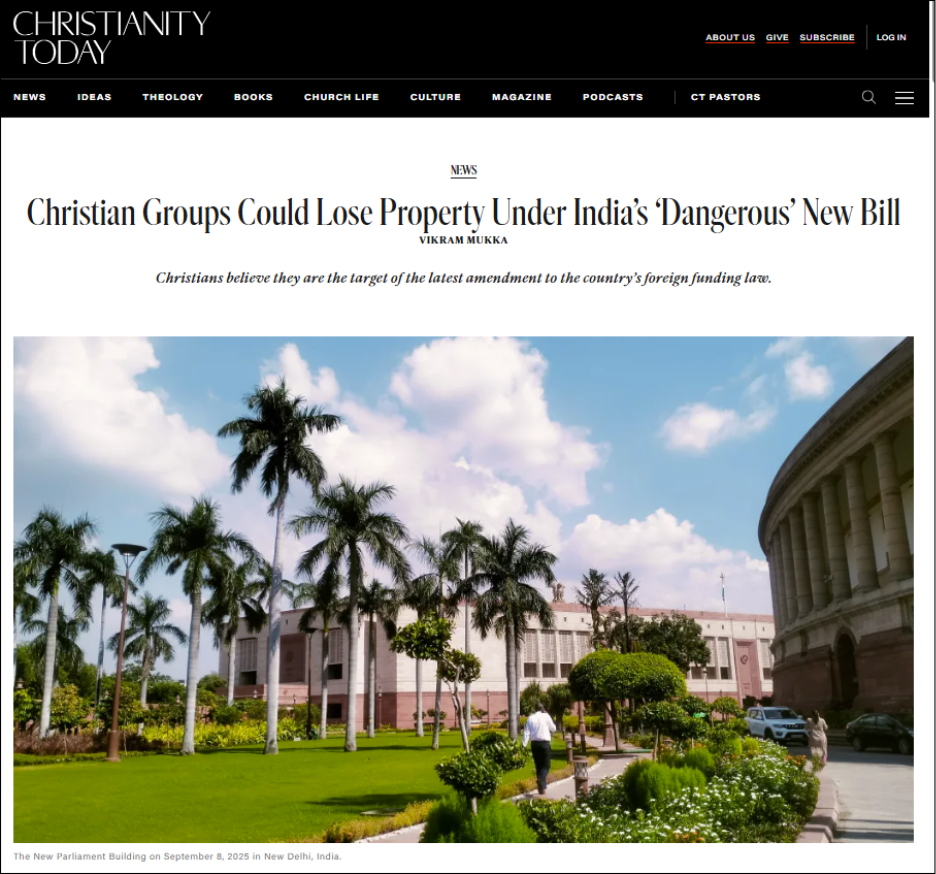
Similarly, Christian publications like Christianity Today, International Christian Concern, among others have been publishing propaganda pieces against the FCRA Amendment Bill to magnify “Christians under attack in India by the Hindu nationalist government” victimhood lies.
In fact, the recent Cockroach Janta Party (CJP) protests in New Delhi, several Catholic priests were seen marching alongside CJP supporters to oppose the FCRA Bill. The Delhi Police have also said that the role of several NGOs and linked individuals is also under scanner now.
It is apparent that because the new FCRA rules, and the FCRA Amendment Bill impose a tighter check on opaque foreign funding flows into entities linked to religious proselytisation and an anti-India agenda, they and their foreign backers are riled up and aggressively campaigning against the FCRA Amendment Bill.
There is also a political angle to the ongoing campaign against the FCRA Amendment Bill. The intensity of the outrage against the FCRA Bill, and the bill’s politicisation hint at the threat it poses to foreign funding pipelines that have long supported religious conversion work and left-leaning advocacy NGOs.
Congress, the main opposition party, is leading the political agitation against the FCRA Amendment Bill. The party, however, has its own history with foreign-funded entities. The Rajiv Gandhi Foundation, chaired by Congress leader Sonia Gandhi, with Rahul Gandhi as its trustee, previously received funds from China and even faced FCRA license cancellation after a probe uncovered irregularities.
OpIndia has reported earlier about how Rahul Gandhi has on numerous occasions sought foreign intervention in India’s domestic political affairs by falsely claiming a collapse of democracy under the Modi government. And now, much to Rahul Gandhi’s joy perhaps, US politicians have started threatening damage to India-US bilateral relations over the Indian government’s policy decisions.
The FCRA Amendment Bill aims to disrupt and destroy the financial network of foreign anti-India entities funding their puppets in India. The bill is fundamentally about sovereignty over foreign funding flows that are directed to fuel religious conversions, demographic alterations, protests, anarchy or parallel power structures. Apparently, for this reason, foreign elements like Riley Moore are amplifying alarmist narratives to incite religious sentiments by framing a mere asset-management and foreign funding regulatory law as a weapon for the seizure of churches and persecution of Christians.