

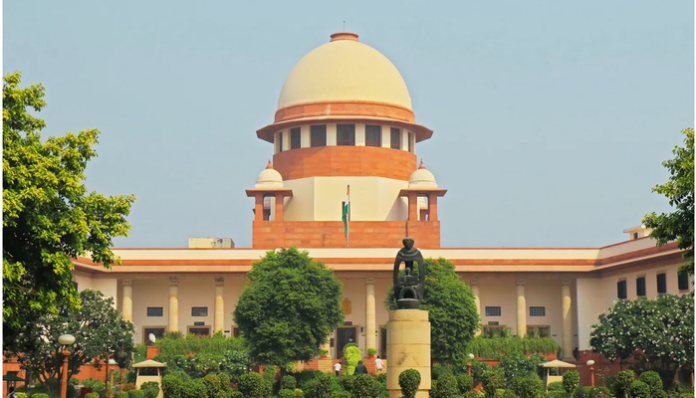
The Supreme Court on Friday (22nd May) questioned the extension of reservation benefits to the children of well-educated and well-off parents belonging to the Other Backward Classes (OBCs). A Bench of Justices Nagarathna and Ujjal Bhuyan made the oral observation during the hearing of a matter concerning reservation benefits for the creamy layer among backward classes.
The Apex Court cited the example of parents serving as officers in the Indian Administrative Services (IAS) and questioned whether is such a case, the reservation benefits should be extended to their children. “If both parents are IAS officers, why should they have reservations? With education and economic empowerment, there is social mobility. So then again, to seek a reservation for the children, we will never get out of it. That is a matter we have to concern. Also, what is the use then? You are giving a reservation. The parents have studied, they are in good jobs, they are getting a good income, and the children want a reservation again. See, they should get out of the reservation,” Justice BV Nagarathna said.
The judges were hearing a petition challenging a Karnataka High Court judgment which upheld the exclusion of the petitioner, whose parents are both state government employees, from the reservation on the grounds of the creamy layer. The petitioner belonged to the Kuruba community, classified under Category II(A) among Karnataka’s backward classes. He was elected for appointment as Assistant Engineer (Electrical) in the Karnataka Power Transmission Corporation Limited under the reserved category. However, he was denied a caste validity certificate by the District Caste and Income Verification Committee after concluding that he fell within the creamy layer.
The Single Judge of the High Court had directed the issuance of a caste certificate to the petitioner after holding that the salary income of his parents was required to be excluded while determining whether he belonged to the creamy layer. The decision was, however, overturned by the Division Bench, which held that the salaries of the were to be considered while deciding on the creamy layer status. It held that the petitioner’s family income exceeded the applicable threshold and that he therefore fell within the creamy layer. The authorities assessed his family income at ₹19.48 lakh annually and noted that the combined income of his parents, who are government employees, exceeds the prescribed creamy layer threshold.
After taking these facts into consideration, Justice Nagarathna expressed concern that reservation benefits continued even after families had progressed socially and economically. She questioned the rationale behind extending the reservation to the children whose parents are educated, hold good jobs and earn substantial incomes.
Advocate Shashank Ratnoo contended before the court that salary income cannot be a determining factor for identifying the creamy layer among government servants. He added that salary and agricultural income should not be taken into consideration and that income from business or other sources should be factored in. He further said that the status of the parents, such as whether they belong to Group A or Group B services, should also be taken into consideration for deciding on exclusion. Ratnoo claimed that if salaried income is taken as the sole criterion, even drivers, peons, clerks and other lower-ranking government employees could be excluded from reservation benefits.
Responding to Ratnoo’s submissions, Justice Nagarathna said that some balance has to be maintained. She gave an example of children having both parents as IAS officers and said that the job and income of parents in such a case have to be taken into consideration. “There has to be some balance. Socially and educationally backward, yes, but once the parents have attended a level because of taking advantage of the reservation, if they are both IAS officers, both are in government service, they are very well placed. Social mobility is there. Now they are questioning the exclusion. This also has to be kept in mind,” Justice Nagarathna said.
