

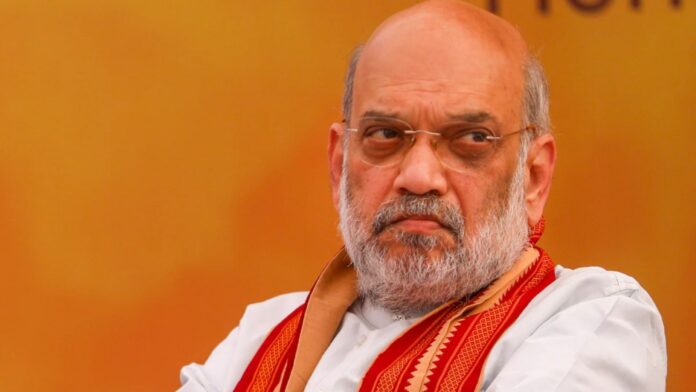
Amid the propaganda being spread over the Foreign Contribution (Regulation) Amendment Bill (FCRA Bill), Union Home Minister Amit Shah met some representatives of the Christian community on Thursday (August 6, 2026). According to an IANS report, the representatives discussed their concerns and apprehensions regarding the bill with the Home Minister during the meeting.
According to sources, Amit Shah listened carefully to the representatives and noted their concerns. The Home Minister assured them that he would look into the issues raised and discuss the matter with other members of the government.
Delhi: Members of the Christian community met Union Home Minister Amit Shah.
— IANS (@ians_india) August 6, 2026
The members raised their concerns regarding the FCRA Bill before the Home Minister. The Home Minister listened to them carefully and noted their concerns. He assured them that he would look into the… pic.twitter.com/sUU3tz9lWV
Meanwhile, a CNN News18 journalist wrote on X about the meeting that the Christian community representatives who met Shah raised their objections to the FCRA Amendment Bill. She wrote, “The representatives demanded that the bill either be withdrawn or sent to a Joint Parliamentary Committee (JPC) for further parliamentary scrutiny.”
The Christian representatives who met HM @AmitShah have demanded that either the FCRA Bill be withdrawn or sent to JPC for further parliamentary scrutiny,.. pic.twitter.com/alfTUHSwlv
— 🦏 Payal M/પાયલ મેહતા/ पायल मेहता/ পাযেল মেহতা (@payalmehta100) August 6, 2026
Mizoram Chief Minister Lalduhoma also met Amit Shah over the FCRA Bill. After the meeting, he said that he had raised six issues related to the bill with the Home Minister.
According to Lalduhoma, on one of these six issues, Amit Shah clearly assured him that the FCRA Amendment Bill would not have retrospective effect. This means that its provisions would not apply to the period before the law comes into force.
The Mizoram Chief Minister said that the Home Minister had agreed to give a written response on the remaining issues. The full picture regarding the bill will become clear only after Amit Shah’s written response on these points is received. Lalduhoma also said that Amit Shah is going to begin discussions on the FCRA Amendment Bill in Parliament from August 12.
VIDEO | Delhi: On FCRA (amendment) bill, Mizoram CM Lalduhoma says, “We raised six issues with him. Out of those, he (Amit Shah) assured me that this bill will not have retrospective effect. As for the remaining points we raised, he said he would respond to them in writing and… pic.twitter.com/unWOJwoW9B
— Press Trust of India (@PTI_News) August 6, 2026
What are the amendments in the bill and why are missionaries concerned?
The FCRA Amendment Bill introduced in March 2026 mainly concerns organisations whose FCRA registration has been cancelled, those that have voluntarily surrendered their licences, or whose licences have not been renewed. Under the bill, an authority appointed by the Central Government will be given the power to manage the foreign funding of such organisations and the assets created using that money. The objective is to prevent misuse of foreign funds and their illegal transfer to another party.
In addition, on June 22, 2026, the Ministry of Home Affairs issued a notification amending the Foreign Contribution (Regulation) Rules, 2011. Under this, proselytisation for several sections of religious communities has been kept outside the scope of these rules.
The government’s powers will be limited only to those assets that have been created using foreign funds and to which specified circumstances, such as the expiry of an FCRA licence, apply. At the same time, there is also a provision for reviewing such government orders and appealing against them.
For several decades, several Evangelical and missionary networks based in the United States have been funding activities in India related to establishing churches, conducting conversion campaigns among the poor, especially tribal and Dalit communities, and other related activities. Several foreign Christian organisations, including Compassion International, World Vision India and Joshua Project, have remained active in India. Their activities have been linked not only to religious work but also to the strategic interests of their countries of origin.
These foreign and Indian missionary organisations are now opposing the FCRA Amendment Bill. They argue that the law will make it difficult for foreign funds to reach organisations that have been accused of working on an agenda aimed at changing India’s religious demography and affecting national security.
