

Women fighter pilots of the Indian Air Force were not merely observers during Operation Sindoor but were involved in actual combat missions against Pakistan-based terror infrastructure and military targets, according to a report by ThePrint’s Snehesh Alex Philip. The report, based on conversations with defence sources, sheds fresh light on the role played by women fighter pilots during the 88-hour India-Pakistan conflict in May 2025.
According to the sources cited by Philip, a woman fighter pilot flew a Sukhoi Su-30MKI during the operation. The aircraft is capable of carrying advanced air-to-ground weapons, including the BrahMos and Rampage missiles. However, the sources declined to identify the precise missile employed during the particular mission, saying details of the weapons used remain classified.
The sources also said Pakistan would have recovered missile debris from some of the strike locations and could have attempted to establish the make and origin of the weapons used.
The revelation comes shortly after the release of Discovery’s two-part docu-series Declassified: Operation Sindoor, which premiered on August 15. The documentary provides a behind-the-scenes account of the planning and execution of the 88-hour military operation and features accounts from military personnel, defence experts and others involved in the campaign.
The documentary also features a woman officer whose identity has been concealed. According to the defence sources cited in the report, more than one woman fighter pilot participated in Operation Sindoor. Women pilots reportedly operated both the Su-30MKI and Rafale fighter aircraft, with some serving as pilots and others as Weapon System Operators (WSOs).
The distinction between male and female pilots effectively disappears once an officer enters the fighter stream, a source explained. They undergo the same training and are assigned the same operational responsibilities.
The role of women in the operation therefore went well beyond the highly visible May 7 press briefing, where Colonel Sofiya Qureshi and Wing Commander Vyomika Singh represented the Indian Army and Air Force respectively. The two officers became prominent public faces of the operation, but the latest revelations indicate that women were also part of the operational teams flying India’s frontline fighter aircraft.
Nine terror targets hit on first day
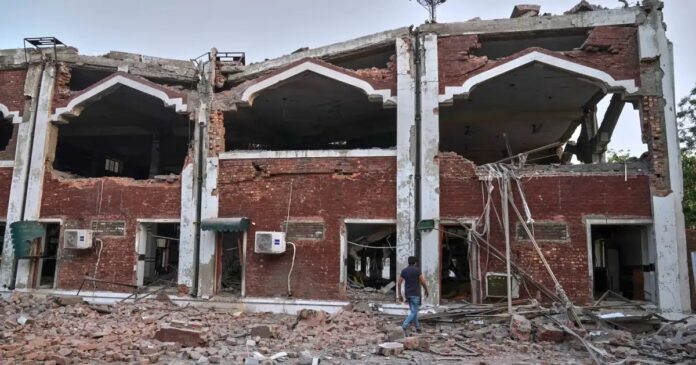
Operation Sindoor was launched by the Indian Armed Forces in the early hours of May 7, 2025, in response to the April 22 Pahalgam terror attack in which 26 people were killed. India targeted nine terror infrastructure sites in Pakistan and Pakistan-occupied Jammu and Kashmir (PoJK), in what the government described as focused and precise strikes against facilities from where terrorist attacks against India had been planned and directed.
The nine targets included the Markaz Taiba facility in Muridke, the Lashkar-e-Taiba’s major headquarters and training centre, and Markaz Subhanallah in Bahawalpur, the Jaish-e-Mohammed headquarters. Other targets were located in Muzaffarabad, Kotli, Sialkot and Bhimber.
Of the nine locations struck during the opening phase, two major targets, Muridke and Bahawalpur, were attacked by the Indian Air Force, while the remaining targets were engaged by the Indian Army using loitering munitions and long-range artillery, according to the account cited by Philip.
The choice of Muridke and Bahawalpur was particularly significant. Markaz Taiba at Muridke had long been associated with Lashkar-e-Taiba, the Pakistan-based terror organisation responsible for several attacks against India, while the Bahawalpur facility was a key Jaish-e-Mohammed hub. The strikes represented a major escalation from the 2019 Balakot operation, when India had targeted a single terror facility deep inside Pakistan. Under Operation Sindoor, India struck nine locations across Pakistan and PoJK.
The operation subsequently expanded beyond the initial counter-terror strikes. During the four-day confrontation, Indian forces targeted Pakistani military infrastructure as Islamabad retaliated. The IAF employed a range of long-range precision weapons, with reports identifying BrahMos, SCALP and other systems among the weapons used during different phases of the conflict.
The BrahMos component became particularly significant in the later stages of the conflict. Reports have said Su-30MKIs were used to launch BrahMos missiles against Pakistani military installations, including airbases. Pakistan’s Prime Minister Shehbaz Sharif later publicly acknowledged that Indian BrahMos strikes hit Pakistani military bases, including the facility at Rawalpindi.
Pakistan’s DGMO called India as pressure mounted
The final phase of Operation Sindoor also highlighted the military pressure Pakistan faced. On May 10, after days of escalating hostilities, Pakistan’s Director General of Military Operations contacted his Indian counterpart at 3:35 pm. India subsequently announced that both sides had agreed to halt military action across land, air and sea from 5 pm.
Subsequent reports have described the Pakistani outreach as a request to stop further military action after Indian strikes had inflicted significant damage on Pakistani military infrastructure. A defence-related compilation citing contemporary reports said Pakistan sought a no-fire understanding after Indian missile strikes and amid concerns over further attacks.
The recently released Declassified: Operation Sindoor documentary has now brought some of the previously undisclosed dimensions of the conflict into public view. Among them is the participation of women fighter pilots in India’s combat operations, flying the same frontline aircraft, undertaking the same operational duties and facing the same risks as their male counterparts.
Their contribution offers another dimension to Operation Sindoor: the transformation of women from being symbols of the Indian military’s changing profile into fully integrated participants in frontline combat operations.
