

The Wuhan Coronavirus has emerged as a pandemic and a global threat. It has triggered a meltdown of the economy, lockdown in various parts of the world and the world is running helter-skelter to get a grip on the virus. Popularly known as the COVID-19 or the SARS-CoV-2, the novel Coronavirus is highly contagious and can spread across the population very quickly and overwhelm its healthcare infrastructure at a remarkable pace. This is what we have observed in countries such as Italy.
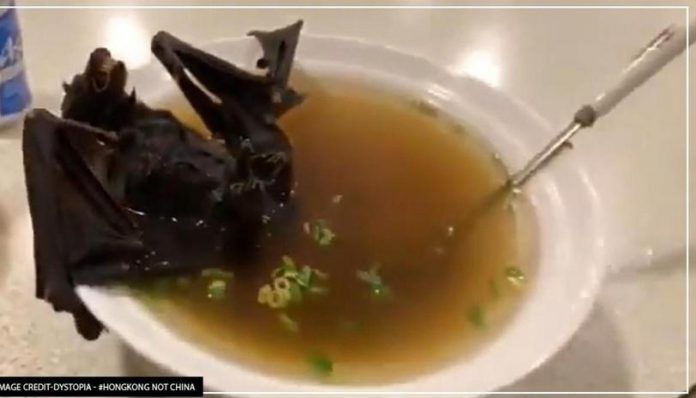
As threatening as the virus is, the emergence of such a virus, and even more threatening forms of it, has been predicted by scientists for a very long time. These are zoonotic viruses and the SARS-CoV-2 has a close similarity to bat coronaviruses. It is suspected that it was introduced to the human population through an animal intermediary such as the pangolin. The food habits of humans has played a very critical role in the transmission of the virus from animals to humans.
A paper published by scientists years ago predicted the reemergence of such viruses. The paper published by Cheng VC, Lau SK, Woo PC and Yuen KY in 2007 warned, “The presence of a large reservoir of SARS-CoV-like viruses in horseshoe bats, together with the culture of eating exotic mammals in southern China, is a time bomb.” It added, “The possibility of the reemergence of SARS and other novel viruses from animals or laboratories and therefore the need for preparedness should not be ignored.” The Wuhan Coronavirus surfaced from the wet markets of the Chinese City of Wuhan.
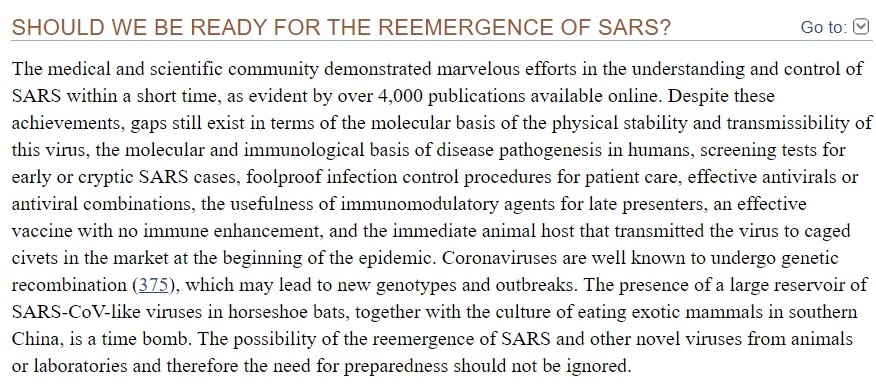
The paper also warned that “Coronaviruses are well known to undergo genetic recombination, which may lead to new genotypes and outbreaks.” It also remarked, “The findings that horseshoe bats are the natural reservoir for SARS-CoV-like virus and that civets are the amplification host highlight the importance of wildlife and biosecurity in farms and wet markets, which can serve as the source and amplification centers for emerging infections.”
Regarding the spread of the first SARS epidemic, the paper stated, “The rapid economic growth in southern China has led to an increasing demand for animal proteins including those from exotic game food animals such as civets. Large numbers and varieties of these wild game mammals in overcrowded cages and the lack of biosecurity measures in wet markets allowed the jumping of this novel virus from animals to human.” It added, “The small reemergence of SARS in late 2003 after the resumption of the wildlife market in southern China and the recent discovery of a very similar virus in horseshoe bats, bat SARS-CoV, suggested that SARS can return if conditions are fit for the introduction, mutation, amplification, and transmission of this dangerous virus.”
The paper also noted that “…in 2003, sustained exposure of the animal handlers to these infected civets and other wild animals would result in the introduction of a moderately transmissible and more virulent SARS-CoV strain, which would have mutated from the animal strain and adapted to infect humans more efficiently.” As for SARS-CoV-2, it is almost certain now animal consumption habits contributed massively to the transmission of the virus from animals to humans.
The Wuhan Coronavirus pandemic is likely to have a profound impact on human society going forward. Given the extent of its impact, it is a history-altering event that will determine national and global policies not only in the immediate future but also in there short-term and long-term. Nations must also combat animal consumption habits and alter their dietary preferences in order to negate the possibility of even more threatening forms of the virus.
China, for instance, has shut down its wildlife farming industry, valued at $74 billion. In the last week of February, the Chinese government banned the buying, selling, and eating of wild animals in an effort to curb the spread and emergence of zoonotic viruses. However, it was too little too late to prevent the Wuhan Coronavirus pandemic.


