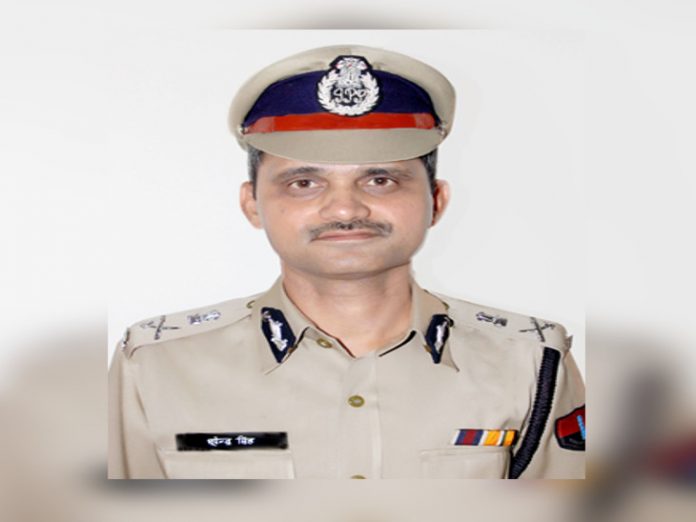
Recently, the Rajasthan Director General of Police (DGP) Bhupendra Yadav has stirred a controversy by blaming the ‘internet and curiosity’ in youths for the rising rape cases in the country. His comments come at the backdrop of several rape cases that have been come to light in the past few days.
Yadav stated, “I have observed an increase in the number of rape cases in North India. There are special reasons behind it such as a rising population of the young generation, unemployment and imitating pornographic activities available on the internet.” He also claimed that since the law does not permit individuals below 18 years to have a physical relationship, it, therefore, invokes curiosity among the youth and thus resulting in rapes.
The Rajasthan DGP has alleged that there is an increase in the number of cases where young boys and girls have ‘friendship’ and often ‘flee’ together. Yadav further added that the youth, especially the girls, need to be taught about confidence-building and ‘ways to avoid’ such incidents.
#Breaking | Rajasthan DGP cites ‘internet’ & ‘curiosity of youth’ as reasons behind the increase in rapes.
— TIMES NOW (@TimesNow) October 5, 2020
Listen in.
Arvind with details. pic.twitter.com/IozTpiGtHg
Rajasthan tops the list in rape cases in India
As per the latest National Crime Records Bureau (NCRB) data, Rajasthan ranks first among the States with the highest number of recorded rape cases. In 2019 alone, the State witnessed a total of 5,997 cases. Rajasthan has seen a consistent rise in rape cases, with the State recording 3,305 cases in 2017 and 4,335 cases in 2018. The rate of increase in rape cases between 2018 and 2019 has almost doubled to 4.2%, up from 2.4% between 2017 and 2018. At the same time, Jaipur has garnered the second spot in the list of most unsafe cities for women in India with 517 rape cases is 2019 alone.
Recent rape cases in Rajasthan
On September 30, it was reported that two minor girls, aged 13 and 15, from Baran in Rajasthan, were taken to Kota, Jaipur and Ajmer and were raped for three days. The two sisters had reportedly admitted on camera that the two boys had abducted them, drugged them and raped for days. On Friday, the naked corpse of a girl has been discovered at a hospital in the Banswara district of Rajasthan. The family of the victim had claimed that she was poisoned and raped. In another shocking incident, a woman was gang-raped by two men in Siswali in Baran district of Rajasthan. The girl was abducted by two men on July 1, kept her hostage, regularly raped and assaulted her. She was rescued a month later.