

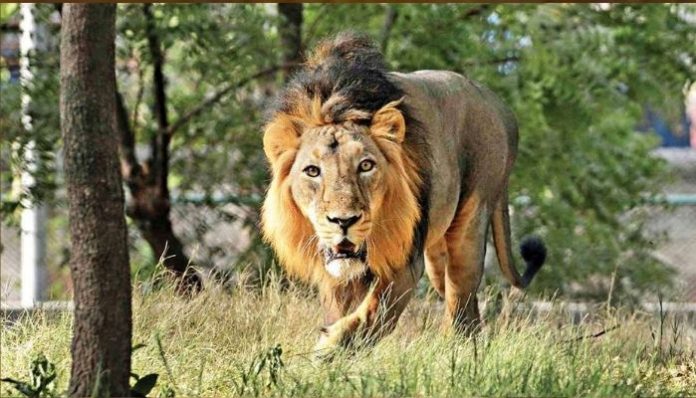
While India is fighting the second wave of the Wuhan Coronavirus pandemic, it has now come to light that 8 Asiatic lions at the Nehru Zoological Park in Hyderabad in Telangana have tested positive for Coronavirus. The zoo is spread across a sprawling 380-acre campus and houses about 1500 animals.
Citing sources in the zoo, The Hindu reported that the Centre for Cellular and Molecular Biology (CCMB) has communicated that the big cats have been diagnosed with the Wuhan Coronavirus following Real-Time- Polymerase Chain Reaction (PCR) tests. Reportedly, the big cats had developed Coronavirus symptoms such as dry cough, loss of appetite, and nasal discharge on April 24.
The zoo caretakers then alerted the veterinary team, who took swab samples of the animals and sent them for testing at the CCMB. The scientists will now undertake genome sequencing of the virus strain to detect whether it was transferred from human beings. The zoo authorities will also conduct a CT scan of the infected animals to determine the magnitude of the infection in their lungs.
Zoos, sanctuaries and national parks closed after 8 felines test positive
“Yes, the lions were tested after displaying mild symptoms. As of now they are active and are doing well,” another source confirmed. The infected animals comprise of four male and four female Asiatic lions. It must be mentioned that the Nehru Zoological Park is one of the biggest zoos in Asia. Earlier, more than 12 staff members at the zoo had tested positive. After the case came to light, the Ministry of Environment, Forest and Climate Change (MoEFCC) issued an advisory on April 30 to shut down all national parks, zoos, sanctuaries.
Animals too can test positive for Wuhan Coronavirus
In March last year, a 2-year-old German Shepherd and a 17-year-old Pomeranian in Hong Kong were suspected of contracting the coronavirus from their infected owners. The Hong Kong Agriculture, Fisheries and Conservation Department (AFCD) said that a German shepherd tested positive for the virus in Pok Fu Lam, a residential area on the west coast of Hong Kong Island.
“No positive results were obtained from the mixed-breed dog and neither dog has shown any signs of disease,” it said. “The department will continue to closely monitor both dogs and conduct repeated tests on the animals.”Officials sent both the German shepherd and another dog from the same residence to a quarantine facility at the Hong Kong Port of the Hong Kong-Zhuhai-Macao Bridge.
This came after an elderly 17-year-old Pomeranian, which had tested “weak positive” during repeated tests for the virus, died two days after it was released from quarantine disease-free.


