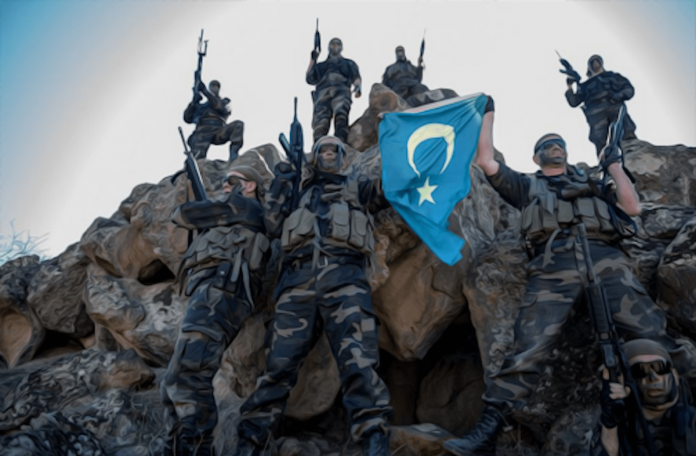
Amidst the ongoing UN troop withdrawal and the Talibani offensive to regain control of the country, several hundred members of the East Turkestan Islamic Movement(ETIM), an Uyghur separatist group that has long sought independence for the Chinese province of Xinjiang, remain active in several districts of Afghanistan, a recently released UNSC report said.
The group is primarily aligned with Al Qaeda and remains active in Badakhshan, Faryab, Kabul and Nuristan Province of Afghanistan, as per the report prepared by the UN Analytical Support and Sanctions Monitoring Team. The group is also closely associated with Jamaat Ansarullah and Katiba al-Tawhid wal-Jihad.
The leaders of the ETIM—Abdul Haq and Hajji Furqan—and the group’s headquarters were currently located in Hustak ravine, Jurm district in Badakhshan Province, the report said. It further added that Abdul Haq often shuttles between Helmand and Badakhshan provinces. The Uyghur separatist group had also recently released a propaganda video, demonstrating their combat readiness.
In their bid to establish an Uyghur state in Xinjiang, China, the group facilitates the movement of fighters from Afghanistan to China, the report said. It noted that the ETIM active in Afghanistan is more focused on actions targeting China, while the group operating in the Syrian Arab Republic had a more global outlook.
Taliban assures China after it raises concerns about Afghanistan becoming a breeding ground for ETIM
Earlier this month, China has expressed its concern regarding Afghanistan becoming a breeding ground for the fighters of the East Turkestan Islamic Movement amidst the turmoil precipitated by the US troop pullout and the offensive launched by the Taliban. Reportedly, China is also concerned that Afghanistan, under Taliban rule, may become a hub for the East Turkistan Islamic Movement (ETIM). The northwest Xinjian region, which is home to Uyghur Muslims, shares about an 8-km-long border with Afghanistan.
In order to assuage the concerns of the Chinese, the Taliban reassured them, saying that it saw China as a “friend” to Afghanistan and hoped that China invests in the reconstruction of the war-torn country.
During an interview, Taliban spokesperson Shaheen had said that the Taliban has assured China that it would not host Uyghur militants from the Xinjiang province, some of whom had previously entered Afghanistan to escape from Chinese persecution. The Taliban would also prevent al-Qaeda or any other terrorist group from operating there, he said.
“Taliban views China as a friendly country and we welcome it for reconstruction and developing Afghanistan”, said Suhail Shaheen, adding that “If (the Chinese) have investments, of course, we will ensure their safety”.