

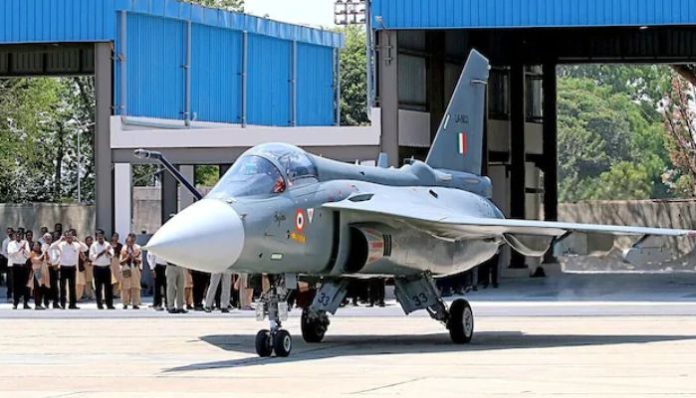
India has taken a major step in defence procurement with Hindustan Aeronautics Ltd (HAL) signing a deal on Friday, 7th November, with GE Aerospace of the United States to buy 113 F404-GE-IN20 jet engines. These engines will power the Tejas Light Combat Aircraft (LCA) Mk1A, which is central to strengthening the Indian Air Force’s fighter fleet.
Hindustan Aeronautics Limited (HAL) has entered into an agreement with M/s. General Electric Company, USA, on 7th November 2025 for the supply of 113 Nos of F404-GE-IN20 engines and support package for execution of 97 LCA Mk1A programme. pic.twitter.com/zB4BVGP0LK
— HAL (@HALHQBLR) November 7, 2025
HAL officials said that deliveries of the engines will start in 2027 and continue till 2032. Along with the engines, the agreement includes a support package to ensure smooth operations for the Tejas programme. This comes as part of India’s larger plan to build 97 new Tejas Mk1A fighters under a contract worth Rs 62,370 crore signed in September between the Defence Ministry and HAL.
The Tejas Mk1A is designed for multiple roles, including air defence, maritime reconnaissance, and strike missions. It is a single-engine, multi-role fighter built to handle tough air combat situations. Compared to its earlier versions, the Mk1A model offers major improvements in technology, performance, and ease of maintenance.
The need for new fighter jets has become urgent as India phases out its ageing MiG-21 squadrons. The Tejas jets are seen as vital replacements to keep the Air Force’s strength balanced, especially with China expanding its military presence and close cooperation with Pakistan.
However, the production of Tejas aircraft has been facing delays due to slow engine deliveries. Out of the 99 engines ordered from GE in 2021, only four have been supplied so far. The company has said that post-COVID-19 supply chain problems have caused the slowdown.
The Tejas Mk1A made its first flight on October 17 this year in Nashik, Maharashtra, in the presence of Defence Minister Rajnath Singh, who also launched HAL’s third production line to speed up deliveries. With earlier orders for 40 Tejas aircraft and 83 Mk1A jets placed in 2021, India will now receive a total of 180 aircraft by 2034.
This new deal marks a strong push towards boosting domestic defence production and deepening ties with the United States at a time of global trade tensions.
