

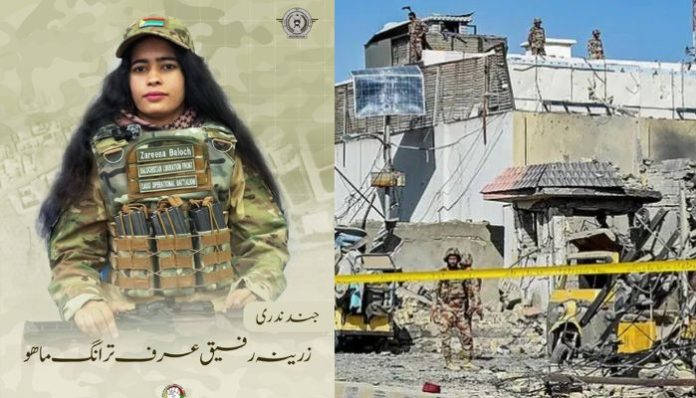
A suicide attack shook the Frontier Corps (FC) headquarters in Nokkundi, Balochistan, on late Sunday night, 30th November. The Balochistan Liberation Army (BLA) claimed responsibility for the attack.
Severe attack on the Frontier Corps (FC) headquarters in Nokkundi, one of Balochistan's most sensitive and strategic areas.
— The Balochistan Post – English (@TBPEnglish) November 30, 2025
Extremely close to Iran and Afghanistan borders, nuclear test sites, as well as the Reko Diq and Saindak mining projects. #Nokkundi #Balochistan pic.twitter.com/eYOeaWubUD
The violence began when a female BLA suicide bomber named Zarina Rafiq blew herself up near the main gate. The explosion was so strong that it destroyed the gate. Right after that, six armed BLA fighters entered the compound. The security forces quickly fought back, and heavy gunfire broke out. Reports claim that between three rebels were killed by the security forces.
A suicide blast followed by a full armed assault on FC HQ in Nokundi.
— TridentX ᴵⁿᵗᵉˡ (@TridentxIN) November 30, 2025
Explosions & gunfire raging for over an hour.
Two rushed in as ops intensify near major gold reserves. pic.twitter.com/EgSsGF5Hij
The violence didn’t stop in Nokkundi. Another FC checkpoint in the Gurmakan area of Panjgur district was also attacked. An FC spokesman confirmed that the BLA was responsible for both attacks. Meanwhile, the Baloch rebels also targeted other places in Quetta and Dera Murad Jamali in the last few days.
Earlier explosions and grenade attacks
Just a few hours earlier, a string of seven blasts hit different locations in Quetta and Dera Murad Jamali. Fortunately, no one died in those explosions. The violence on Saturday, 29th November, started with a hand grenade attack on a police checkpoint in Quetta, followed by an IED blast near an Anti-Terrorism Department vehicle. Three more explosions happened later that day.
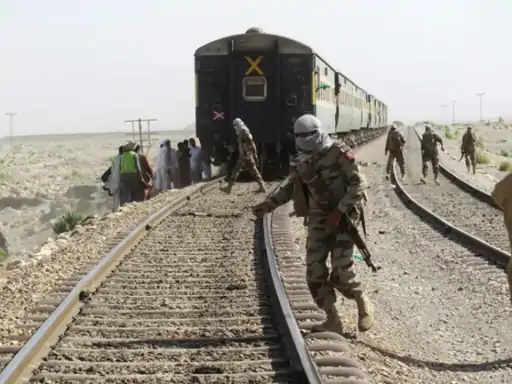
In separate attacks, armed men threw grenades at a construction company camp on Sariab Road in Quetta, injuring two guards, according to Quetta SSP Asif Khan. Attackers on motorcycles also threw two grenades at the Manzoor Shaheed police station. One grenade exploded while the bomb squad safely defused the other. Additionally, an IED went off and damaged a railway track near Lohar Karez on Quetta’s outskirts.
There was also a grenade attack on a police patrol vehicle in Dera Murad Jamali, and more grenades were thrown near a police post in the Kech Beg area of Quetta. No group has claimed responsibility for these earlier attacks.
Rising violence in Balochistan
Balochistan is facing a big rise in major attacks. So far this year, 782 people have lost their lives in the province. Earlier in March, the BLA hijacked a train and killed several soldiers. In September, a suicide attack on a political rally in Quetta killed 11 people.
Warnings from Pakistan’s Deputy Prime Minister
Pakistan’s Deputy Prime Minister Ishaq Dar recently said that in the last four years, 4,000 Pakistani soldiers have died and over 20,000 have been injured. He mentioned that Pakistan’s problems have worsened since the Taliban came to power in Afghanistan. Dar urged the Taliban to take strong action against militants and warned them not to give shelter to Pakistani Taliban fighters in the border areas.
Pakistan’s position in Global Terrorism
On the global stage, things look worrying for Pakistan. According to the Global Terrorism Index 2025, Pakistan has moved up to become the second most terror-affected country in the world, after Burkina Faso. Last year, it was ranked fourth.
The report shows big increases in attacks by different groups. Attacks by the Pakistani Taliban (TTP) have increased by 90%. The Balochistan Liberation Army (BLA) attacks have risen by 60%. The Islamic State-Khorasan group (IS-K) has also started targeting cities in Pakistan.
Most of the violent incidents take place in Khyber Pakhtunkhwa and Balochistan, which together see 90% of the country’s violent activities. The report named the TTP as Pakistan’s most dangerous terror group for the second year in a row. The TTP carried out 482 attacks last year, causing 558 deaths, which is a 91% rise compared to the previous year.
