

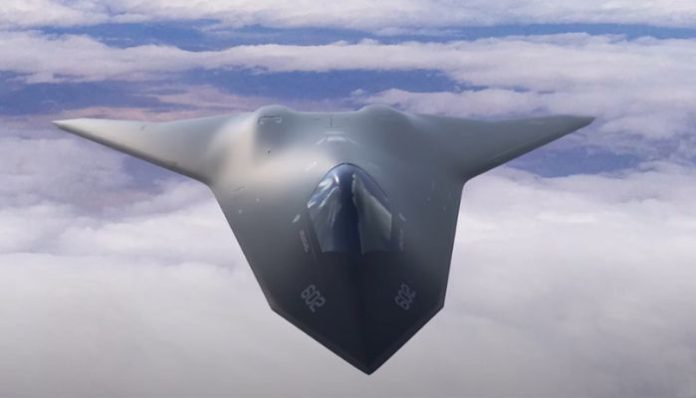
India is working on a new technology that could completely change the way its fighter jets fly. Imagine aircraft that can change their wing shape in the middle of a mission, rising, drooping, or bending smoothly to match whatever the pilot needs at that moment. This futuristic idea, known as morphing wing technology, has been researched by global defence leaders like NASA, Airbus and the US DARPA. Now, India is joining that elite group with its own successful demonstrations.
Scientists from the Defence Research and Development Organisation (DRDO) and CSIR–National Aerospace Laboratories (NAL) have created a wing section that can change its shape while in the air. This development is not just a small upgrade. It represents a major shift in how Indian aircraft may fly, hide from enemy radar and save fuel in the future.
One of the senior DRDO scientists working on this project explained that aircraft wings today are a compromise; they work well only in some flight phases but not all. With morphing wings, the jet can change its shape at any time to get the best performance in every situation.
How shape-memory metals make wings
The big innovation behind this technology is the use of Shape Memory Alloys, or SMAs. These are special metals that shrink when heated and expand again when they cool. Unlike traditional hydraulic systems or mechanical hinges, these metals can bend parts of the wing smoothly, without gaps or joints.
The wing segment that DRDO tested has a special diagonal design at the leading edge, the front part of the wing. When the SMA actuators heat up, this front portion bends downward, improving lift or helping in sharp manoeuvres. When they cool, the wing returns to a smooth, low-drag shape for cruising.
According to the scientist, they have already achieved a six-degree droop in the leading edge during tests. This change happens in real time, while the aircraft is flying.
The big advantage here is stealth. Normal aircraft wings have visible hinges and joints that reflect enemy radar. Morphing wings remain smooth at all times, making it harder for radars to detect them. They also allow a fighter to maintain better airflow while turning sharply, something very useful in dogfights.
High-speed shape change in flight-like conditions
Many countries have tested morphing wings before, but one challenge has always been the speed of shape change during flight. The wings must bend quickly while facing strong airflow forces; otherwise, they won’t be useful in combat.
The DRDO and NAL team seems to have solved this. They tested their morphing system on a small micro air vehicle with a wingspan of 300 mm. Even under fast propeller airflow, similar to real flying conditions, the wing changed shape from zero to full droop in just 0.17 seconds.
The scientist said the wing can adjust continuously, even once every second, while facing full aerodynamic load. This means the aircraft could change its shape at different moments of flight, more lift during take-off, better balance during climb, smooth wings for long-range cruising and sharp manoeuvring during close combat.
Smart power control keeps the system efficient
Another hidden but important part of this innovation is managing electrical power. Shape Memory Alloys need heat to change shape, which requires electricity.
The DRDO team has designed a smart control system that shares electrical power intelligently between many wing segments. With this method, the wing parts move faster but without putting too much load on the aircraft’s power supply.
The system only uses around 5.6% extra energy, making it suitable not just for drones but also for full-size fighter jets. Each electronic unit for a wing segment weighs just six grams, meaning many more segments can be used without adding noticeable weight.
A big step toward sixth-generation fighters
What DRDO has shown so far is a small-scale demonstration, but the possibilities are huge. The same principles can be used in India’s future projects like the Advanced Medium Combat Aircraft (AMCA), the Twin-Engine Deck-Based Fighter (TEDBF) and advanced unmanned combat drones.
The team now plans to test wings that can change shape in multiple directions at the same time, affecting both lift and roll control. Future versions may even replace traditional moving parts like flaps and elevators, reducing mechanical failures and improving stealth further.
The scientist said the technology will eventually allow aircraft to automatically adjust their wing shape depending on mission needs, weather and combat conditions.
India joins a select group of innovators
With this demonstration, India has joined a small group of nations exploring dynamic, real-time morphing structures. But unlike many early Western experiments that remained conceptual, DRDO and CSIR–NAL have produced a flight-ready, controllable and energy-efficient implementation.
“Our aircraft should adapt like living organisms, reacting to the sky around them,” the scientist said.
With this achievement, India steps into a highly advanced league of aviation technology. The future Indian jets may not just fly; they may transform in the air, making them harder to detect and more deadly in battle.
