

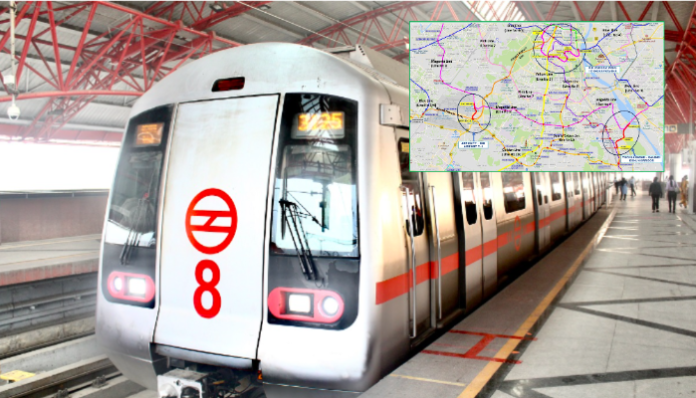
On 24th December (Wednesday), the Union Cabinet led by PM Narendra Modi approved a major expansion to the Delhi Metro, as part of Phase V(A) of the network. The fresh announcement is a component of the 16.076 kilometres Delhi Metro Phase V(A) project, which will improve connectivity throughout the national capital. Significantly, Delhi Metro will connect the Central Vista area after the completion of the expansion.
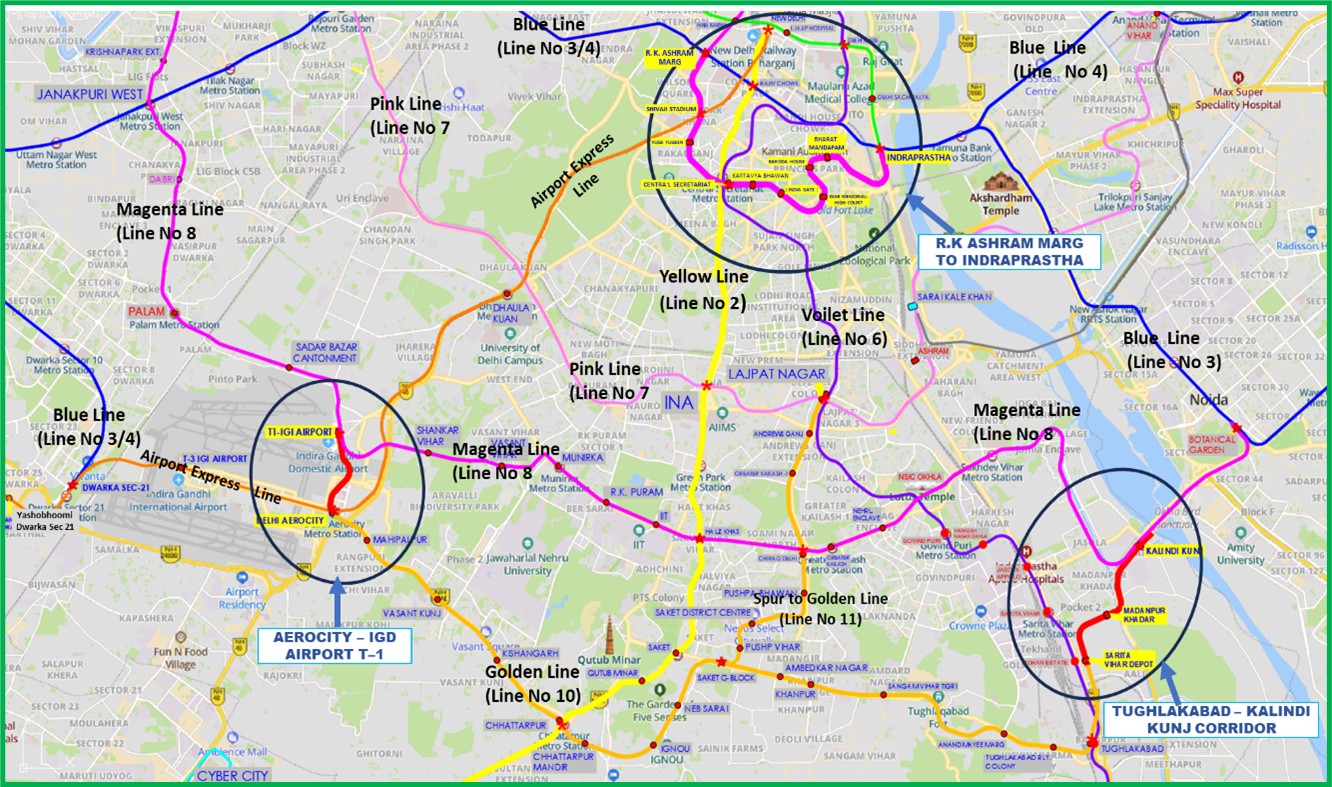
Three new corridors will be added to the Delhi Metro network as part of this expansion, which are RK Ashram Marg to Indraprastha, which is 9.913 kilometres, Aerocity to IGD Airport T-1, which is 2.263 kilometres and Tughlakabad to Kalindi Kunj, which is 3.9 kilometres. The Delhi Metro Phase V(A) project will cost a total of 12014.91 crore, which will be funded by international financing organisations, the Delhi government and the Indian government.
All Kartavya Bhawans will be connected via the Central Vista corridor, offering local office workers and tourists doorstep access. Every day, this link would assist about 2 lakh visitors and 60,000 office employees. These corridors will improve living conditions by reducing pollution and fossil fuel consumption.
The Botanical Garden-RK Ashram Marg corridor will be extended by the RK Ashram Marg-Indraprastha section. As a result, the Central Vista district, which is presently undergoing reconstruction, will have Metro connectivity. An extension of the Aerocity-Tughlakabad corridor, the Aerocity-IGD Airport Terminal 1 and Tughlakabad-Kalindi Kunj portions will improve the airport’s connectivity with the southern regions of the national capital, including Tughlakabad, Saket and Kalindi Kunj, among others. There will be thirteen stations in these extensions, and three of these will be elevated, while the other ten will be underground.
The first corridor, which runs from RK Ashram Marg to Indraprastha, will boost connectivity between West, North, and Old Delhi and Central Delhi once it is constructed. The other two corridors, Aerocity to IGD Airport T-1 and Tughlakabad to Kalindi Kunj, will link South Delhi with the domestic Airport Terminal-1 via Saket, Chattarpur and other places.
The Delhi Metro network will connect Central Delhi and the Domestic Airport owing to these metro extensions of the Phase V (A) project, which will further stimulate the economy. The Magenta Line and Golden Line extensions will also ease traffic on the roads, which will decrease pollution.
RK Ashram Marg, Shivaji Stadium, Central Secretariat, Kartavya Bhawan, India Gate, War Memorial-High Court, Baroda House, Bharat Mandapam, and Indraprastha are the stations that will be located on the RK Ashram Marg-Indraprastha segment. On the Tughlakabad – Kalindi Kunj section, there will be stations at Sarita Vihar Depot, Madanpur Khadar, and Kalindi Kunj, while the Aerocity station will be connected further with the IGD T-1 station.
Notably, the construction of Phase-IV, consisting of 111 km and 83 stations, are underway, and about 80.43% of the civil construction of Phase-IV (3 Priority) corridors has been completed. The Phase-IV (3 Priority) corridors are likely to be completed in stages by December 2026.
Prime Minister Narendra Modi said that the expansion project will expand our capital’s metro network, thus boosting ‘Ease of Living’ and reducing congestion.
Delhi's infrastructure gets a major boost!
— Narendra Modi (@narendramodi) December 24, 2025
Cabinet's approval for three new corridors as part of Delhi Metro's Phase V(A) Project will expand our capital's metro network, thus boosting 'Ease of Living' and reducing congestion.https://t.co/PiWd4e31oP
The Delhi Metro handles 65 lakh passenger trips every day on average. On 8th August, the highest passenger travel ever recorded stood at 81.87 lakh. Delhi Metro has established itself as the capital’s backbone by raising the standard for performance in the fundamental MRTS metrics of safety, dependability and punctuality.
Delhi Metro Rail Corporation (DMRC) operates 12 metro lines totalling around 395 kilometres and 289 stations in Delhi and the National Capital Region (NCR). It is currently among the biggest metro networks globally and the largest in the country.
